
Internal Conflicts During the Reign of Ramiro …
Years: 849 - 849
Internal Conflicts During the Reign of Ramiro I of Asturias
Although Ramiro I’s reign is relatively free of foreign invasions, the latter part of his rule is marked by internal conflict and noble revolts.
His ascent to the throne in 842 CE had been contested, and he continues to face resistance from discontented Asturian nobles. The Chronica Albeldensis records two major rebellions during his reign:
- Piniolo, a high-ranking prócer (grandee), leads a rebellion against Ramiro but is defeated. As punishment, Ramiro executes Piniolo and his seven sons.
- Aldroito, the comes palatii (palace count), leads another uprising and is blinded by order of the king.
Ramiro’s Harsh Rule and the "Rod of Justice"
Ramiro also takes severe measures against lawlessness in his kingdom. He persecutes thieves (latrones), whose increasing numbers contribute to civil unrest, and targets magicians (magos), likely referring to pagan practitioners who remain in isolated regions.
His crackdown extends to suspected witches, sorcerers, and even Jews, many of whom he reportedly executes. Due to his strict and often ruthless justice, the Chronica Albeldensis refers to Ramiro as Uirga iustitiae, meaning "the Rod of Justice."
Ordoño I: Early Life and Rise to Power
Little is known about Ramiro’s first marriage, but it must have taken place early enough for his son, Ordoño I, to be an adult by the time of Ramiro’s death.
- Ordoño I was born in Oviedo and spent his early life at the court of Alfonso II.
- He was likely associated with the crown from an early age.
- He was probably raised in Lugo, the capital of Galicia, where his father had been appointed governor.
- There, he received an education, including military training.
Ordoño’s Role in Ramiro’s Succession
When Ramiro traveled to Vardulia to marry his second wife, Paterna, he left Ordoño as governor of Galicia. During his absence, Alfonso II died, and the Asturian nobles elected Count Nepocian as king, leading to a succession crisis.
Ordoño immediately raised an army to support his father’s claim to the throne, but he was unable to leave Galicia to assist. His forces ultimately went unused, as Ramiro eventually prevailed over Nepocian and secured the Asturian throne.
Once in power, Ramiro confirmed Ordoño as governor of Galicia, transforming what had been a provisional role into a permanent position, preparing Ordoño for his future reign as king.
Locations
People
Groups
Topics
Commodoties
Subjects
Regions
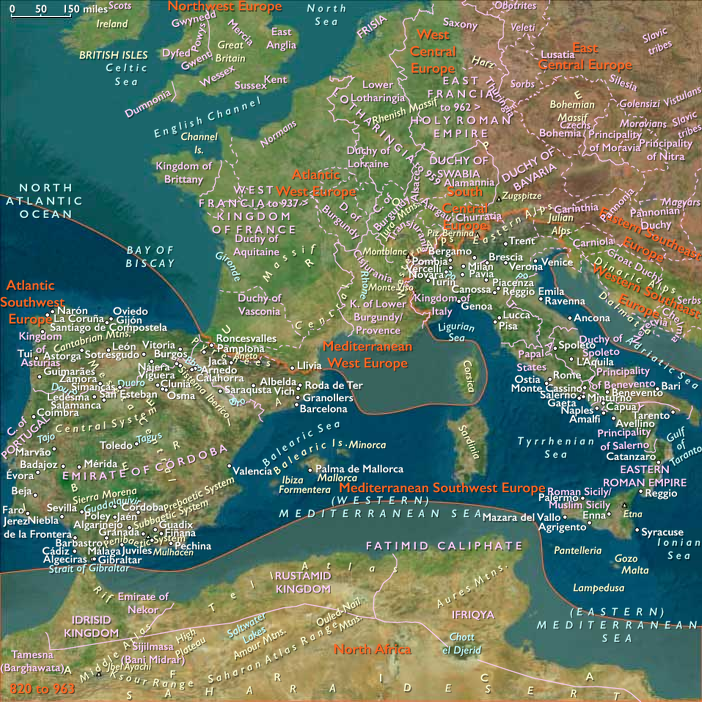
Subregions
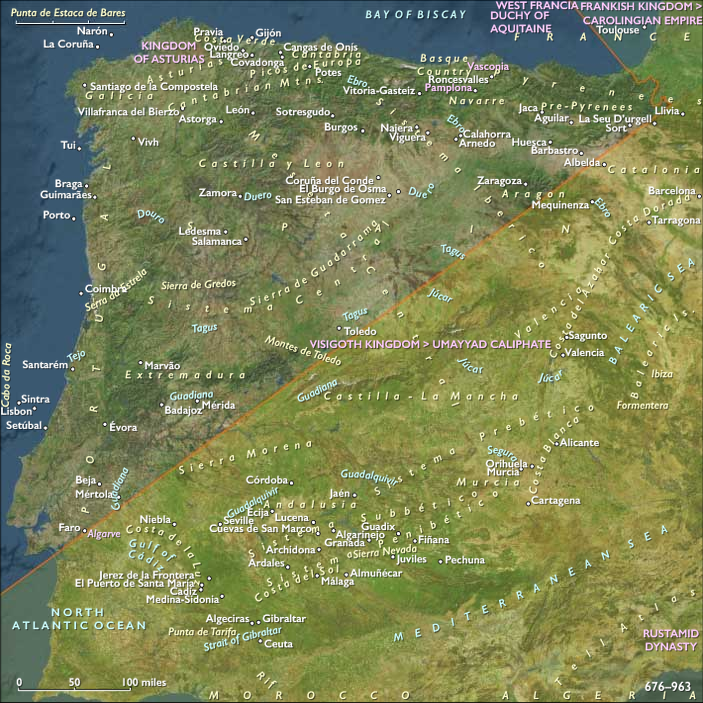
Years: 849 - 849
Locations
People
Groups
Topics
Commodoties
Subjects
Regions
Subregions