
James IV of Scotland, as an ally …
Years: 1513 - 1513
September
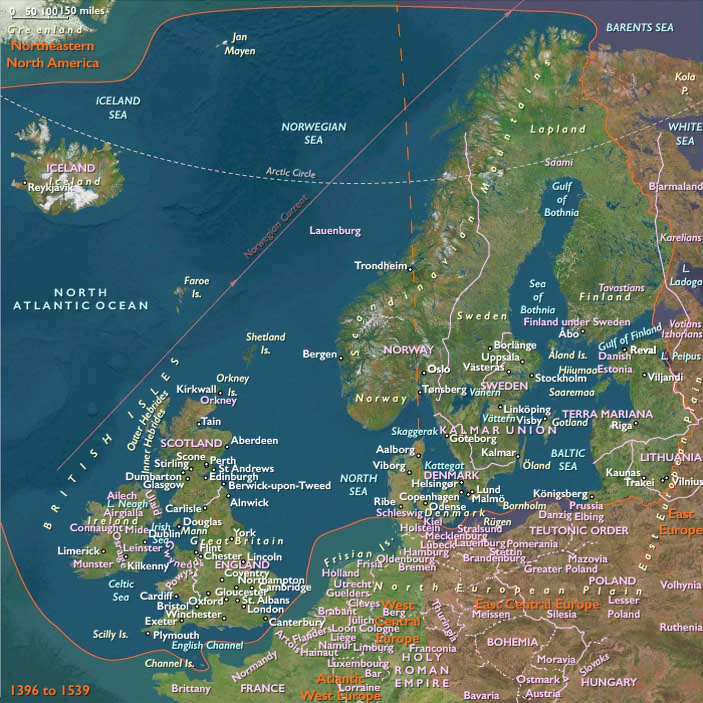
James IV of Scotland, as an ally by treaty both to France and England, finds himself in a difficult position when war breaks out between England and France as a result of the Italian Wars.
Henry VIII of England, his brother-in-law, invades France, and James reacts by declaring war on England.
James had already balked at the interdict of his kingdom by Pope Julius II, and he opposes its confirmation by Pope Leo X, so he is not in a good position with the pontiff.
Leo sends a letter to James, threatening him with ecclesiastical censure for breaking peace treaties June 28, 1513, and James subsequently is excommunicated by Cardinal Christopher Bainbridge, Archbishop of York.
James had summoned sailors and sent the Scottish navy, including the Great Michael, to join the ships of Louis XII of France, so joining in the war of the League of Cambrai.
Hoping to take advantage of Henry's absence at the siege of Thérouanne, he leads an invading army southward into Northumbria at the behest of Louis, but he fails to draw Henry's attention from France.
James and his Scottish army meet English forces at Flodden on September 9.
The English army, overseen by Queen Catherine and commanded by Thomas Howard, second duke of Norfolk, who had regained royal favor, is outnumbered two-to-one.
The English, however, apply their superior weaponry to good effect, massacring the Scots and killing James, along with nine Scottish earls and fourteen lords.
Heavy losses on the English side prevent further action against the Scots.
The death of James—and the Scots' catastrophic defeat—ends Scotland's brief involvement in the War of the League of Cambrai.
Both English and Scottish accounts of Flodden emphasize the King's determination to fight.
In his otherwise flattering portrayal of James, Pedro de Ayala remarks on James's ability as a military commander, portraying him as brusque and fearless on the battlefield;
He is courageous, even more so than a king should be.
I am a good witness of it.
I have seen him often undertake most dangerous things in the last wars.
On such occasions he does not take the least care of himself.
He is not a good captain, because he begins to fight before he has given his orders.
He said to me that his subjects serve him with their persons and goods, in just and unjust quarrels, exactly as he likes, and that therefore he does not think it right to begin any warlike undertaking without being himself the first in danger.
His deeds are as good as his words.
A body, thought to be that of James, is recovered from the battlefield and taken to London for burial.
James had been excommunicated, and although Henry VIII will obtain a legal brief from the Pope on November 29, 1513, to have the King buried in consecrated ground at St. Paul’s, the embalmed body will lie unburied for many years at Sheen Priory in Surrey.
The Reformation will lead to the demolition of the priory, and the body will be lost.
Locations
People
- Alfonso d'Este
- Andrea Gritti
- Bartolomeo d'Alviano
- Catherine of Aragon
- Catherine of Navarre
- Christopher Bainbridge
- Ferdinand II of Aragon
- Gian Giacomo Trivulzio
- Giuliano de Medici
- Henry VIII of England
- Jacques de La Palice
- Louis II de la Trémoille
- Louis XII of France
- Maximilian I of
- Maximilian Sforza
- Pope Leo X
- Ramón de Cardona
Groups
- Papal States (Republic of St. Peter)
- Navarre, Kingdom of
- Genoa, (Most Serene) Republic of
- Christians, Roman Catholic
- Mantua, free commune of
- Aragón, Kingdom of
- Venice, (Most Serene) Republic of
- Aragon, Crown of
- Swiss mercenaries
- France, (Valois) Kingdom of
- Holy Roman Empire
- Urbino, Duchy of
- Milan, Duchy of
- Modena and Reggio, Duchy of
- Ferrara, Duchy of
- Florence, Republic of
Topics
Commodoties
Subjects
Regions
Subregions
Years: 1513 - 1513
September
Locations
People
- Alfonso d'Este
- Andrea Gritti
- Bartolomeo d'Alviano
- Catherine of Aragon
- Catherine of Navarre
- Christopher Bainbridge
- Ferdinand II of Aragon
- Gian Giacomo Trivulzio
- Giuliano de Medici
- Henry VIII of England
- Jacques de La Palice
- Louis II de la Trémoille
- Louis XII of France
- Maximilian I of
- Maximilian Sforza
- Pope Leo X
- Ramón de Cardona
Groups
- Papal States (Republic of St. Peter)
- Navarre, Kingdom of
- Genoa, (Most Serene) Republic of
- Christians, Roman Catholic
- Mantua, free commune of
- Aragón, Kingdom of
- Venice, (Most Serene) Republic of
- Aragon, Crown of
- Swiss mercenaries
- France, (Valois) Kingdom of
- Holy Roman Empire
- Urbino, Duchy of
- Milan, Duchy of
- Modena and Reggio, Duchy of
- Ferrara, Duchy of
- Florence, Republic of
Topics
Commodoties
Subjects
Regions
Subregions