
Filters:
The Portuguese Cortes: An Early Representative Assembly …
Years: 1252 - 1395
The Portuguese Cortes: An Early Representative Assembly (1211–1697)
In medieval Portugal, when matters of exceptional importance arose, the king convoked the cortes, an expanded royal council that brought together representatives of the three estates of the realm:
- The Nobility (Fidalguia) – Representing the landowning warrior class.
- The Clergy (Clero) – Representing the Church and its vast influence.
- The Commoners (Povo) – Representing townsmen and merchants, particularly after the mid-13th century.
The First Cortes and Its Evolution
- The first cortes was held in 1211 at Coimbra, under Afonso II, to legitimize his succession to the throne and to approve new laws for the realm.
- In 1254, at the Cortes of Leiria, Afonso III expanded participation to include representatives of self-governing settler communities (concelhos), marking a milestone in Portugal’s political evolution.
- These early cortes were not legislative bodies in the modern sense but served as a forum for advising the king, presenting petitions and grievances, and discussing matters of taxation, succession, and governance.
Limitations and Decline of the Cortes
- The cortes had no independent legislative power—its resolutions only became law if countersigned by the king.
- Over time, as the Portuguese monarchy centralized power, the authority of the cortes weakened.
- Although it played a role in limiting royal authority during certain periods, the monarchy gradually became more absolute.
- The cortes was convened less frequently, and by 1697, it ceased to be summoned altogether, marking the end of its function as a political institution until its revival in the 19th century during constitutional reforms.
Legacy of the Cortes
Though it ultimately declined, the Portuguese cortes was one of the earliest representative assemblies in Europe, contributing to the development of Iberian and Western parliamentary traditions.
People
Groups
- Benedictines, or Order of St. Benedict
- Islam
- Portuguese people
- León, Kingdom of
- Burgundy, Duchy of
- Christians, Roman Catholic
- Portugal, (second) County of
- Hospitallers of St. John of Jerusalem
- Templar, Knights (Poor Knights of Christ and of the Temple of Solomon)
- Almohad Caliphate
- Portugal, Burgundian (Alfonsine) Kingdom of
- Santiago, Order of
- Calatrava, Order of
- Franciscans, or Order of St. Francis
- Calatrava, Order of
- Dominicans, or Order of St. Dominic
Topics
Subjects
Regions
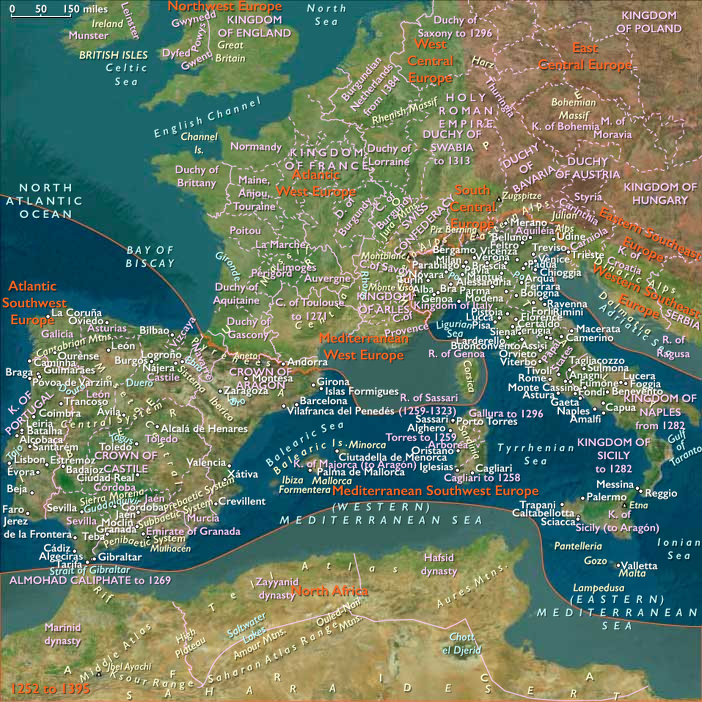
Subregions
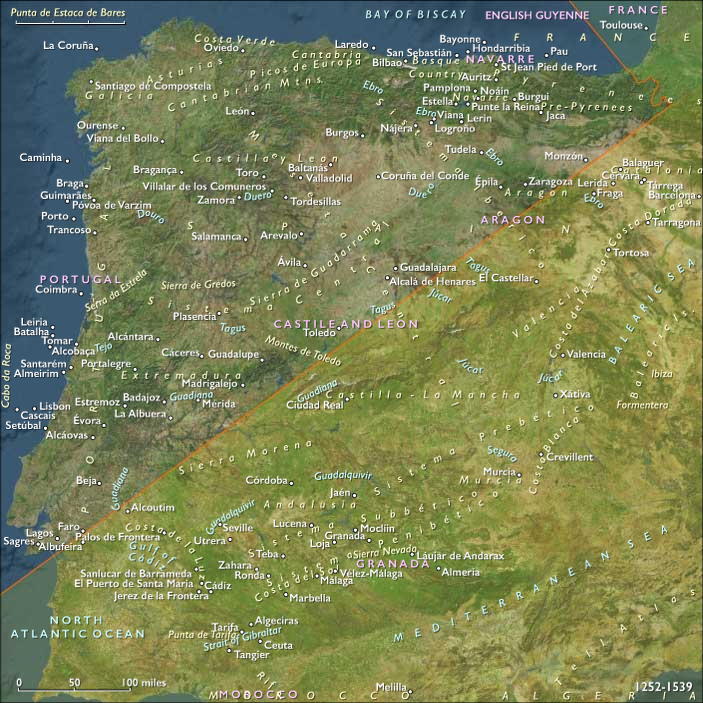
Years: 1252 - 1395
People
Groups
- Benedictines, or Order of St. Benedict
- Islam
- Portuguese people
- León, Kingdom of
- Burgundy, Duchy of
- Christians, Roman Catholic
- Portugal, (second) County of
- Hospitallers of St. John of Jerusalem
- Templar, Knights (Poor Knights of Christ and of the Temple of Solomon)
- Almohad Caliphate
- Portugal, Burgundian (Alfonsine) Kingdom of
- Santiago, Order of
- Calatrava, Order of
- Franciscans, or Order of St. Francis
- Calatrava, Order of
- Dominicans, or Order of St. Dominic
Topics
Subjects
Regions
Subregions