
Otto III is only twenty-one at the …
Years: 1002 - 1002
February
The emperor, dealing with a revolt against his reign in Italy in 1001, had sent word for Duke Henry of Bavaria to join him with reinforcements from Germany.
In the Ottonian dynasty, succession to the throne has been drawn from the Saxon branch, not the Bavarian line of which Henry is a member.
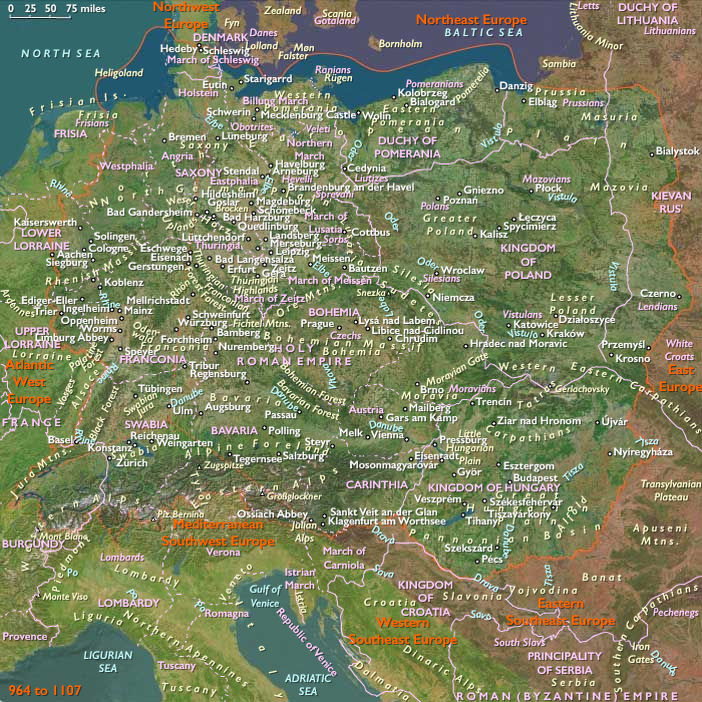
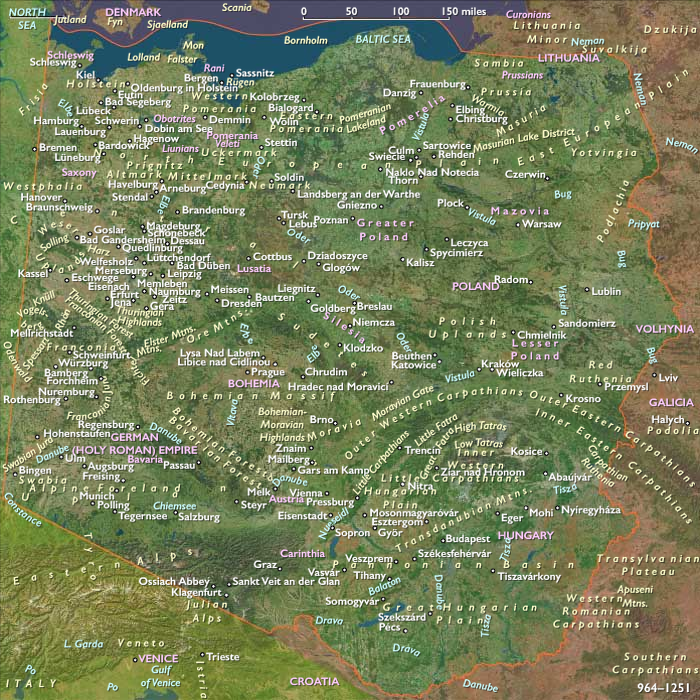
As the funeral procession moves through the Duchy of Bavaria in February 1002, Henry meets the procession in Polling, just north of the Alps.
To legitimize his claims, Henry demands Archbishop Heribert of Cologne give him the imperial regalia, chief among them being the Holy Lance.
Heribert, however, had sent these ahead of the procession, possibility out of distrust of Henry and possibly because he favors the succession of his relative Duke Herman II of Swabia as the next king.
In order to force Herman II to relinquish the Holy Lance to him, Henry imprisons the Archbishop and his brother the Bishop of Wurzburg.
With neither the symbols of imperial authority, the crown jewels, nor the cooperation of Heribert, Henry is unable to persuade the nobles attending Otto III's funeral procession to elect him as king.
Locations
People
- Boleslaw I Chrobry
- Eckard I
- Henry II, Holy Roman Emperor
- Heribert of Cologne
- Herman II
- Otto III
- Pope Sylvester II
Groups
- Polytheism (“paganism”)
- Prussians, Old, or Baltic (Western Balts)
- Germans
- Hungarian people
- Polabian Slavs (West Slavs)
- Christianity, Chalcedonian
- Papal States (Republic of St. Peter)
- Swabia, Duchy of
- Lusatia, Margraviate of
- Bavaria, Ottonian Duchy of
- Cologne, Electorate of
- German, or Ottonian (Roman) Empire
- Poland, Principality of
- Lutici (West Slavic Polabian tribe)
- Poles (West Slavs)
- Meissen, March of
- Hungary, Kingdom of
Topics
Commodoties
Subjects
Regions
Subregions
Related Events
Showing 10 events out of 51969 total
Years: 1002 - 1002
February
Locations
People
- Boleslaw I Chrobry
- Eckard I
- Henry II, Holy Roman Emperor
- Heribert of Cologne
- Herman II
- Otto III
- Pope Sylvester II
Groups
- Polytheism (“paganism”)
- Prussians, Old, or Baltic (Western Balts)
- Germans
- Hungarian people
- Polabian Slavs (West Slavs)
- Christianity, Chalcedonian
- Papal States (Republic of St. Peter)
- Swabia, Duchy of
- Lusatia, Margraviate of
- Bavaria, Ottonian Duchy of
- Cologne, Electorate of
- German, or Ottonian (Roman) Empire
- Poland, Principality of
- Lutici (West Slavic Polabian tribe)
- Poles (West Slavs)
- Meissen, March of
- Hungary, Kingdom of
Topics
Commodoties
Subjects
Regions
Subregions