
Braddock's expedition is to be part of …
Years: 1755 - 1755
April
Braddock's expedition is to be part of a massive British offensive against the French in North America this summer.
As commander-in-chief of the British Army in America, General Braddock will lead the main thrust against the Ohio Country with a column some twenty-one hundred strong.
His command consists of two regular line regiments, the 44th and 48th with about thirteen hundred and fifty men, along with about five hundred regular soldiers and militiamen from several British American colonies, and artillery and other support troops.
With these men, Braddock expects to seize Fort Duquesne easily, then push on to capture a series of French forts, eventually reaching Fort Niagara.
George Washington, just turned twenty-three, knows the territory and serves as a volunteer aide-de-camp to General Braddock.
Braddock's Chief of Scouts is Lieutenant John Fraser of the Virginia Regiment.
Fraser owns land at Turtle Creek, had been at Fort Necessity, and had served as Second-in-Command at Fort Prince George (renamed Fort Duquesne by the French), at the confluence of the Allegheny and Monongahela Rivers.
Braddock has mostly failed in his attempts to recruit native allies from those tribes not yet allied with the French; he has but eight Mingos with him, serving as scouts.
A number of natives in the area, notably Delaware leader Shingas, remain neutral; caught between two powerful European empires at war, the local natives cannot afford to be on the side of the loser.
They will decide based on Braddock's success or failure.
As commander-in-chief of the British Army in America, General Braddock will lead the main thrust against the Ohio Country with a column some twenty-one hundred strong.
His command consists of two regular line regiments, the 44th and 48th with about thirteen hundred and fifty men, along with about five hundred regular soldiers and militiamen from several British American colonies, and artillery and other support troops.
With these men, Braddock expects to seize Fort Duquesne easily, then push on to capture a series of French forts, eventually reaching Fort Niagara.
George Washington, just turned twenty-three, knows the territory and serves as a volunteer aide-de-camp to General Braddock.
Braddock's Chief of Scouts is Lieutenant John Fraser of the Virginia Regiment.
Fraser owns land at Turtle Creek, had been at Fort Necessity, and had served as Second-in-Command at Fort Prince George (renamed Fort Duquesne by the French), at the confluence of the Allegheny and Monongahela Rivers.
Braddock has mostly failed in his attempts to recruit native allies from those tribes not yet allied with the French; he has but eight Mingos with him, serving as scouts.
A number of natives in the area, notably Delaware leader Shingas, remain neutral; caught between two powerful European empires at war, the local natives cannot afford to be on the side of the loser.
They will decide based on Braddock's success or failure.
Locations
People
Groups
- Lenape or Lenni-Lenape (later named Delaware Indians by Europeans)
- Seneca (Amerind tribe)
- New France (French Colony)
- Shawnees, or Shawanos (Amerind tribe)
- France, (Bourbon) Kingdom of
- Ohio Country
- Pennsylvania, Province of (English Colony)
- Maryland, Province of (English Colony)
- Virginia (English Crown Colony)
- Britain, Kingdom of Great
- Ohio Company
- Mingo (Seneca-Cayuga Tribe of Oklahoma)
Topics
- Colonization of the Americas, French
- Colonization of the Americas, British
- French and Indian War
- Jumonville Glen, Battle of
- Braddock expedition
Commodoties
Subjects
Regions
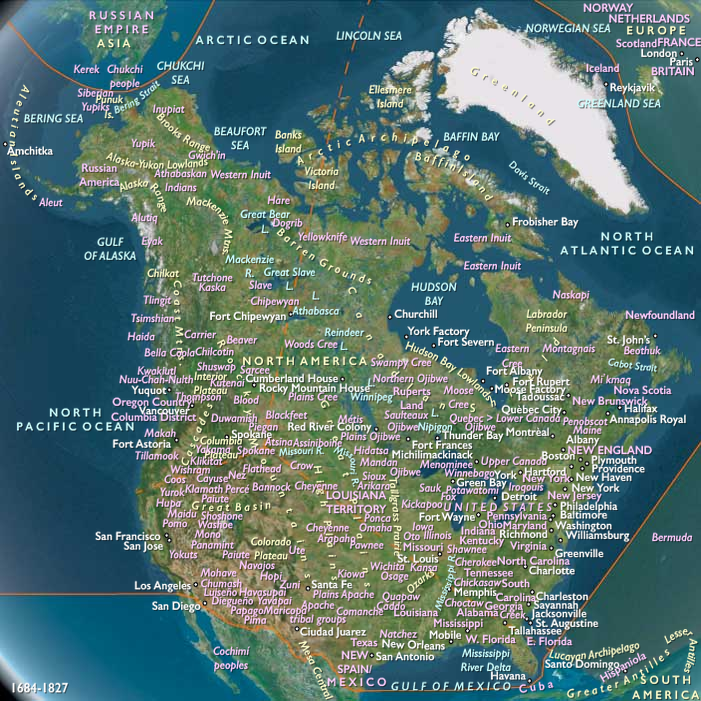
Subregions
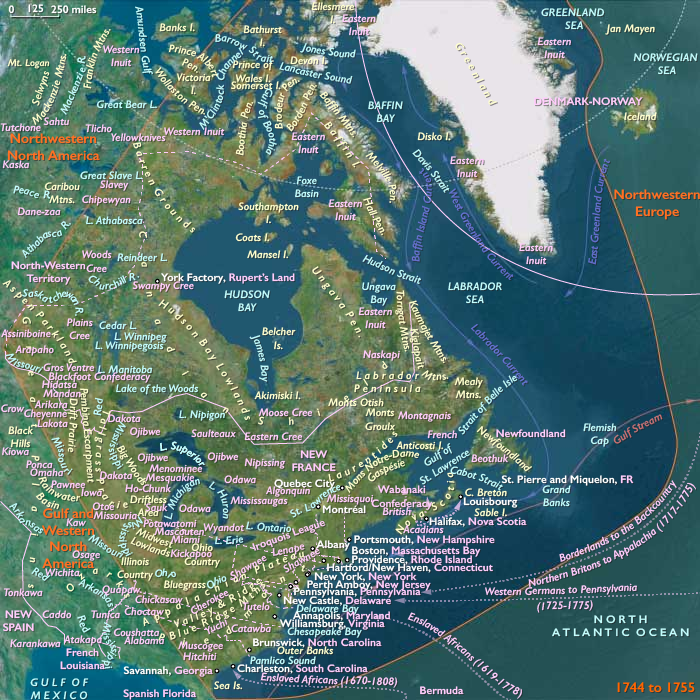
Related Events
Showing 10 events out of 26883 total
Years: 1755 - 1755
April
Locations
People
Groups
- Lenape or Lenni-Lenape (later named Delaware Indians by Europeans)
- Seneca (Amerind tribe)
- New France (French Colony)
- Shawnees, or Shawanos (Amerind tribe)
- France, (Bourbon) Kingdom of
- Ohio Country
- Pennsylvania, Province of (English Colony)
- Maryland, Province of (English Colony)
- Virginia (English Crown Colony)
- Britain, Kingdom of Great
- Ohio Company
- Mingo (Seneca-Cayuga Tribe of Oklahoma)
Topics
- Colonization of the Americas, French
- Colonization of the Americas, British
- French and Indian War
- Jumonville Glen, Battle of
- Braddock expedition
Commodoties
Subjects
Regions
Subregions