
The Expulsion and Forced Conversion of Jews …
Years: 1492 - 1503
The Expulsion and Forced Conversion of Jews in Portugal (1492–1497)
The Spanish expulsion of Jews in 1492 triggered a wave of Jewish migration to Portugal, where King John II initially allowed temporary asylum in exchange for payment. However, four years later, King Manuel I, pressured by Spain, ordered the expulsion or forced conversion of Jews and Muslims from Portugal, marking a dramatic shift in policy.
John II’s Admission of Spanish Jews (1492)
- Following the Alhambra Decree (May 1492) issued by Ferdinand and Isabella, which expelled all unconverted Jews from Spain, many Jewish families sought refuge in Portugal.
- A delegation of Spanish Jews offered 60,000 cruzados for the permanent admission of 600 wealthy familiesand a fee of 8 cruzados per head for others, who would be allowed to stay for eight months.
- John II agreed to these terms but imposed harsh conditions:
- The wealthy families were admitted permanently.
- The rest were allowed to stay temporarily, after which ships were to be provided for their departure.
- However, ships were arranged only to Tangier and Arzila (in Morocco), forcing many to remain stranded.
- Some Jewish children were taken from their families and sent to settle São Tomé, an island in the Gulf of Guinea, where many died from disease and harsh conditions.
The Expulsion and Forced Conversion Under Manuel I (1496–1497)
- John II died in 1495, and his successor, King Manuel I, initially welcomed Jews, valuing their skills and economic contributions.
- However, his marriage negotiations with Isabella and Ferdinand’s daughter, Isabella of Aragon, required him to expel all Jews and Muslims from Portugal as a condition.
- In 1496, Manuel I issued an edict of expulsion, ordering all unconverted Jews and Muslims to leave Portugal.
- Rather than allowing them to emigrate freely, Manuel sought to force conversions, leading to:
- Mass forced baptisms, particularly of Jewish children.
- Restrictions on emigration, with many Jews being trapped in Portugal.
- The creation of "New Christians" (Conversos or Marranos)—Jews who converted under pressure but often continued practicing Judaism in secret.
- Manuel promised that the Inquisition would not be established for 20 years, offering nominal protection to New Christians, though many faced persecution in later decades.
Consequences of the Expulsion and Forced Conversion
-
Portugal Lost a Highly Educated and Skilled Community
- Jewish communities had contributed significantly to finance, medicine, science, and trade.
- Their expulsion weakened Portugal’s intellectual and economic resources.
-
Conversos Became an Important Social Group
- Many Jews converted outwardly but continued to practice Judaism in secret.
- This led to the rise of crypto-Judaism in Portugal, which later became a target of the Portuguese Inquisition (established in 1536).
-
Mass Jewish Migration to the Ottoman Empire and North Africa
- Many Portuguese and Spanish Jews found refuge in the Ottoman Empire, where Sultan Bayezid II welcomed them.
- Others fled to Italy, the Netherlands, and the Middle East, forming Sephardic Jewish communities.
Conclusion: The End of Jewish Life in Medieval Portugal
The Jewish expulsions and forced conversions of 1492–1497 marked the end of open Jewish life in Portugal, despite centuries of flourishing Jewish culture and scholarship. Although many Jews remained as New Christians, Portugal’s policies ultimately mirrored those of Spain, aligning the two Iberian kingdoms in their pursuit of religious uniformity at the cost of diversity and economic prosperity.
Locations
People
Groups
- Jews
- Islam
- Muslims, Sunni
- Christians, Roman Catholic
- Aragón, Kingdom of
- Aragon, Crown of
- Castile, Crown of
- Portugal, Avizan (Joannine) Kingdom of
Topics
Commodoties
Subjects
- Commerce
- Products
- Watercraft
- Labor and Service
- Conflict
- Mayhem
- Faith
- Government
- Custom and Law
- Technology
Regions
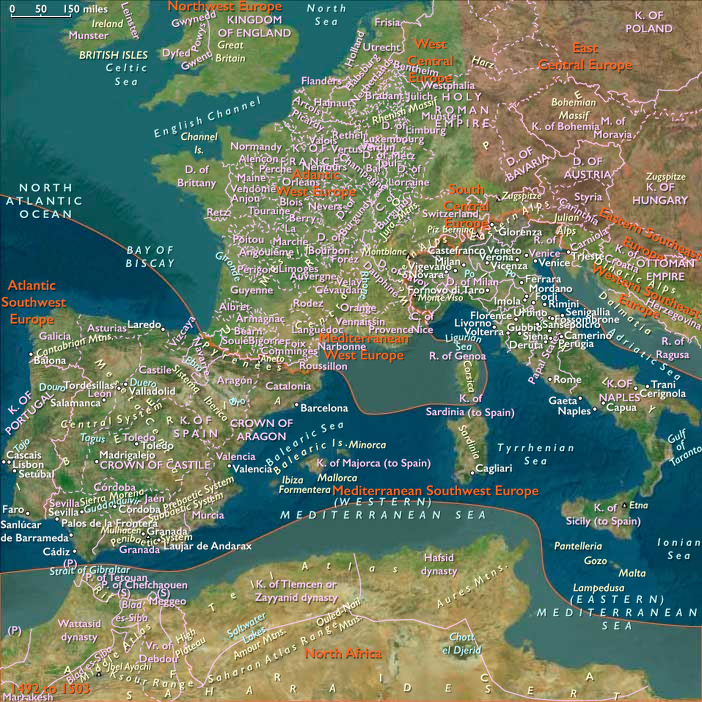
Subregions
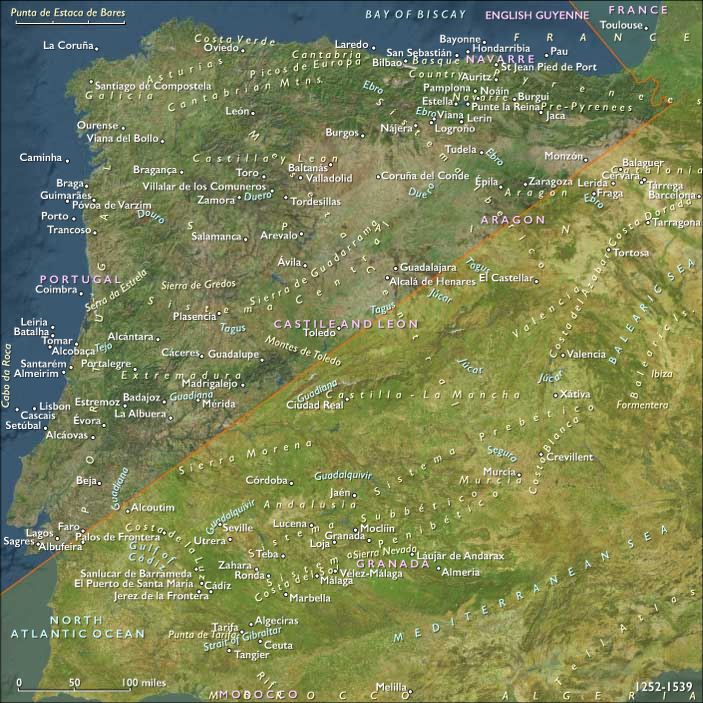
Related Events
Showing 10 events out of 40412 total
Years: 1492 - 1503
Locations
People
Groups
- Jews
- Islam
- Muslims, Sunni
- Christians, Roman Catholic
- Aragón, Kingdom of
- Aragon, Crown of
- Castile, Crown of
- Portugal, Avizan (Joannine) Kingdom of
Topics
Commodoties
Subjects
- Commerce
- Products
- Watercraft
- Labor and Service
- Conflict
- Mayhem
- Faith
- Government
- Custom and Law
- Technology
Regions
Subregions