
Kōgyoku, Emperor Kōtoku's elder sister, is restored …
Years: 654 - 654
November
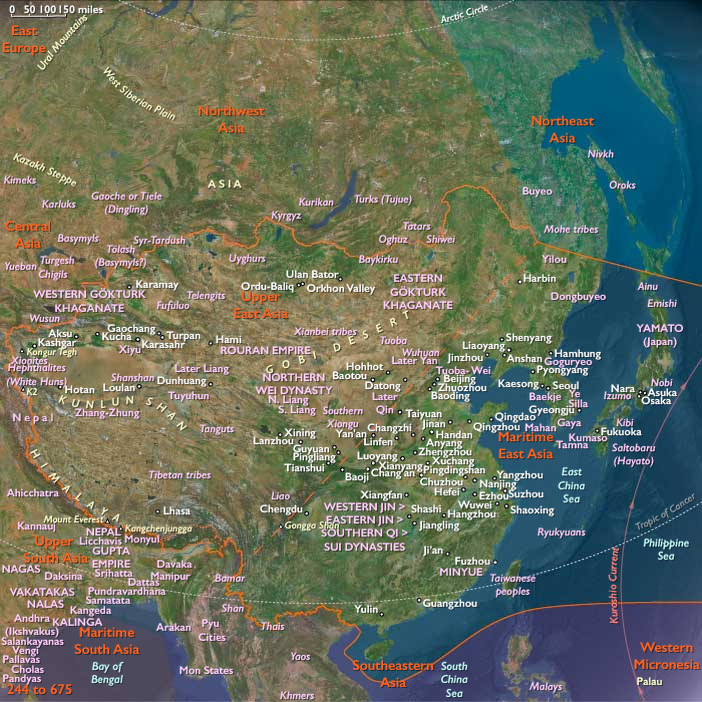
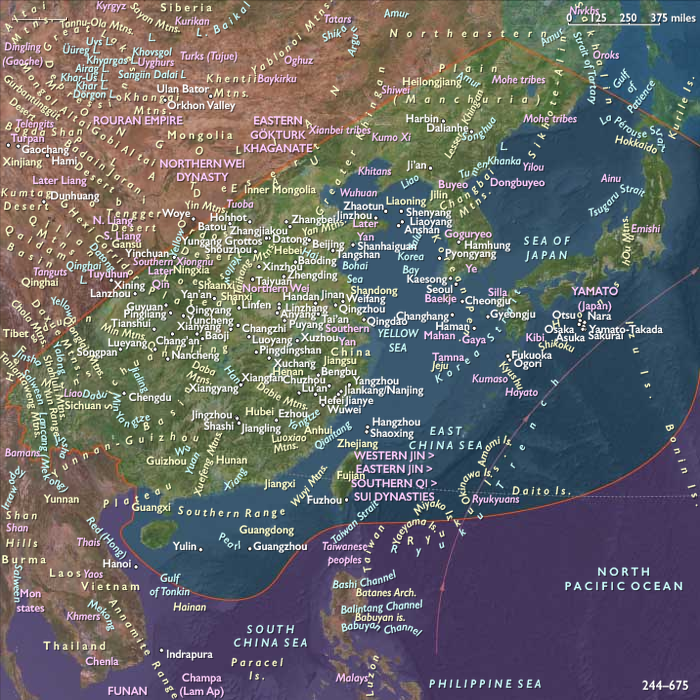
Kōgyoku, Emperor Kōtoku's elder sister, is restored on the throne under the name Saimei when her brother dies on November 24, 654, after a nine-year reign.
Nakatomi no Kamatari, interior minister (naidaijin) of Japan, is granted the Shikwan (the Purple Cap).
Locations
People
Groups
Topics
Subjects
Regions
Subregions
Related Events
Showing 10 events out of 56368 total
Years: 654 - 654
November
Locations
People
Groups
Topics
Subjects
Regions
Subregions