
Rhys ap Gruffydd, Prince of Deheubarth, had …
Years: 1168 - 1168
Rhys ap Gruffydd, Prince of Deheubarth, had had other reasons for rebellion when all the Welsh princes had united in 1164 in an uprising against Henry II, for he had returned to Deheubarth from England to find that the neighboring Norman lords were threatening Cantref Mawr.
His nephew, Einion ab Anarawd, who was the captain of his bodyguard, had been murdered at the instigation of Roger de Clare, Earl of Hertford.
The murderer had been given the protection of the Clares in Ceredigion.
Rhys had first appealed to the king to intercede; when this failed, he had invaded Ceredigion and recaptured all of it apart from the town and castle of Cardigan.
The Welsh revolt had led in 1165 to another invasion of Wales by King Henry.
Henry had attacked Gwynedd first, but instead of following the usual invasion route along the north coast he attacked from the south, following a route over the Berwyn hills.
He was met by the united forces of the Welsh princes, led by Owain Gwynedd and including Rhys.
Torrential rain had forced Henry's army to retreat in disorder without fighting a major battle, and Henry had vented his spleen on the hostages, having Rhys's son Maredudd blinded.
Rhys's other son, Hywel, was not among the victims.
Rhys had returned to Deheubarth where he captured and burned Cardigan Castle.
He had allowed the garrison to depart, but held the castellan, Robert Fitz-Stephen, as a prisoner.
Shortly afterwards, Rhys captured Cilgerran castle.
The King of Leinster, Diarmait Mac Murchada, deprived of his kingdom by the High King of Ireland, had asked Rhys ap Gruffydd in 1167 to release Robert Fitz-Stephen from captivity to take part in an expedition to Ireland.
Rhys had not obliged at the time, and the exiled king had gone from here to England and Aquitaine in France in order to have the consent of King Henry II of England to recruit soldiers.
Rhys had released Fitz-Stephen the following year.
Locations
People
Groups
- Irish people
- Leinster (Laigin), Irish kingdom of
- Gwynedd, Welsh Kingdom of
- Welsh people
- Ireland, medieval
- Dublin, Kingdom of
- Aquitaine, (Angevin) Duchy of
- Christians, Roman Catholic
- Anglo-Normans
- Deheubarth, Welsh Principality of
- England, (Plantagenet, Angevin) Kingdom of
- Gwynedd, Welsh Principality of
Commodoties
Subjects
Regions
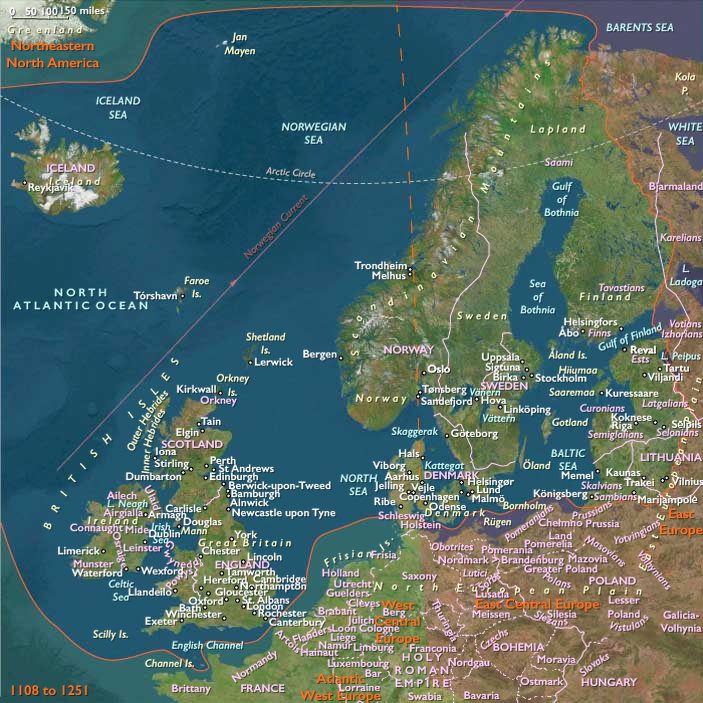
Subregions
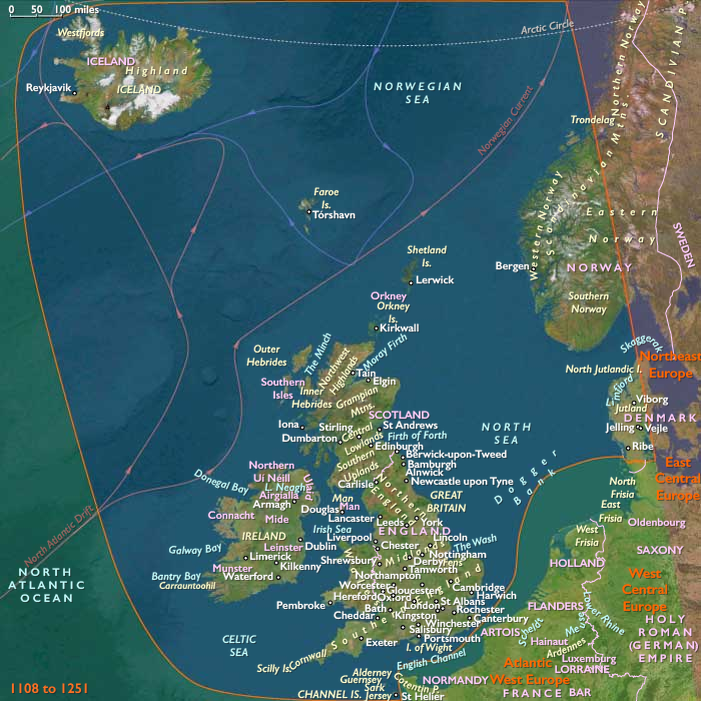
Related Events
Showing 10 events out of 48423 total
Years: 1168 - 1168
Locations
People
Groups
- Irish people
- Leinster (Laigin), Irish kingdom of
- Gwynedd, Welsh Kingdom of
- Welsh people
- Ireland, medieval
- Dublin, Kingdom of
- Aquitaine, (Angevin) Duchy of
- Christians, Roman Catholic
- Anglo-Normans
- Deheubarth, Welsh Principality of
- England, (Plantagenet, Angevin) Kingdom of
- Gwynedd, Welsh Principality of
Commodoties
Subjects
Regions
Subregions