
Pope Urban II, at the Council of …
Years: 1095 - 1095
November
Pope Urban II, at the Council of Piacenza, had received the envoys of Alexios I Komnenos, the emperor in Constantinople, sent to the west in early 1095 to request military assistance against the Seljuq Turks.
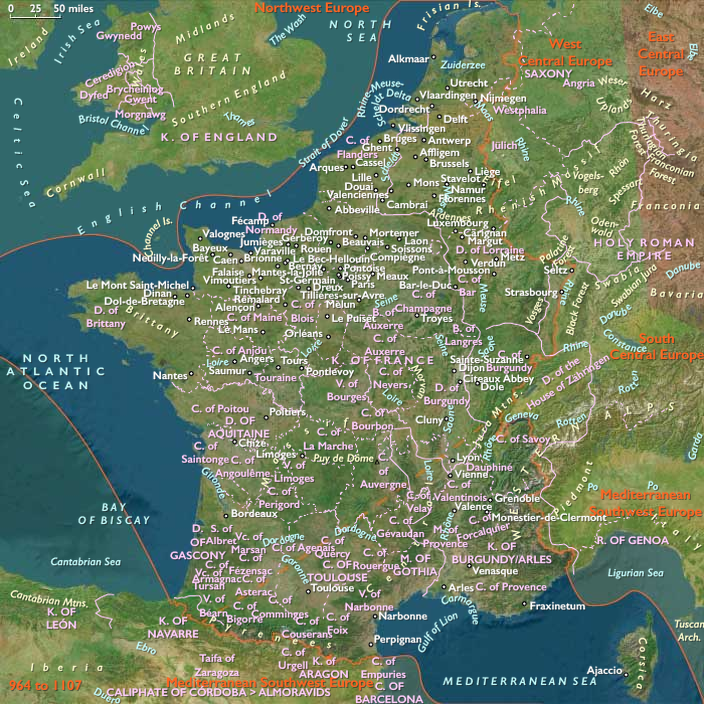
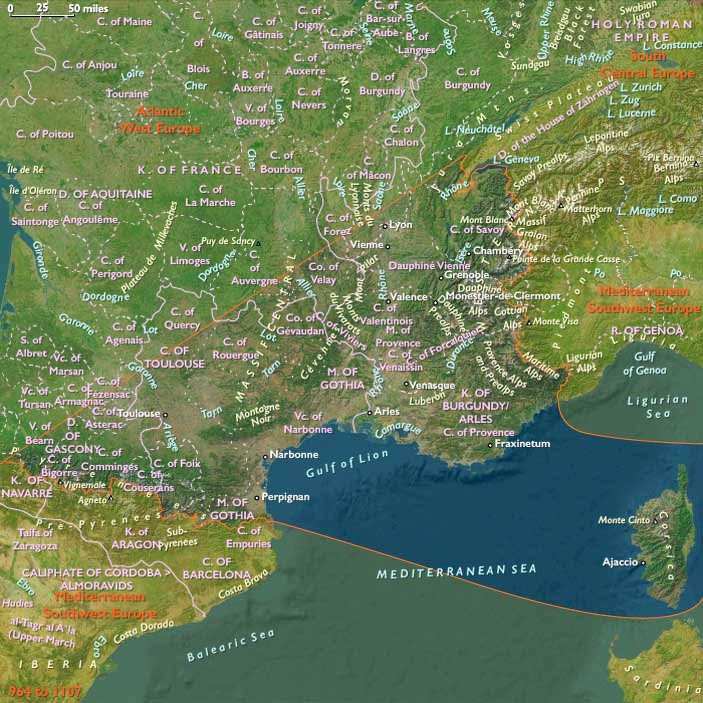
In November of this year, Urban calls the Council of Clermont to discuss the matter further.
In convoking the council, Urban urges the bishops and abbots, whom he addresses directly, to bring with them the prominent lords in their provinces.
Attended by nearly three hundred clerics from throughout France, the Council lasts from November 19 to November 28.
Urban discusses Cluniac reforms of the Church, and also extends the excommunication of Philip I of France for his adulterous remarriage to Bertrade of Montfort.
On November 27, Urban speaks for the first time about the problems in the east.
He promotes Western Christians' fight against the Muslims who had occupied the Holy Land and are attacking the Eastern Roman Empire, exhorting Christians to aid the Christian East and to halt the desecration of the holy places; he emphasizes the moral duty of preserving the "Peace of God" at home.
Here, amid a crowd of thousands who have come to hear his words, he urges all present to take up arms under the banner of the Cross and launch a holy war to recover Jerusalem and the east from the 'infidel' Muslims.
Indulgences are to be granted to all those who take part in the great enterprise.
Many promise to carry out the Pope's command, and word of the Crusade will soon spread across western Europe.
Appealing for volunteers to set out for Jerusalem, he offers the incentive of remission of ecclesiastical penances, or plenary indulgences.
On the last day of the council, Urban II appoints Bishop Adhemar of Le Puy and Count Raymond IV of Toulouse to lead the crusade to the Holy Land.
Locations
People
- Adhemar of Le Puy
- Alexios I Komnenos
- Antipope Clement III
- Boniface del Vasto
- Conrad II of Italy
- Eupraxia of Kiev
- Henry IV, Holy Roman Emperor
- Pope Urban II
- Raymond IV
- Welf II
Groups
- Arab people
- Berber people (also called Amazigh people or Imazighen, "free men", singular Amazigh)
- Jews
- Lombards (West Germanic tribe)
- Saxons
- Christians, Armenian Apostolic Orthodox
- Christians, Miaphysite (Oriental Orthodox)
- Coptic Orthodox Church of Alexandria
- Greeks, Medieval (Byzantines)
- Islam
- Muslims, Sunni
- Syrian people
- Saxony, Duchy of
- Tuscany, Margravate of
- Normans
- German, or Ottonian (Roman) Empire
- Italy, Kingdom of (Holy Roman Empire)
- Turkmen people
- Fatimid Caliphate
- Pataria
- Seljuq Empire (Isfahan)
- Christians, Roman Catholic
- Christians, Eastern Orthodox
- Bavaria, Welf Duchy of
- Roman Empire, Eastern: Komnenos dynasty, restored
Topics
Commodoties
Subjects
Regions
Subregions
Years: 1095 - 1095
November
Locations
People
- Adhemar of Le Puy
- Alexios I Komnenos
- Antipope Clement III
- Boniface del Vasto
- Conrad II of Italy
- Eupraxia of Kiev
- Henry IV, Holy Roman Emperor
- Pope Urban II
- Raymond IV
- Welf II
Groups
- Arab people
- Berber people (also called Amazigh people or Imazighen, "free men", singular Amazigh)
- Jews
- Lombards (West Germanic tribe)
- Saxons
- Christians, Armenian Apostolic Orthodox
- Christians, Miaphysite (Oriental Orthodox)
- Coptic Orthodox Church of Alexandria
- Greeks, Medieval (Byzantines)
- Islam
- Muslims, Sunni
- Syrian people
- Saxony, Duchy of
- Tuscany, Margravate of
- Normans
- German, or Ottonian (Roman) Empire
- Italy, Kingdom of (Holy Roman Empire)
- Turkmen people
- Fatimid Caliphate
- Pataria
- Seljuq Empire (Isfahan)
- Christians, Roman Catholic
- Christians, Eastern Orthodox
- Bavaria, Welf Duchy of
- Roman Empire, Eastern: Komnenos dynasty, restored
Topics
Commodoties
Subjects
Regions
Subregions