
The 1383–1385 Crisis: The Struggle for Portugal’s …
Years: 1372 - 1383
The 1383–1385 Crisis: The Struggle for Portugal’s Throne
The death of King Fernando I of Portugal in 1383 triggered a succession crisis that threatened the independence of Portugal. His only heir, Beatriz of Portugal, was married to Juan I of Castile, raising fears that the Portuguese crown would fall under Castilian rule.
The Unpopular Regency of Leonor Teles
According to the marriage writ, until Beatriz and Juan I had a child, Portugal would be ruled by a regency under Fernando’s widow, Queen Leonor Teles. However, Leonor was deeply unpopular:
- She was a Castilian by birth, fueling Portuguese fears of Castilian dominance.
- Many believed she intended to surrender Portugal’s independence to Castile.
- Portuguese nobles and urban elites saw her rule as illegitimate and dangerous.
João of Avis and the Assassination of Count Andeiro (December 1383)
The most powerful rival to Leonor’s rule was João, Master of the Order of Avis, an illegitimate son of King Pedro I (r. 1357–1367) and a staunch defender of Portuguese independence.
- On December 6, 1383, João led a coup in Lisbon, storming the royal palace.
- He personally killed Count Andeiro, a Galician noble who had served as Fernando’s chancellor and was widely despised as a Castilian agent.
- With Count Andeiro dead, Queen Leonor fled to Alenquer, a town traditionally held by Portugal’s queens.
Juan I of Castile Invades (January 1384) and Leonor Abdicates
From Alenquer, Leonor Teles appealed to Juan I of Castile for military aid. In January 1384, the Castilian king invaded Portugal, intent on securing his wife's claim to the Portuguese throne.
However, Leonor’s position became untenable, and she was forced to abdicate as regent. After her removal, Juan I took direct control of the Castilian war effort.
João of Avis Proclaimed Defender of Portugal
In Lisbon, the people rejected Castilian rule and proclaimed João of Avis as "Governor and Defender of the Realm" (Regedor e Defensor do Reino). He quickly:
- Mobilized Portuguese forces to resist Castile.
- Sent an embassy to England to recruit soldiers and secure support, leveraging the Anglo-Portuguese allianceformalized in 1386.
This marked the beginning of the Portuguese Interregnum (1383–1385), culminating in João’s victory at the Battle of Aljubarrota (1385) and his ascension as King João I, securing Portugal’s independence from Castile and founding the House of Avis.
Locations
People
Groups
- Islam
- Portuguese people
- Castillian people
- Christians, Roman Catholic
- English people
- Almohad Caliphate
- Portugal, Burgundian (Alfonsine) Kingdom of
- Castile, Crown of
Topics
Subjects
Regions
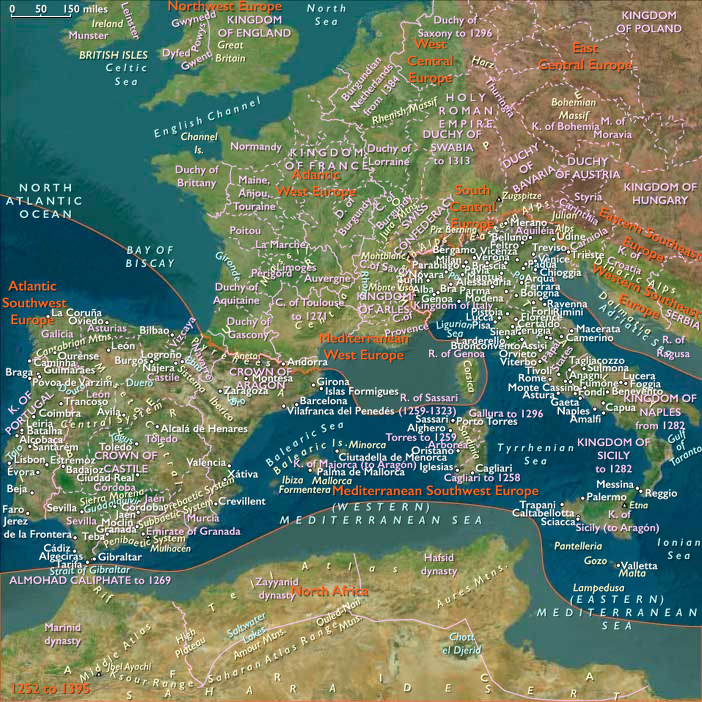
Subregions
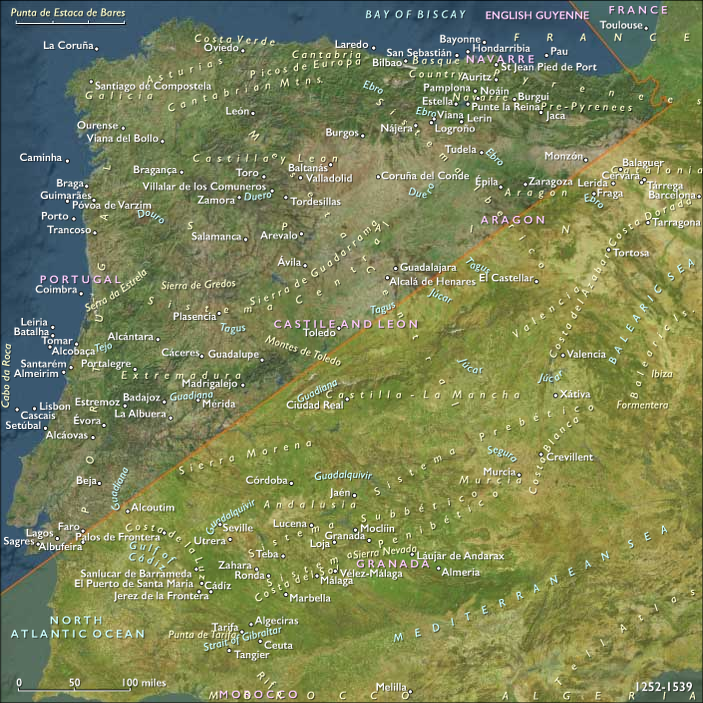
Years: 1372 - 1383
Locations
People
Groups
- Islam
- Portuguese people
- Castillian people
- Christians, Roman Catholic
- English people
- Almohad Caliphate
- Portugal, Burgundian (Alfonsine) Kingdom of
- Castile, Crown of
Topics
Subjects
Regions
Subregions