
Wheel-formed pottery begins replacing crude hand-modeled ware …
Years: 609BCE - 598BCE
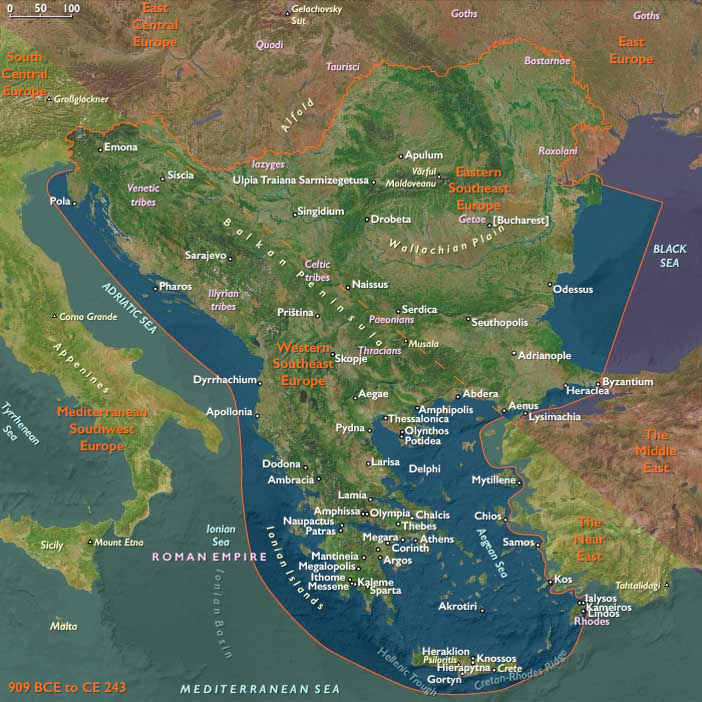
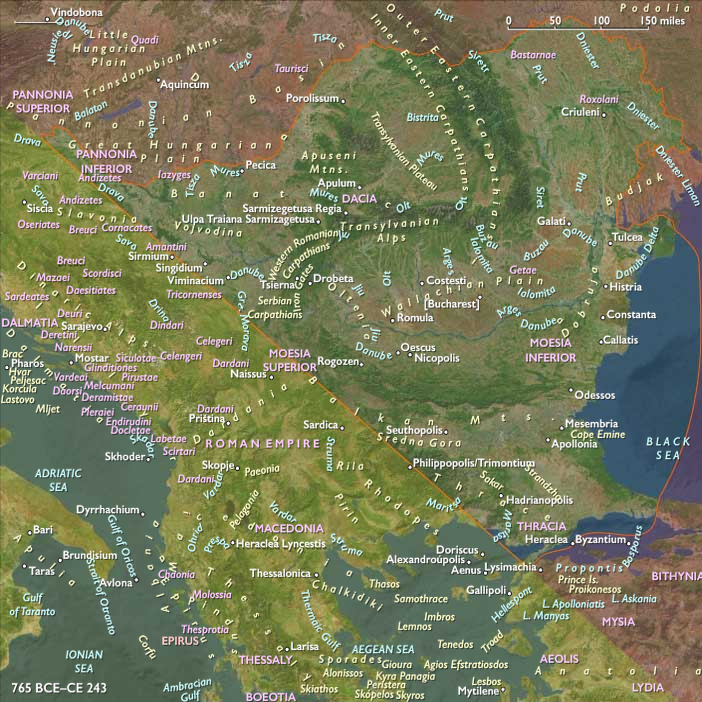
Wheel-formed pottery begins replacing crude hand-modeled ware in the coastal region of Thrace toward the end of the seventh century BCE.
The Thracians, who are of Indo-European stock and language, are superior fighters; only their constant political fragmentation prevents their overrunning the lands around the northeastern Mediterranean.
Although Greek and Roman historians characterize the Thracian tribes as primitive partly because they live in simple, open villages, the Thracians in fact have an advanced culture that is especially noted for its poetry and music.
The use of Greek and Macedonian coins spreads through the area, and the Thracians exchange grain, cattle, fish, honey, and slaves with the Greeks for oils, wines, precious materials, jewelry, and high-quality pottery.
By the sixth century BCE, this trade is affording the Thracian ruling class many luxuries.
Locations
Groups
Topics
Commodoties
- Fish and game
- Weapons
- Gem materials
- Domestic animals
- Grains and produce
- Ceramics
- Strategic metals
- Slaves
- Sweeteners
- Beer, wine, and spirits
- Manufactured goods
- Land
Subjects
- Origins
- Commerce
- Environment
- Labor and Service
- Fashion
- Decorative arts
- Conflict
- Faith
- Government
- Technology
Regions
Subregions
Related Events
Showing 1 events out of 1 total
Years: 609BCE - 598BCE
Locations
Groups
Topics
Commodoties
- Fish and game
- Weapons
- Gem materials
- Domestic animals
- Grains and produce
- Ceramics
- Strategic metals
- Slaves
- Sweeteners
- Beer, wine, and spirits
- Manufactured goods
- Land
Subjects
- Origins
- Commerce
- Environment
- Labor and Service
- Fashion
- Decorative arts
- Conflict
- Faith
- Government
- Technology
Regions
Subregions