
Western West Indies (820 – 963 CE): …
Years: 820 - 963
Western West Indies (820 – 963 CE): Ostionoid Settlements, Canoe Corridors, and the Western Gateways
Geographic and Environmental Context
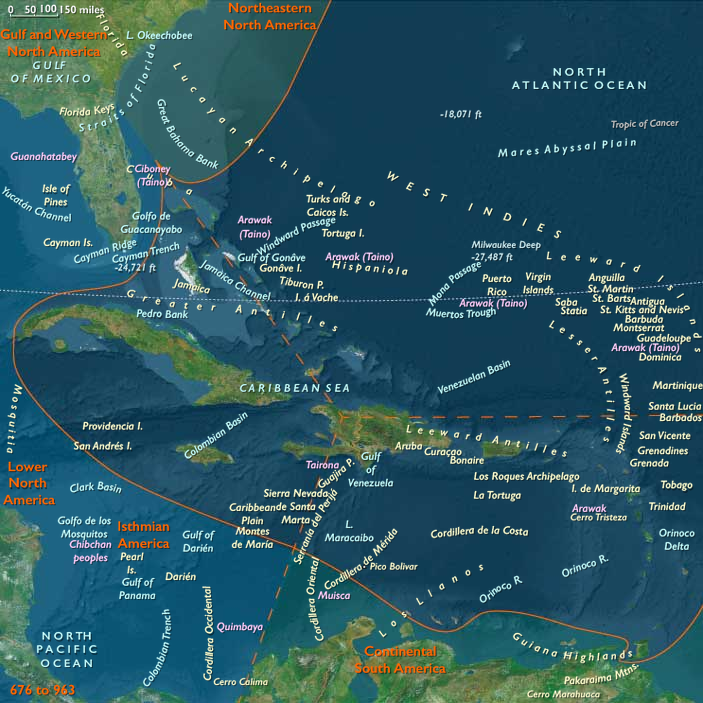
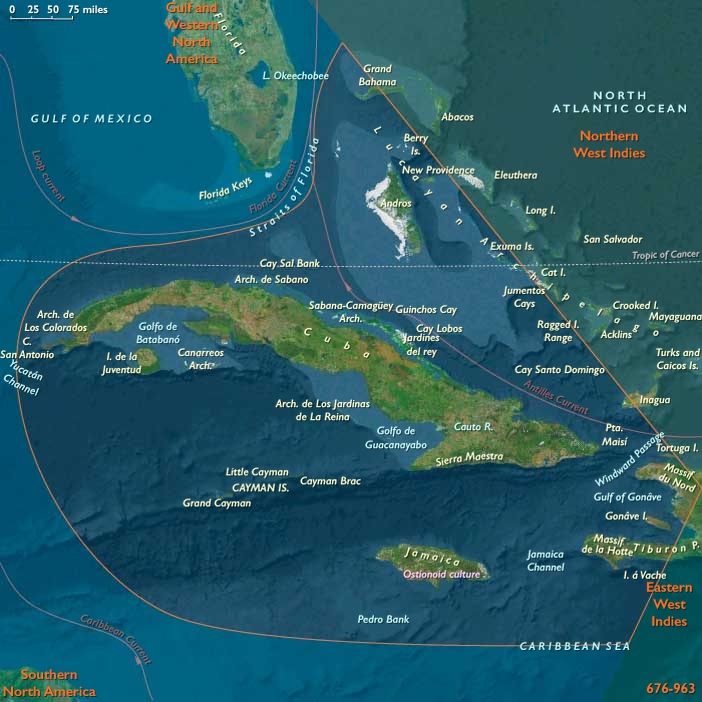
The Western West Indies includes Cuba and its surrounding islands, Jamaica, the Cayman Islands, and western Haiti — including Tortuga Island, the Massif du Nord’s western flank, the Gonâve Gulf and Peninsula, and Port-de-Paix as its principal coastal node.
-
Cuba, the largest island in the Caribbean, offered broad alluvial plains (notably in the west and central valleys), karst uplands, and extensive coastlines.
-
Jamaica provided fertile volcanic soils and mountain-fed rivers.
-
Western Haiti, with the Massif du Nord, Gonâve Gulf, and Tortuga, was a crossroads between Hispaniola’s interior valleys and the northern Caribbean sea-lanes.
-
The Caymans, smaller and reef-fringed, offered turtle-rich waters but few permanent settlements in this early period.
Climate and Environmental Shifts
-
Tropical maritime climate, moderated by trade winds, with abundant rainfall in Cuba and Jamaica.
-
Western Hispaniola’s rainfall was variable, with fertile pockets along rivers and more arid rain-shadow zones.
-
Hurricanes periodically struck the northern coasts, shaping settlement dispersal.
Societies and Political Developments
-
Populations belonged to the Ostionoid cultural horizon, precursors to the Taíno.
-
Settlement was organized into hamlets of bohíos with incipient plazas, typically sited on river terraces and coastal flats.
-
Western Haiti (around Port-de-Paix, Tortuga, and the Massif du Nord) served as a canoe embarkation point to Cuba and Jamaica, making it a cultural hinge.
-
Cuba was still sparsely populated in its western reaches but saw growing Ostionoid presence in river valleys.
-
Jamaica’s first substantial Ostionoid settlements appeared in this age, linking it directly to Hispaniola and Cuba.
-
Political organization remained kin-based, with leadership vested in village elders rather than hereditary caciques.
Economy and Trade
-
Conuco horticulture in Cuba, Jamaica, and western Hispaniola produced cassava, sweet potato, beans, peppers, and peanuts.
-
Fishing and hunting: reef and lagoon harvests, turtles, manatees, birds, and small game.
-
Canoe-borne exchange:
-
Western Hispaniola exported cassava bread, stone celts, and cotton thread.
-
Cuba provided hardwoods, shell artifacts, and fertile conuco produce.
-
Jamaica contributed timber, feathers, and small quantities of cassava.
-
Caymans served primarily as turtle-fishing stations within this circuit.
-
Subsistence and Technology
-
Cassava processing used griddles and presses to remove toxins, yielding transportable bread.
-
Conucos (raised-mound fields) enhanced soil fertility.
-
Fishing technology: traps, nets, shell/bone hooks.
-
Canoes: dugouts, some large enough for dozens of paddlers, enabling crossings between Cuba, Jamaica, and Hispaniola.
-
Ceramics: Ostionoid red-on-buff wares with simple incised designs, transitioning toward Meillacoid styles.
Movement and Interaction Corridors
-
Windward Passage: linked western Hispaniola and eastern Cuba.
-
Jamaica Channel: tied Cuba to Jamaica through western Hispaniola nodes.
-
Old Bahama Channel: indirectly connected Cuba and Tortuga with the northern Bahamian banks.
-
Cayman waters: seasonal resource zones within the larger canoe network.
Belief and Symbolism
-
Animist traditions honored zemí spirits of rivers, caves, and fertility.
-
Ritual caves in Cuba and Haiti housed offerings of shell and stone.
-
Ancestor veneration: burials included shell ornaments and ochre.
-
Early ritual seats and carved stones foreshadowed the ceremonial life of later Taíno chiefdoms.
Adaptation and Resilience
-
Dual economies: root-crop horticulture plus reef/turtle harvests buffered communities against storms.
-
Dispersed settlement along multiple coastal nodes reduced vulnerability to hurricanes.
-
Archipelagic exchange ensured that shortages in one zone (e.g., arid Haiti) could be offset by imports from Cuba or Jamaica.
Long-Term Significance
By 963 CE, the Western West Indies had emerged as a canoe crossroads:
-
Western Hispaniola (Port-de-Paix, Tortuga) acted as the hinge between Cuba, Jamaica, and Hispaniola’s north.
-
Cuba and Jamaica saw Ostionoid expansion of conuco horticulture and ritual cave use.
-
Inter-island exchange was consolidating the cultural and economic web that would mature into Taíno cacicazgos by the 11th–12th centuries.
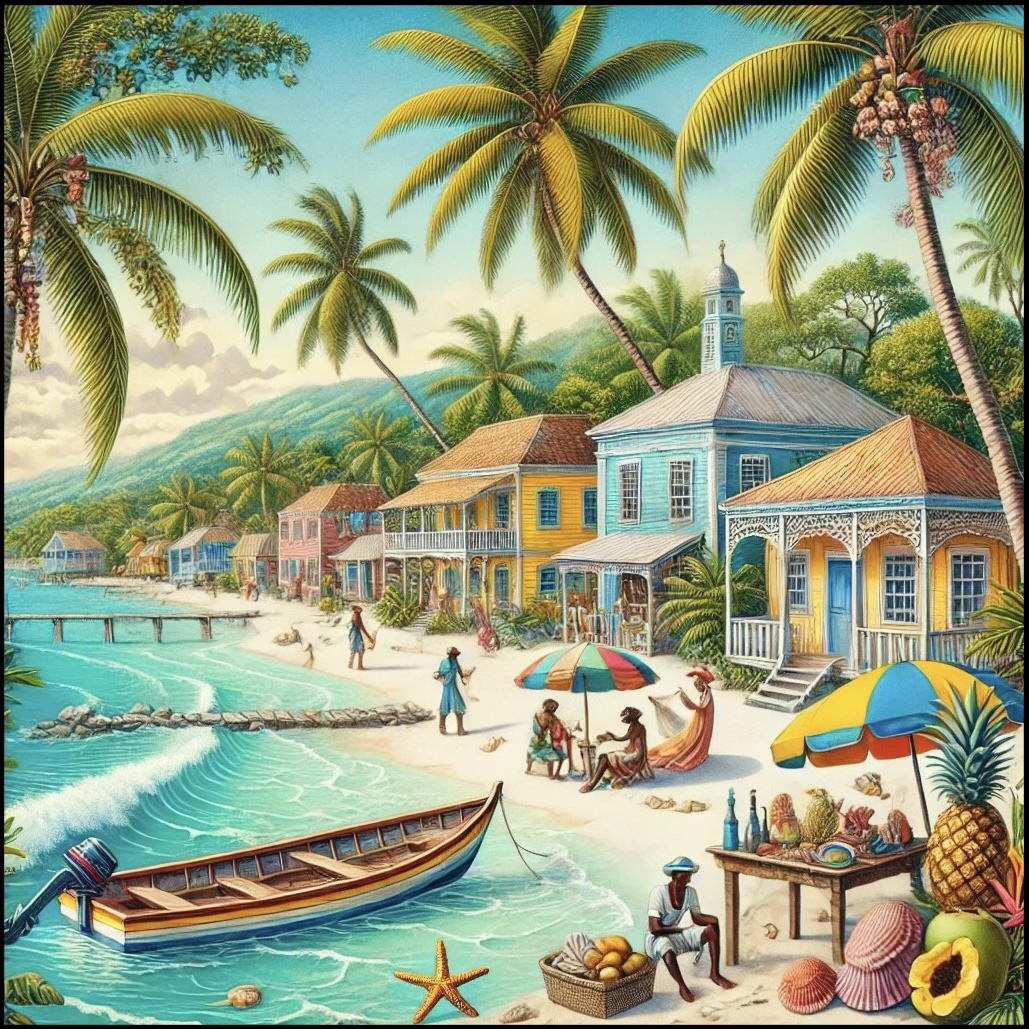
Western West Indies (with civilization) ©2024-25 Electric Prism, Inc. All rights reserved.
Groups
Commodoties
Subjects
Regions
Subregions
Years: 820 - 963
Western West Indies (with civilization) ©2024-25 Electric Prism, Inc. All rights reserved.
Groups
Commodoties
Subjects
Regions
Subregions