
Eastern Southeast Europe (49,293 – 28,578 …
Years: 49293BCE - 28578BCE
Eastern Southeast Europe (49,293 – 28,578 BCE) Upper Pleistocene I — Ice-Edge Steppes, River Terraces, and Cave Lifeways
Geographic and Environmental Context
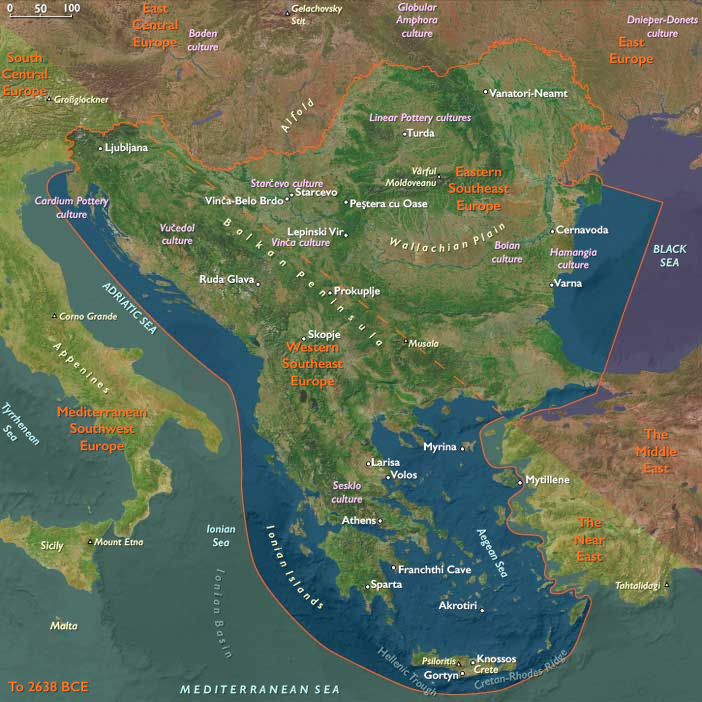
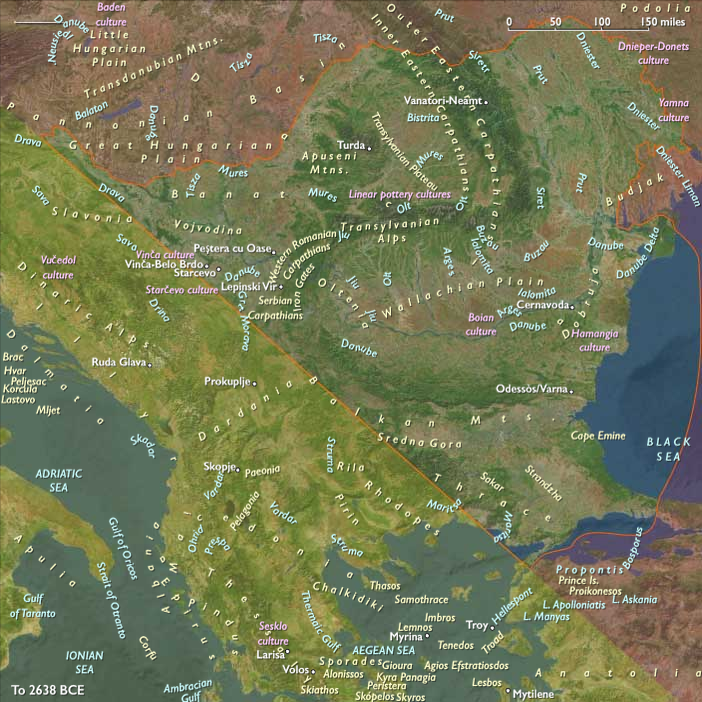
Eastern Southeast Europe includes Turkey-in-Europe (Thrace); Greece’s Thrace; Bulgaria (except its southwest); Romania & Moldova; northeastern Serbia; northeastern Croatia; extreme northeastern Bosnia & Herzegovina.
-
Anchors: Lower Danube terraces and loess bluffs, Iron Gates gorges (NE Serbia–Romania), Thracian Plain margins, Dobruja uplands, Carpathian forelands.
-
Periglacial steppe–tundra covered plains; conifer pockets in sheltered valleys; Black Sea level sat far below modern.
Climate & Environmental Shifts
-
Last Glacial Maximum: cold, arid, windy; braided rivers; expanded loess mantles; seasonal ice on the Danube margins.
Subsistence & Settlement
-
Foragers hunted mammoth, bison, horse, reindeer on terrace shoulders; fishing and waterfowl exploited seasonally.
-
Camps in loess promontories and caves/rock shelters; hearths, butchery floors, windbreaks.
Technology & Material Culture
-
Blade–microblade toolkits; burins/scrapers; bone/antler points; eyed needles (tailored furs).
-
Ornaments (pierced teeth, shell); broad ochre use.
Movement & Interaction Corridors
-
Lower Danube trunkway; Iron Gates as winter refugium and crossing; steppe corridors across Dobruja to the Black Sea shelf.
Cultural & Symbolic Expressions
-
Engraved bone/ivory animal imagery; ochred burials imply shared Upper Paleolithic symbolism with the wider Eurasian north.
Environmental Adaptation & Resilience
-
High mobility between river–steppe–shelter niches; layered clothing and fuel caching enabled deep-winter occupation.
Topics
Commodoties
Subjects
Regions
Subregions
Related Events
Showing 10 events out of 69706 total
Years: 49293BCE - 28578BCE
Topics
Commodoties
Subjects
Regions
Subregions