
Western Southeast Europe (1252 – 1395 CE): …
Years: 1252 - 1395
Western Southeast Europe (1252 – 1395 CE): Serbian Zenith, Ragusan Republic, and Adriatic–Danubian Crossroads
Geographic and Environmental Context
Western Southeast Europe includes Greece (outside Thrace), Albania, Montenegro, North Macedonia, Kosovo, most of Bosnia, southwestern Serbia, most of Croatia, and Slovenia.
-
Coastal lowlands and islands along the Adriatic (Dalmatia, the Ionian isles) met the Dinaric and Pindus mountains’ karst and upland pastures.
-
Interior corridors—Morava–Vardar, Drina–Sava, and the Via Egnatia from Dyrrachium (Durres) to Thessaloniki—linked the Aegean and Adriatic to the central Balkans.
-
River valleys and Mediterranean basins of Attica, Boeotia, Peloponnese, and Epiros anchored Byzantine agrarian themes.
Climate and Environmental Shifts
-
Early Little Ice Age (~1300) brought cooler, more variable seasons; the Black Death (1348–1350) hit ports and mining towns hard, with uneven recovery afterward.
Societies and Political Developments
-
Serbia: Stefan Uroš IV Dušan (r. 1331–1355) forged a vast empire over Macedonia, Epirus, Thessaly, styled “Emperor of Serbs and Greeks” (1346); promulgated Dušan’s Code (1349/1354). Post-1355, magnate fragmentation; Prince Lazar’s coalition fell at Kosovo Polje (1389); Ottomans advanced up the Vardar–Morava axis.
-
Bosnia: Ban/King Tvrtko I (r. 1353–1391) expanded into Hum (Herzegovina) and coastal tracts; royal title claimed in 1377; silver mining underwrote power.
-
Croatia & Dalmatia: after the Treaty of Zadar (1358), Ragusa (Dubrovnik) became effectively independent as a republic under Hungarian suzerainty; Venice retained enclaves but lost most Dalmatia for a time.
-
Ragusa codified the Statute, developed consular networks to Alexandria, Constantinople, Apulia, and became a premier brokerage hub.
-
Slovenia & inland Croatia: Habsburgs consolidated Carniola, Styria; towns like Ljubljana and Zagreb grew.
-
Greek states (Epirus, Achaea, Athens) persisted in fragmented form, increasingly pressured by Ottomans late in the century.
Economy and Trade
-
Mining & coinage: Novo Brdo, Rudnik, Srebrenica supplied silver; Serbian dinars and Ragusan issues circulated.
-
Adriatic trade: Ragusan fleets exported Balkan silver, wax, leather; imported Italian cloth, salt, and spices; Dalmatian communes shipped timber and grain inland.
-
Agrarian base: grain–vine–olive belts on coasts; transhumance in uplands; river valleys fed internal markets.
Subsistence and Technology
-
Fortified cities (walls of Dubrovnik, Zadar, Kotor); castles protected mining roads.
-
Shipyards turned out cogs and galleys; notarial and insurance instruments stabilized long-distance trade.
Movement and Interaction Corridors
-
Adriatic sea-lanes (Ragusa–Kotor–Split–Zadar ⇄ Venice–Apulia–Ancona).
-
Silver roads from Bosnia/Serbia to Ragusa/Dalmatia.
-
Vardar–Morava route through Skopje–Niš; Sava–Drava tied inland to the sea.
Belief and Symbolism
-
Orthodoxy—monasteries (Dečani, Peć) and Serbian law codes; Catholicism—communes, mendicant houses in Dalmatia; Bosnian Church in Bosnia.
-
Plague-era confraternities and Marian cults expanded; saints’ days structured civic calendars.
Adaptation and Resilience
-
Institutional layering (royal courts, communes, mining communities) absorbed shocks.
-
Commercial redundancy—alternate ports and passes—kept trade moving despite wars and plague.
-
Fiscal pivots—silver, salt, and customs—funded defenses and reconstruction.
Long-Term Significance
By 1395, Western Southeast Europe was a corridor of mines, ports, and passes: Serbia past its apex and facing Ottoman pressure; Bosnia at high tide; Ragusa a nimble republic; Dalmatia/Croatia/Slovenia balancing Hungary and Venice. These matrices would shape 15th-century Ottoman expansion and Adriatic power politics.
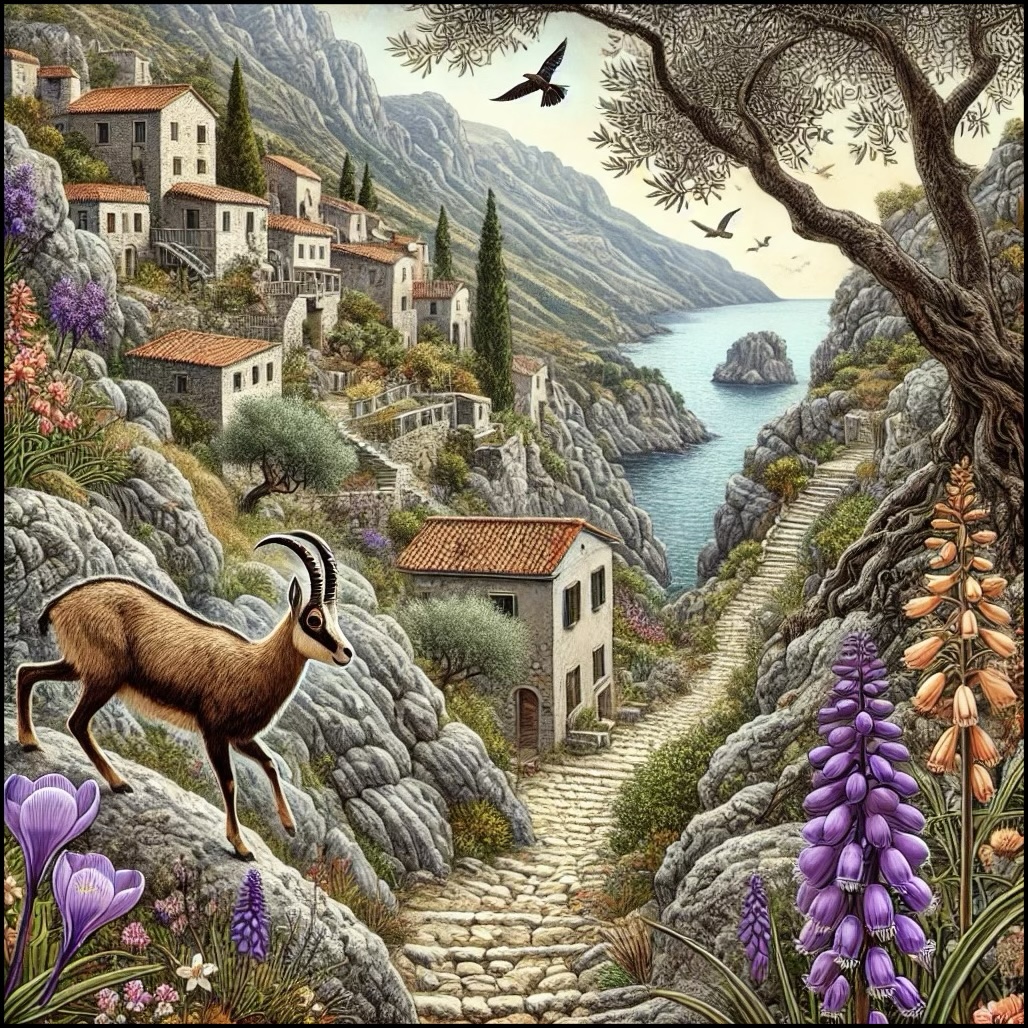
Western Southeast Europe (with civilization) ©2024-25 Electric Prism, Inc. All rights reserved.
People
Groups
- Slavs, South
- Greeks, Medieval (Byzantines)
- Venice, Duchy of
- Croats (South Slavs)
- Serbs (South Slavs)
- Croatia, Kingdom of
- March of Carniola
- Habsburg, House of
- Christians, Eastern Orthodox
- Christians, Roman Catholic
- Dalmatia region
- Croatia, Kingdom of
- Austria, Archduchy of
- Styria, Duchy of
- Athens, Duchy of
- Epirus, Despotate of
- Serbia, Kingdom of
- Hungary, Kingdom of
- Achaea, Principality of
- Achaea, Principality of
- Ottoman Emirate
- Catalan Company of the East, Grand (officially the Company of the Army of the Franks in Romania, sometimes called the Grand Company and widely known as the Catalan Company
- Ottoman Emirate
- Serbian Empire
- Ottoman Empire
- Epirus, Despotate of
- Ragusa, Republic of
- Carniola, Duchy of
- Humska zemlja (Hum)
Topics
- Little Ice Age, Warm Phase I
- Little Ice Age (LIA)
- Black Death, or Great Plague
- Serbian Empire, fall of the
- Kosovo, Battle of
Commodoties
- Glass
- Domestic animals
- Oils, gums, resins, and waxes
- Grains and produce
- Textiles
- Ceramics
- Strategic metals
- Salt
- Beer, wine, and spirits
- Manufactured goods
- Money
- Aroma compounds
Subjects
Regions
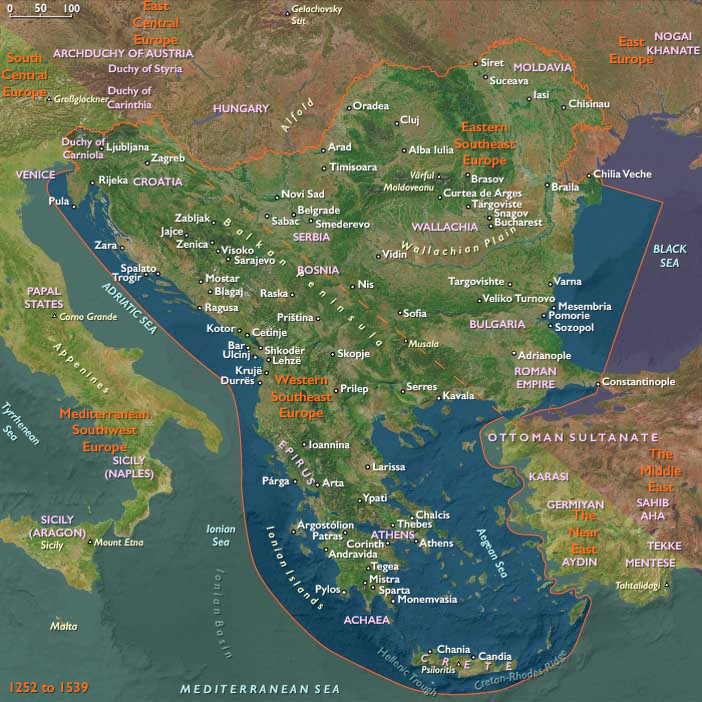
Subregions
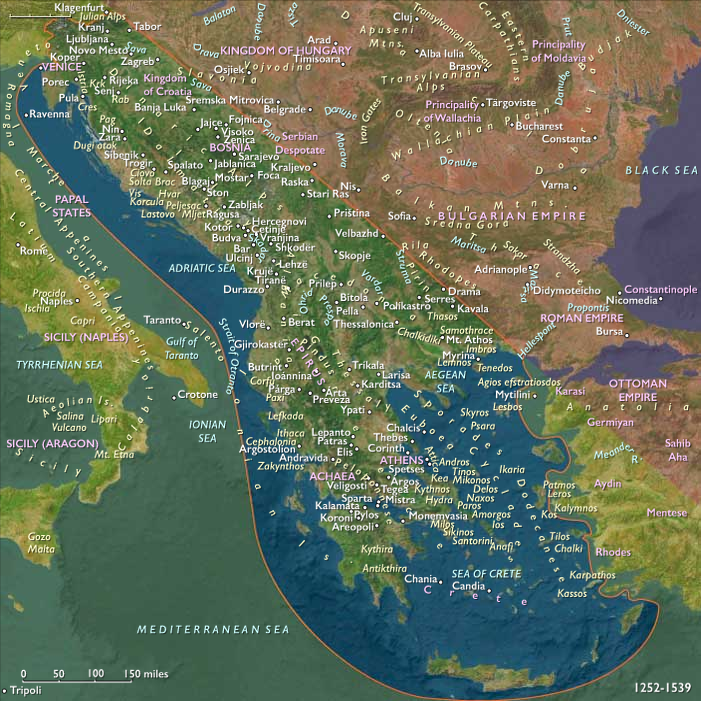
Years: 1252 - 1395
Western Southeast Europe (with civilization) ©2024-25 Electric Prism, Inc. All rights reserved.
People
Groups
- Slavs, South
- Greeks, Medieval (Byzantines)
- Venice, Duchy of
- Croats (South Slavs)
- Serbs (South Slavs)
- Croatia, Kingdom of
- March of Carniola
- Habsburg, House of
- Christians, Eastern Orthodox
- Christians, Roman Catholic
- Dalmatia region
- Croatia, Kingdom of
- Austria, Archduchy of
- Styria, Duchy of
- Athens, Duchy of
- Epirus, Despotate of
- Serbia, Kingdom of
- Hungary, Kingdom of
- Achaea, Principality of
- Achaea, Principality of
- Ottoman Emirate
- Catalan Company of the East, Grand (officially the Company of the Army of the Franks in Romania, sometimes called the Grand Company and widely known as the Catalan Company
- Ottoman Emirate
- Serbian Empire
- Ottoman Empire
- Epirus, Despotate of
- Ragusa, Republic of
- Carniola, Duchy of
- Humska zemlja (Hum)
Topics
- Little Ice Age, Warm Phase I
- Little Ice Age (LIA)
- Black Death, or Great Plague
- Serbian Empire, fall of the
- Kosovo, Battle of
Commodoties
- Glass
- Domestic animals
- Oils, gums, resins, and waxes
- Grains and produce
- Textiles
- Ceramics
- Strategic metals
- Salt
- Beer, wine, and spirits
- Manufactured goods
- Money
- Aroma compounds
Subjects
Regions
Subregions