
The Early 11th-Century Landscape of Western Frisia …
Years: 1018 - 1018
The Early 11th-Century Landscape of Western Frisia and the Rule of Dirk III (c. 1000–1039)
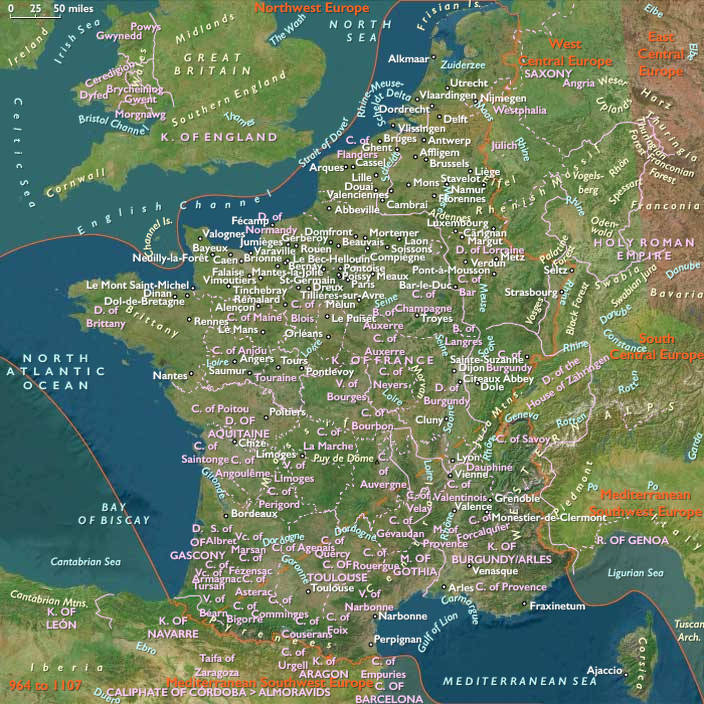
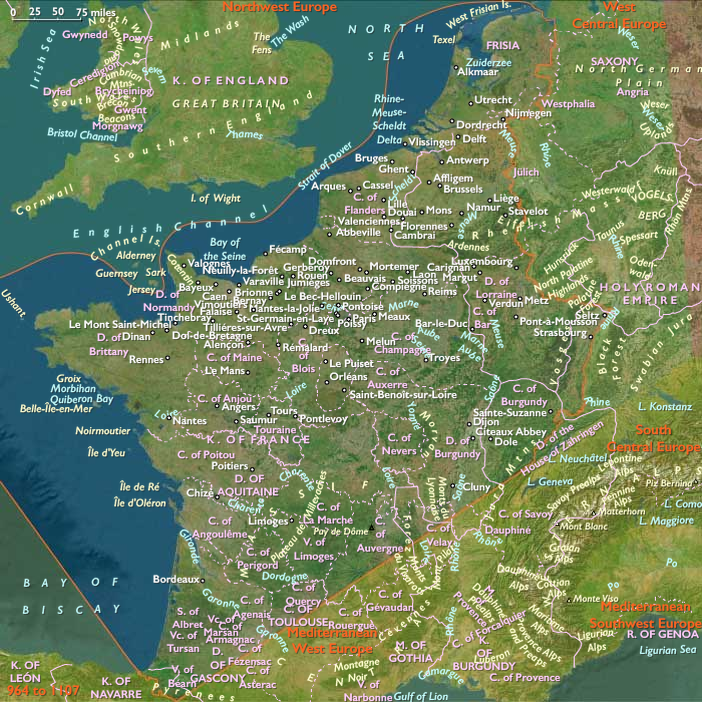
At the beginning of the 11th century, Western Frisia—the region that would later become Holland—was vastly different from the modern provinces of North and South Holland. The land was largely boggy, prone to constant flooding, and sparsely populated, with human settlement concentrated in the coastal dunes and raised riverbanks. The region was a strategic frontier of the Holy Roman Empire, contested by both local Frisian counts and powerful German bishops.
A Challenging Landscape: Western Frisia Before Its Transformation
- The region was dominated by wetlands, with only small elevated settlements near riverbanks and the North Sea dunes.
- Constant flooding made large-scale agriculture difficult, keeping population levels low.
- Utrecht, situated in the Rhine delta, was the largest trading center in the region and an important imperial city, with frequent visits from German kings and emperors.
- Traders sailing between the North Sea and the interior of the empire had to pass through the territory of Dirk III, Count of Friesland, making his fief strategically vital.
Dirk III and the House of Holland
- Dirk III, ruling from 1005 to 1039, belonged to the House of Holland, an influential noble family within the Holy Roman Empire.
- His mother, Luitgard of Luxembourg, served as regent from 993 to 1005 while Dirk was still a minor.
- She was the sister-in-law of Emperor Henry II, and with his backing, she successfully secured the county for Dirk.
- Even after Dirk assumed power, Luitgard continued to leverage her imperial connections, at one point securing military intervention from the emperor to quell a Frisian revolt.
Dirk’s Vassalage and the Bishopric Rivalries
- Dirk III was nominally a vassal of Emperor Henry II, but his rule was contested by three powerful bishops—Trier, Utrecht, and Cologne—who all laid claim to his fief.
- The bishops sought control over Frisia and its key trade routes, seeing Dirk’s position as an obstacle to their own territorial expansion.
- Despite these claims, Dirk III skillfully maintained his autonomy, balancing imperial loyalties and local resistance.
The Future Name of Holland
- During Dirk III’s reign, the territory was still called West Friesland.
- The title of "Count in Friesland" was used by Dirk and his predecessors.
- The region would not officially be referred to as Holland until 1101, under his successors.
Legacy
Dirk III’s rule laid the foundations for the future County of Holland, setting a precedent for resisting both imperial and ecclesiastical interference. His strategic location, control over trade routes, and ability to leverage family ties ensured that his county remained a major player in the feudal politics of the Holy Roman Empire. His descendants would eventually shape Holland into a dominant force in the Low Countries, beginning the region’s transformation from wetland frontier to economic powerhouse.
Locations
People
Groups
- Frisians
- Trier, Electorate of
- Cologne, Electorate of
- Lorraine (Lotharingia), Lower, (first) Duchy of
- German, or Ottonian (Roman) Empire
- Holland, County of
Topics
Commodoties
Subjects
Regions
Subregions
Related Events
Showing 10 events out of 51721 total
Years: 1018 - 1018
Locations
People
Groups
- Frisians
- Trier, Electorate of
- Cologne, Electorate of
- Lorraine (Lotharingia), Lower, (first) Duchy of
- German, or Ottonian (Roman) Empire
- Holland, County of
Topics
Commodoties
Subjects
Regions
Subregions