
West Polynesia (6,093 – 4,366 BCE): Middle …
Years: 6093BCE - 4366BCE
West Polynesia (6,093 – 4,366 BCE): Middle Holocene — Highstand Wetlands, Reef Terraces, and Coastal Stability
Geographic & Environmental Context
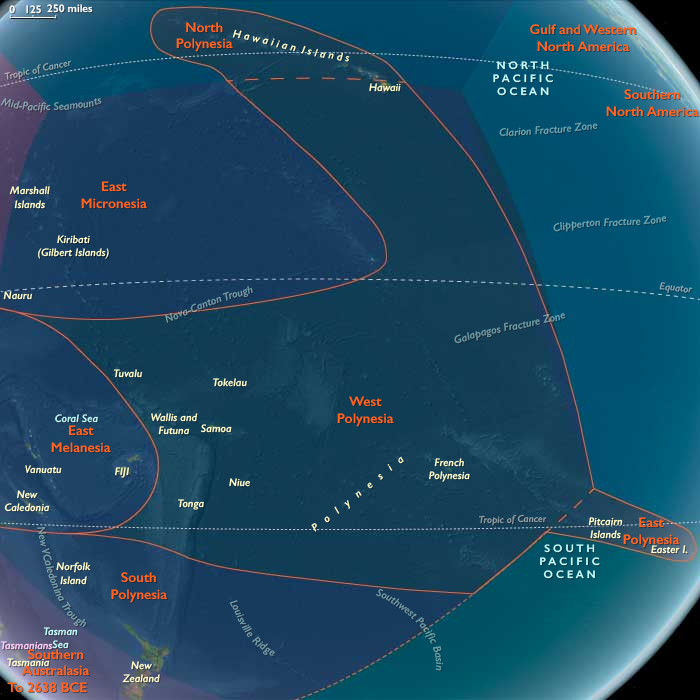
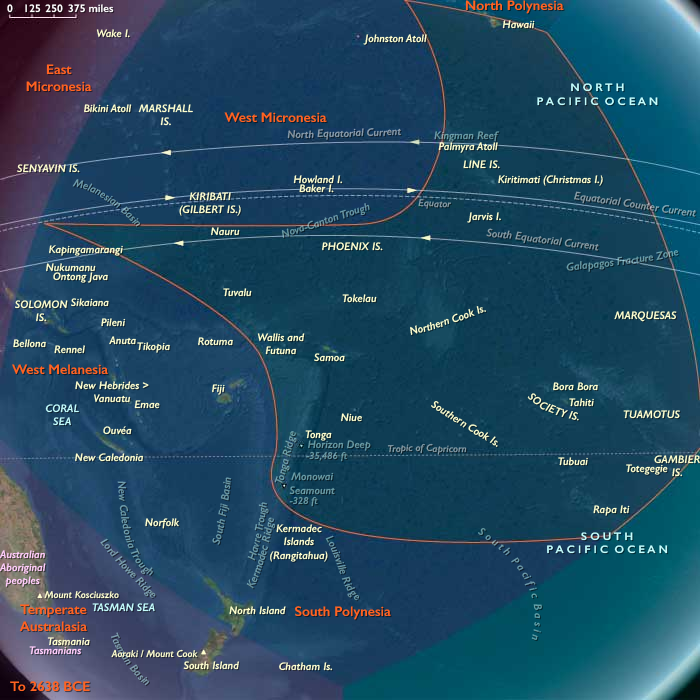
West Polynesia includes Hawaiʻi Island (the Big Island); Tonga (Tongatapu, Haʻapai, Vavaʻu); Samoa (Savaiʻi, Upolu, Tutuila/Manuʻa); Tuvalu and Tokelau (low atolls); the Cook Islands (Rarotonga, Aitutaki, Mangaia, etc.); Society Islands (Raiatea–Tahiti–Moʻorea–Bora Bora); and the Marquesas (Nuku Hiva, Hiva Oa).
-
Anchors: Tongatapu–Haʻapai sheltered lagoons; Savaiʻi–Upolu bay heads; Tahiti–Raiatea reef passages; Rarotonga–Aitutaki leeward basins; Marquesan deep embayments; Tuvalu–Tokelau rim ponds.
Climate & Environmental Shifts
-
Hypsithermal highstand: modestly higher sea level creates extensive back-reef ponds and estuarine wetlands; occasional Kona-style storms rework spits.
Biota & Baseline (No Human Presence)
-
Estuarine fish/invertebrates boom; freshwater gobies/shrimps occupy streams; coastal strand and pandanus forests stabilize beaches.
Long-Term Significance
Coastal geomorphology reaches near-modern equilibrium—perfect templates for fishponds, irrigated taro fields, and canoe landings.
Topics
Subjects
Regions
Subregions
Years: 6093BCE - 4366BCE
Topics
Subjects
Regions
Subregions