
West Polynesia (7,821 – 6,094 BCE): Early …
Years: 7821BCE - 6094BCE
West Polynesia (7,821 – 6,094 BCE): Early Holocene — Cloud-Forest Belts and Productive Reef–Valley Coupling
Geographic & Environmental Context
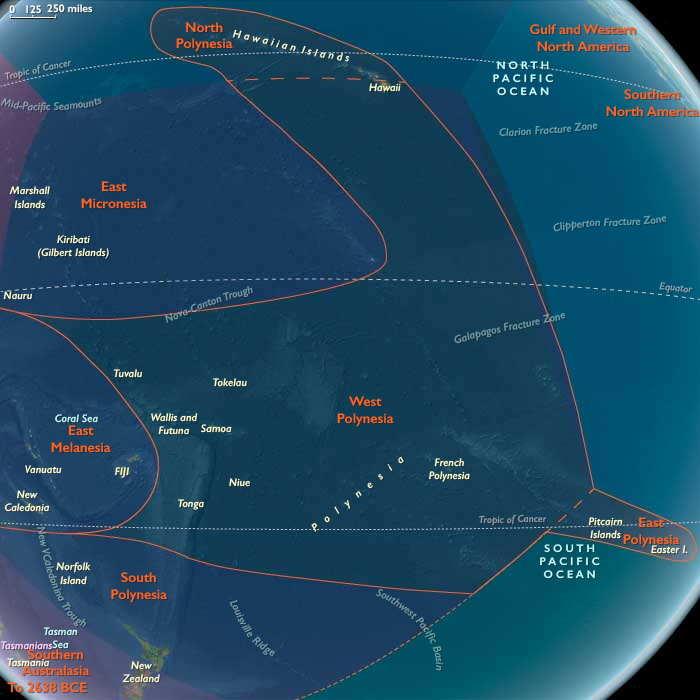
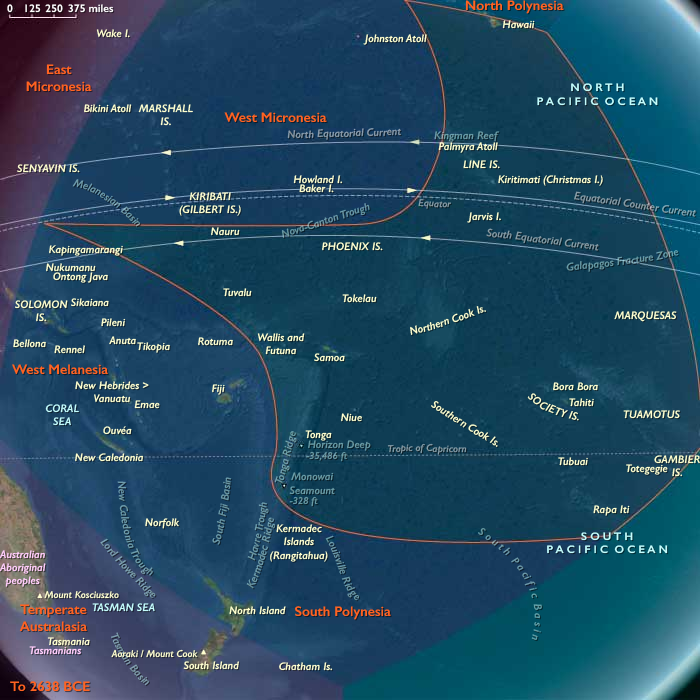
West Polynesia includes Hawaiʻi Island (the Big Island); Tonga (Tongatapu, Haʻapai, Vavaʻu); Samoa (Savaiʻi, Upolu, Tutuila/Manuʻa); Tuvalu and Tokelau (low atolls); the Cook Islands (Rarotonga, Aitutaki, Mangaia, etc.); Society Islands (Raiatea–Tahiti–Moʻorea–Bora Bora); and the Marquesas (Nuku Hiva, Hiva Oa).
-
Anchors: Hawaiʻi Island windward ravines; Savaiʻi–Upolu perennial streams; Tongatapu–Haʻapai shelf lagoons; Raiatea–Tahiti deep valleys; Rarotonga–Mangaia alluvial fans; Nuku Hiva–Hiva Oa amphitheaters; Tuvalu–Tokelau atoll flats.
Climate & Environmental Shifts
-
Thermal optimum: predictable trades, strong orographic rain on windward slopes, moderate ENSO.
Biota & Baseline (No Human Presence)
-
Endemic montane and mesic forests at peak; valley floors carry wetlands; reef productivity high; seabird guano subsidizes nutrient cycling on islets.
Long-Term Significance
An integrated ridge–stream–reef continuum matures across all high islands.
Topics
Subjects
Regions
Subregions
Years: 7821BCE - 6094BCE
Topics
Subjects
Regions
Subregions