
West Polynesia (49,293 – 28,578 BCE): Upper …
Years: 49293BCE - 28578BCE
West Polynesia (49,293 – 28,578 BCE): Upper Paleolithic I — Volcanic High Islands, Atoll Seeds, and Reef-Edge Biota
Geographic & Environmental Context
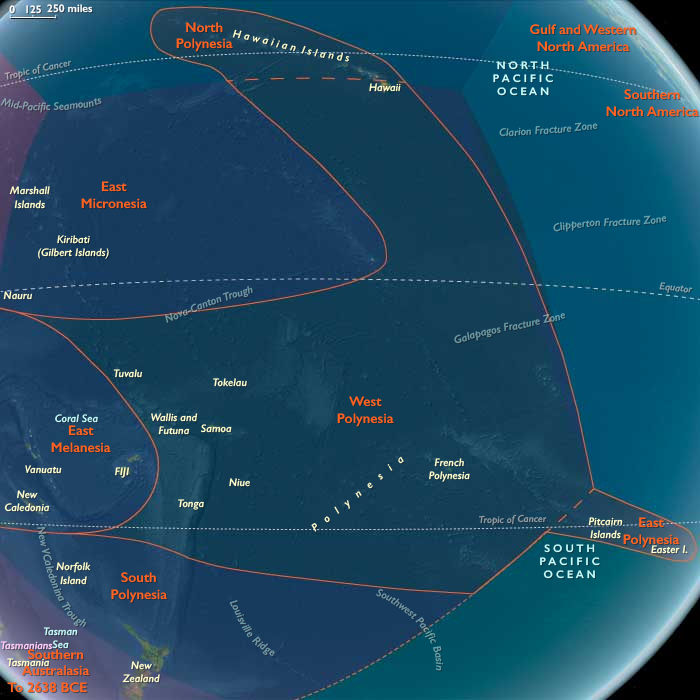
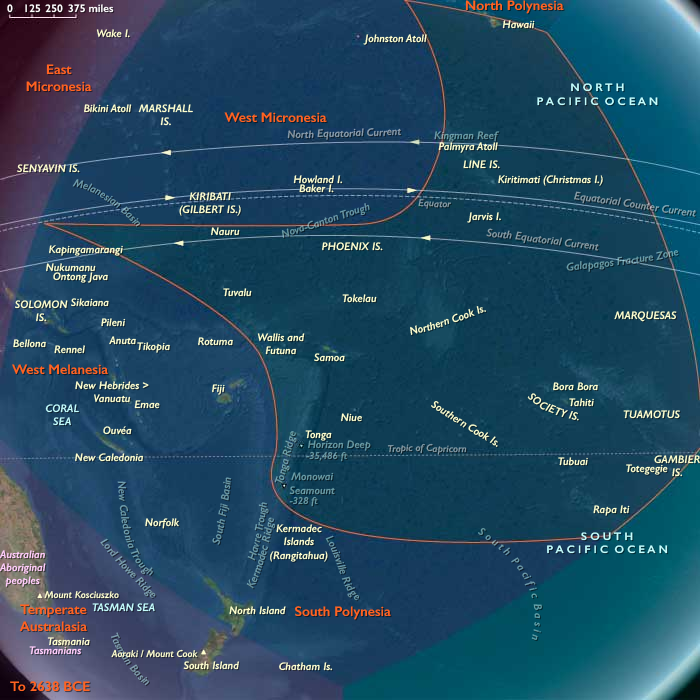
West Polynesia includes Hawaiʻi Island (the Big Island); Tonga (Tongatapu, Haʻapai, Vavaʻu); Samoa (Savaiʻi, Upolu, Tutuila/Manuʻa); Tuvalu and Tokelau (low atolls); the Cook Islands (Rarotonga, Aitutaki, Mangaia, etc.); Society Islands (Raiatea–Tahiti–Moʻorea–Bora Bora); and the Marquesas (Nuku Hiva, Hiva Oa).
-
Hawaiʻi Island still in an active shield-building phase (Mauna Loa, Mauna Kea); Societies, Marquesas, Cooks are high volcanic islands; Tuvalu–Tokelau are emergent low reef structures and paleo-atolls; Tonga–Samoa high islands/raised limestones.
Climate & Environmental Shifts
-
Glacial world: sea level ~100 m lower; wide reef flats and drowned shelves exposed terraces and benches. Trades strong; cooler SSTs.
Biota & Baseline (No Human Presence)
-
Seabird supercolonies, turtle rookeries, monk seals (in NW line) on outer cays; uplands carry cloud/montane forests, leeward slopes dry woodland.
-
Reef accretion proceeds episodically; lagoons are shallower and more extensive than today.
Long-Term Significance
A geomorphic blueprint forms: high islands with fertile amphitheaters and burgeoning barrier reefs—future foundations for intensive ridge-to-reef food systems.
Topics
Subjects
Regions
Subregions
Related Events
Showing 10 events out of 69706 total
Years: 49293BCE - 28578BCE
Topics
Subjects
Regions
Subregions