
Polynesia (1540–1683 CE) Fishpond States, Voyaging …
Years: 1540 - 1683
Polynesia (1540–1683 CE)
Fishpond States, Voyaging Chiefdoms, and Monumental Shores
Geography & Environmental Context
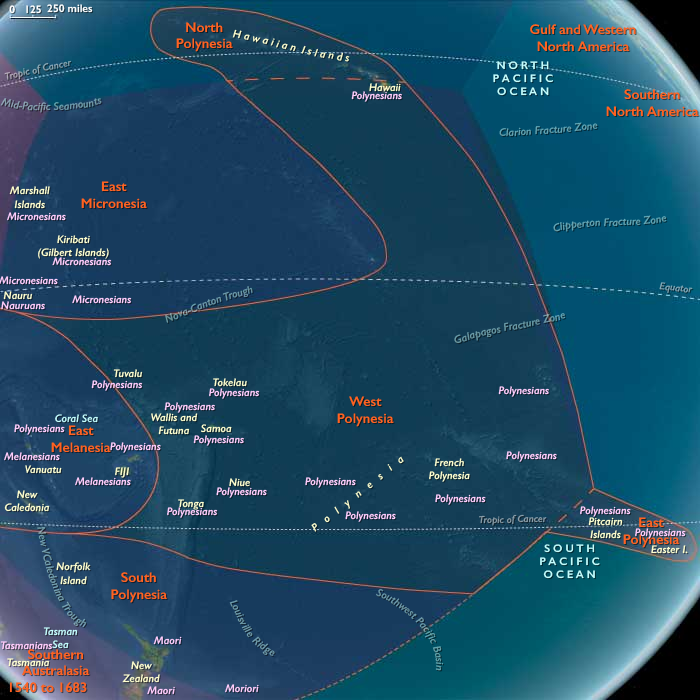
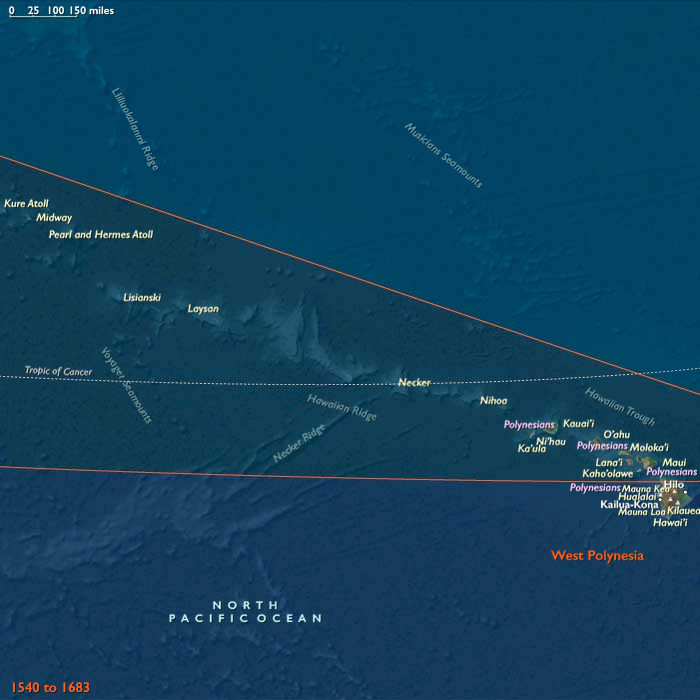
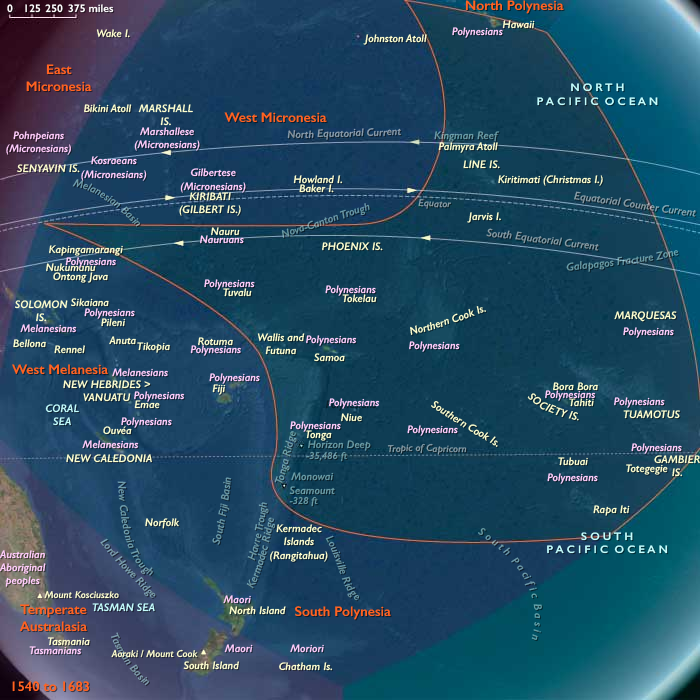
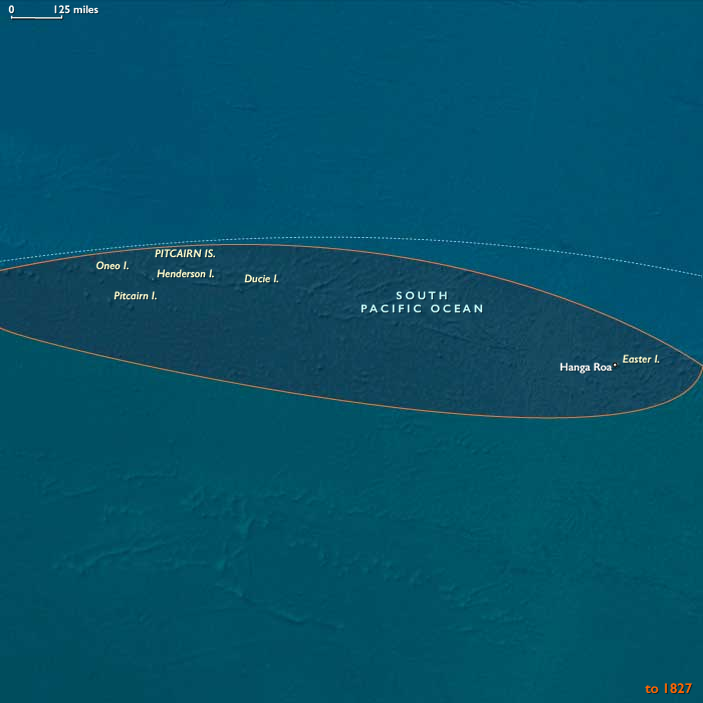
Polynesia in this age formed a triad of enduring worlds: North Polynesia (the Hawaiian chain except Hawai‘i Island, plus Midway), West Polynesia (Hawai‘i Island, Samoa, Tonga, Tuvalu, Tokelau, the Cook Islands, and French Polynesia—Tahiti, the Society, Tuamotu, and Marquesas), and East Polynesia (Rapa Nui and the Pitcairn group). Volcanic high islands—O‘ahu, Maui, Tahiti, Savai‘i, Hawai‘i—framed fertile valleys and alluvial plains; coral atolls—Tuvalu, Tokelau, parts of the Cooks and Tuamotus—offered thin soils and fragile freshwater lenses; far to the east, Rapa Nui and Henderson stood as remote outliers where stone and sea set strict limits on life.
Climate & Environmental Shifts
Within the Little Ice Age, conditions trended slightly cooler with episodic droughts and intensified winter rains. High islands captured orographic moisture that fed irrigated systems, while leeward slopes and atolls felt drought stress most acutely. Cyclones periodically raked the central and western archipelagos; powerful swells and storms reworked beaches, loko i‘a fishpond walls, and atoll shorelines. Offshore, cooler seas nudged fish migrations and seasonality.
Subsistence & Settlement
-
High islands (Hawai‘i, Tahiti, Samoa, Marquesas):
-
Intensive irrigated taro (lo‘i) in valley bottoms paired with extensive dryland sweet potato field systems on leeward slopes.
-
Along coasts, engineered fishponds stabilized protein supply, especially on O‘ahu, Moloka‘i, Hawai‘i.
-
Dense villages clustered around chiefly centers, heiau/marae precincts, and irrigated landscapes.
-
-
Atolls (Tuvalu, Tokelau, parts of Cooks/Tuamotus):
-
Pulaka pits sunk into freshwater lenses, coconuts, breadfruit, and lagoon fisheries underpinned smaller, more vulnerable populations.
-
-
Eastern frontier (Rapa Nui & Pitcairn group):
-
Rapa Nui sustained rock-mulched gardens (sweet potato, yams), chicken husbandry, and nearshore fishing while monumental ahu–moai construction crested; Pitcairn/Henderson supported small, intermittent settlements balancing gardens, reef harvests, and seabirding.
-
Technology & Material Culture
-
Canoe mastery: Double-hulled voyaging canoes linked islands across hundreds of kilometers; outriggers worked lagoons and channels.
-
Landscape engineering: Basalt adzes cut terraces, irrigation ditches, and monumental platforms; dryland field alignments and mulches buffered aridity; coastal loko i‘a exemplified hydrological skill.
-
Prestige arts: Feather cloaks and helmets (Hawai‘i), finely woven mats (ʻie tōga) and kava regalia(Tonga/Samoa), tattooing (Marquesas, Tahiti), painted tapa, and carved deity images encoded rank, genealogy, and cosmology.
-
Rapa Nui’s quarrying and transport of moai showcased coordinated labor and ritual engineering in a resource-tight setting.
Movement & Interaction Corridors
-
Intra-archipelago circuits:
-
Hawai‘i: Inter-island rivalries and exchanges moved tribute, surplus, and warriors across channels; Moloka‘i retained renown as a spiritual and diplomatic center.
-
Tonga–Samoa–ʻUvea/Fiji: Marriage, kava ceremony, and tribute radiated Tongan influence while Samoa remained a cultural hearth.
-
Tahiti–Tuamotus–Cooks–Marquesas: Society Islands rose as ritual and exchange hubs binding east and west.
-
-
Peripheral links: Midway remained marginal in Hawaiian awareness; Pitcairn–Henderson–Ducie–Oenomaintained intermittent resource voyaging.
-
Long-distance voyaging beyond the Polynesian core had largely ceased, leaving each sphere internally networked yet regionally distinct—and still untouched by Europe in this period.
Cultural & Symbolic Expressions
-
Ritual sovereignty: Kapu/tapu systems ordered access to land, sea, labor, and gendered spaces; seasonal rites (e.g., Makahiki tied to Makali‘i/Pleiades) synchronized agriculture and polity.
-
Temple landscapes: Heiau (Hawai‘i) to marae (Tahiti) anchored offerings to Kū, Lono, ʻOro, and lineage gods; red-feather regalia (maro ʻura) consecrated paramounts.
-
Genealogical chant & body: Mele, oratory, and tattoo embodied ancestry and divine descent; in Rapa Nui, the evolving tangata manu (birdman) cult shifted power to seasonal ritual contests at Orongo.
-
Exchange as theatre: Ceremonial gifting—ʻie tōga, pigs, red feathers—materialized hierarchy and alliance across lagoons and channels.
Environmental Adaptation & Resilience
-
Hydro-ecological balance: Irrigation captured steep-valley flows; dryland grids with stone mulches stabilized yields; fishponds buffered marine variability.
-
Atoll ingenuity: Pulaka pits, coconut silviculture, and reef tenure sustained life on thin soils; kin networks redistributed food after storms.
-
Eastern edge: Lithic mulching, windbreaks, and intensified poultry compensated for timber scarcity on Rapa Nui; Pitcairn/Henderson scaled settlement to water constraints.
-
Political redistribution: Tribute and chiefly feasting moved surpluses from fertile districts to deficit zones, embedding resilience in hierarchy.
Transition
Between 1540 and 1683, Polynesia achieved a mature equilibrium of agricultural intensification, aquaculture, and ritual centralization. Hawaiian fishpond states and kapu-ordered landscapes, Tongan–Samoan voyaging chiefdoms and kava diplomacy, Tahiti–Marquesas monumental and tattooed polities, and Rapa Nui’s ahu–moai cosmos each expressed a shared oceanic grammar adapted to local ecologies.
No European sails had yet altered these systems, but population density, inter-island rivalries, and climatic pulses demanded careful management. The social and engineering frameworks perfected in this age would be the very strengths—and points of stress—poised to meet the profound disruptions of the centuries ahead.
Groups
- Hawaiʻi
- Fiji
- Polynesians
- Samoan, or Navigators Islands
- Tahitians
- Ellice Islands/Tuvalu
- Cook Islanders
- Hawaiians, Native
- Marquesas Islands
- Tokelau
- Tonga, Kingdom of
Topics
Commodoties
- Rocks, sand, and gravel
- Fish and game
- Hides and feathers
- Grains and produce
- Fibers
- Ceramics
- Salt
- Lumber
Subjects
Regions
Subregions
Years: 1540 - 1683
Groups
- Hawaiʻi
- Fiji
- Polynesians
- Samoan, or Navigators Islands
- Tahitians
- Ellice Islands/Tuvalu
- Cook Islanders
- Hawaiians, Native
- Marquesas Islands
- Tokelau
- Tonga, Kingdom of
Topics
Commodoties
- Rocks, sand, and gravel
- Fish and game
- Hides and feathers
- Grains and produce
- Fibers
- Ceramics
- Salt
- Lumber
Subjects
Regions
Subregions