
West Polynesia (1252 – 1395 CE): Tuʻi …
Years: 1252 - 1395
West Polynesia (1252 – 1395 CE): Tuʻi Tonga Hegemony, Samoan Councils, and Taputapuātea’s Ritual Commonwealth
Geographic and Environmental Context
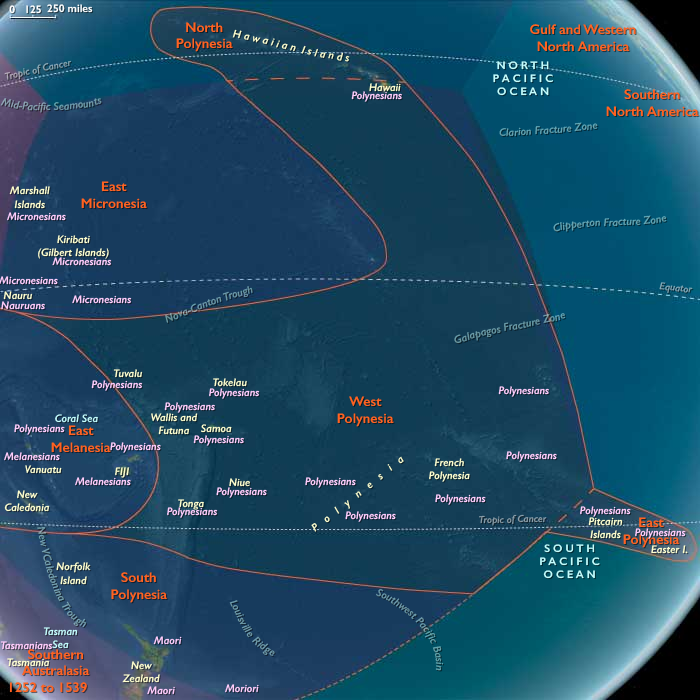
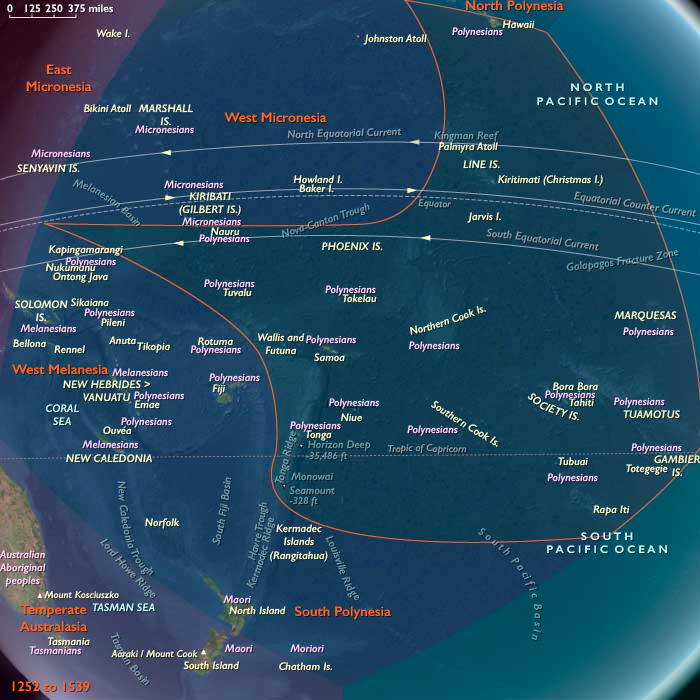
West Polynesia includes the Big Island of Hawaiʻi, Tonga, Samoa, Tuvalu, Tokelau, the Cook Islands, and French Polynesia (the Society Islands and the Marquesas).
-
High volcanic archipelagos (Hawaiʻi Island, Tonga, Samoa, Societies, Marquesas) sustained large valleys, leeward plains, and rich reefs.
-
Low atolls (Tuvalu, Tokelau, some Cooks) relied on arboriculture, lagoon fisheries, and exchange.
-
The region straddled the central Pacific voyaging lanes—west to Fiji and Vanuatu, east to the Societies and Marquesas, and north to Hawaiʻi.
Climate and Environmental Shifts
-
The late Medieval Warm Period eased into the early Little Ice Age (~1300s), bringing greater rainfall variability and occasional cool spells.
-
Cyclones periodically struck the Cooks and Societies; multi-year droughts challenged atolls.
-
Resilience came from diversified ridge-to-reef food systems and inter-island redistribution.
Societies and Political Developments
-
Tonga (Tuʻi Tonga polity):
-
The Tuʻi Tonga line maintained a far-reaching maritime hegemony (c. 1200–1500), projecting ritual and political authority through marriage alliances, tribute voyages, and sacred titles.
-
Tribute flowed from parts of Samoa and the Cooks as well as peripheral partners; high chiefs managed outliers while the royal center staged large ritual feasts.
-
-
Samoa:
-
Power remained distributed among matai (titled heads) and orator groups; great titles balanced districts through councils and ceremonial exchange.
-
Samoan influence permeated the west–east network via marriage, language prestige, and ceremonial protocol (e.g., ʻava rites).
-
-
Society Islands (Ra‘iātea–Tahiti complex):
-
Taputapuātea on Ra‘iātea continued as a pan-Polynesian ritual hub, where chiefs and priests renewed alliances and sacred genealogies; voyaging guilds refreshed routes linking Cooks, Societies, and the Marquesas.
-
-
Marquesas:
-
Intensified valley chiefdoms built large plaza precincts (tōhua), elaborated tattoo and carving traditions, and maintained long-range ties to the Societies.
-
-
Cook Islands, Tuvalu, Tokelau:
-
Atoll and high-island chiefdoms integrated into Tongan and Society networks; some islands specialized in fine mats, canoe components, and salt fish.
-
-
Hawaiʻi Island:
-
Chiefly consolidation accelerated; aliʻi patronized large dryland field systems (e.g., leeward Kona expansions) and fishponds (loko iʻa) on protected coasts.
-
The kapu system tightened labor mobilization for irrigation features, terraces, and temple construction (heiau).
-
Economy and Trade
-
Staples: irrigated taro in wet valleys; dryland complexes of sweet potato, yam, and gourds on leeward slopes; breadfruit–coconut arboriculture on atolls.
-
Aquatic production: large coastal fishponds (loko iʻa) and lagoon fisheries yielded reliable protein; reef management (closures, gear taboos) protected stocks.
-
Prestige exchange:
-
Fine mats (ʻie tōga), red feathers, pearl shell, basalt adzes, and sennit cordage moved along Tongan–Samoan–Cook–Society circuits.
-
Hawaiian contributions included high-quality barkcloth and adze stone; south-central routes circulated tools, ornaments, and ritual items among the Societies and Marquesas.
-
-
Redistribution: chiefly feasts converted surplus into alliance and rank; atolls received starch staples and tools in exchange for marine foods and craft goods.
Subsistence and Technology
-
Hydraulic and field systems: stone-lined ditches and terraces in wet valleys; extensive dryland grids (Hawaiʻi Island) leveraging mulch, fallow cycles, and windbreaks.
-
Fishpond engineering: seawalls and sluice gates controlled recruitment and harvest; staggered ponds spread seasonal risk.
-
Vessels & navigation: double-hulled voyaging canoes; wayfinding by stars, swells, cloud forms, seabird behavior; maintained routes binding Tonga–Samoa–Cooks–Societies and selectively north to Hawaiʻi.
-
Craft specializations: adze quarrying and finishing, barkcloth beating, sennit ropework, shell and wood carving.
Movement and Interaction Corridors
-
Tonga–Samoa–Cooks–Societies arc: the core political–ritual corridor of the age, anchored by Taputapuātea convocations.
-
Marquesan links: voyages to the Societies for ritual and marriage ties; exchange of specialists and regalia.
-
Hawaiʻi Island: robust inter-island Hawaiian traffic; selective long-distance links persisted through shared voyaging lore rather than regular southbound circuits.
-
Atoll shuttles (Tuvalu, Tokelau): lifelines for salt fish, fiber, and mats.
Belief and Symbolism
-
Divine kingship: the Tuʻi Tonga embodied cosmic order; court ritual fused genealogy, sacrifice, and sea power.
-
Taputapuātea: pan-Polynesian rites renewed sacred genealogies and voyaging covenants; marae federations bound chiefs across archipelagos.
-
Hawaiʻi Island: monumental heiau (agriculture, healing, war) and the kapu system regulated ecology and hierarchy; aliʻi sanctity expressed in feather regalia and temple dedications.
-
Samoa & Marquesas: oratory, tattoo, and plaza ceremonies affirmed lineage prestige and sacred authority.
Adaptation and Resilience
-
Portfolio food webs (valley irrigation + dryland grids + fishponds + reef/lagoon fisheries) buffered climatic swings of the early Little Ice Age.
-
Ritual closures and calendrical taboos protected spawning grounds and allowed pond/reef recovery.
-
Inter-island reciprocity—tribute, marriage alliances, convoyed voyages—redistributed surplus after cyclones or droughts.
-
Chiefly labor organization maintained large infrastructures (ponds, terraces, seawalls), enabling quick post-storm repairs.
Long-Term Significance
By 1395, West Polynesia was a knit archipelagic commonwealth:
-
Tuʻi Tonga dominance set the political tempo; Taputapuātea sustained a shared ritual order.
-
Samoan councils, Society–Marquesas cult centers, and Hawaiʻi Island agro-aquatic estates all reached new scales of complexity.
-
The combination of engineered landscapes, voyaging diplomacy, and sacred governance provided durable buffers against climatic variability and framed the region’s trajectories into the later medieval centuries.
Groups
- Hawaiʻi
- Fiji
- Polynesians
- Samoan, or Navigators Islands
- Tahitians
- Ellice Islands/Tuvalu
- Cook Islanders
- Hawaiians, Native
- Marquesas Islands
- Tokelau
- Tonga, Kingdom of
Topics
Commodoties
- Rocks, sand, and gravel
- Fish and game
- Hides and feathers
- Grains and produce
- Fibers
- Ceramics
- Salt
- Lumber
Subjects
Regions
Subregions
Years: 1252 - 1395
Groups
- Hawaiʻi
- Fiji
- Polynesians
- Samoan, or Navigators Islands
- Tahitians
- Ellice Islands/Tuvalu
- Cook Islanders
- Hawaiians, Native
- Marquesas Islands
- Tokelau
- Tonga, Kingdom of
Topics
Commodoties
- Rocks, sand, and gravel
- Fish and game
- Hides and feathers
- Grains and produce
- Fibers
- Ceramics
- Salt
- Lumber
Subjects
Regions
Subregions