
West Micronesia (6,093 – 4,366 BCE): Middle …
Years: 6093BCE - 4366BCE
West Micronesia (6,093 – 4,366 BCE): Middle Holocene — Highstand Wetlands, Stable Passes (No Human Presence)
Geographic and Environmental Context
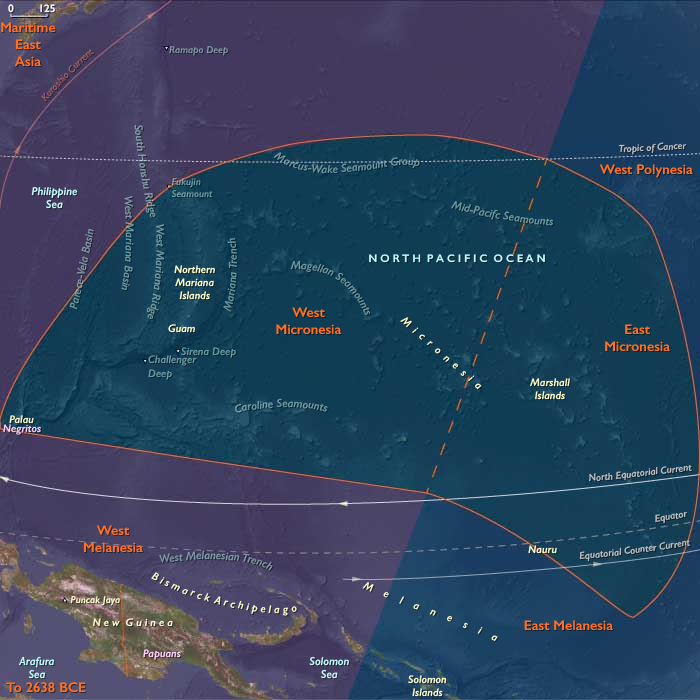
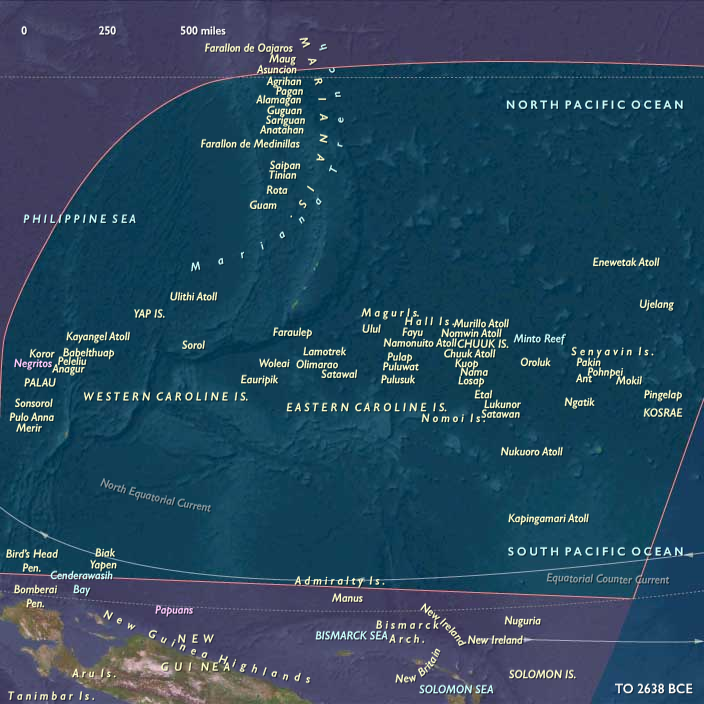
West Micronesia includes the Mariana Islands (Guam, Saipan, Tinian, Rota, and the northern chain), Palau (Babeldaob, Koror, Rock Islands), and Yap (Yap proper and its outer atolls).
-
Anchors: Guam–Saipan–Tinian–Rota (limestone platforms with fringing reefs), Babeldaob–Koror (Palau’s volcanic/limestone high islands and the Rock Islands lagoon), Yap proper (raised reef islands) and the outer Yap atolls (Ulithi–Woleai arc).
-
Slight mid-Holocene highstand widened back-reef ponds and stabilized pass channels around Guam–Saipan–Tinian, Babeldaob–Koror, and Yap.
Climate & Environmental Shifts
-
Warm-phase stability with modest ENSO pulses; storm seasons episodic but lagoon geomorphology resilient.
Baseline Ecology
-
Estuarine fish/invertebrates boomed; strand and pandanus forests stabilized beaches; carbonate soils accumulated organics in lee basins.
Long-Term Significance
A near-modern reef–lagoon–mangrove equilibrium formed, providing ideal basins for later stone fish weirs, canoe anchorages, and garden soils.
Topics
Subjects
Regions
Subregions
Years: 6093BCE - 4366BCE
Topics
Subjects
Regions
Subregions