
West Micronesia (49,293 – 28,578 BCE): Upper …
Years: 49293BCE - 28578BCE
West Micronesia (49,293 – 28,578 BCE): Upper Pleistocene — Lowstand Reef Terraces, Seabird Kingdoms (No Human Presence)
Geographic & Environmental Context
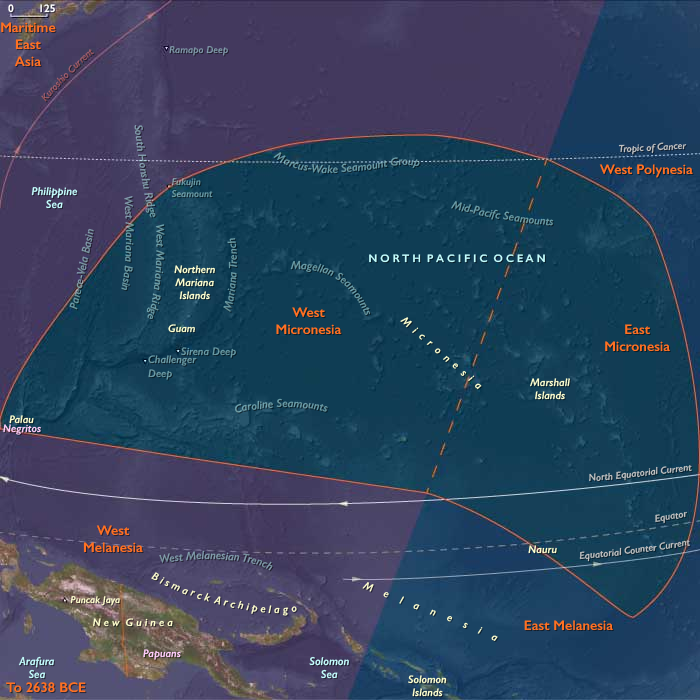
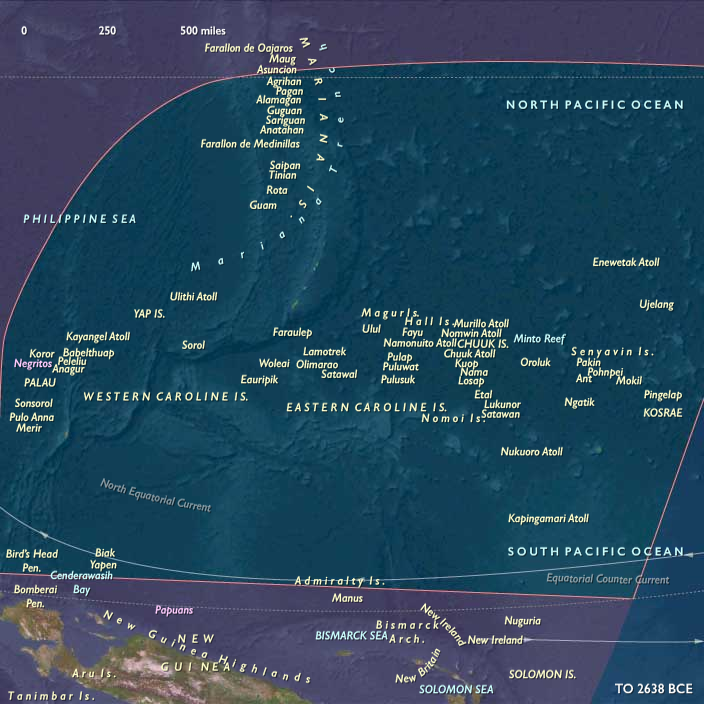
West Micronesia includes the Mariana Islands (Guam, Saipan, Tinian, Rota, and the northern chain), Palau (Babeldaob, Koror, Rock Islands), and Yap (Yap proper and its outer atolls).
-
Anchors: Guam–Saipan–Tinian–Rota (limestone platforms with fringing reefs), Babeldaob–Koror (Palau’s volcanic/limestone high islands and the Rock Islands lagoon), Yap proper (raised reef islands) and the outer Yap atolls (Ulithi–Woleai arc).
-
Sea level lay ~100 m below modern, exposing wide limestone benches and reef flats around Marianas, Palau, and Yap; lagoons were shallower, passes narrower.
-
Palau combined volcanic uplands with emergent limestone rims; Marianas and Yap presented high-standing reef platforms.
Climate & Environmental Shifts
-
Last Glacial Maximum: cooler SSTs, stronger trades; reef accretion slowed, but intertidal foraging niches (future) expanded geomorphically.
Baseline Ecology
-
Seabird supercolonies nested on outer cays; turtles used broad beaches; giant clams and reef fish populated nearshore flats.
-
On Palau, montane forests fed clear streams into mangrove-lined embayments.
Long-Term Significance
Glacial lowstand set the reef foundations and coastal benches later engineered by settlers into canoe landings, fish weirs, and garden soils.
Topics
Subjects
Regions
Subregions
Related Events
Showing 10 events out of 69706 total
Years: 49293BCE - 28578BCE
Topics
Subjects
Regions
Subregions