
West Melanesia (1108 – 1251 CE): Island …
Years: 1108 - 1251
West Melanesia (1108 – 1251 CE): Island Chiefdoms, Austronesian Exchange, and Cultural Frontiers
Geographic and Environmental Context
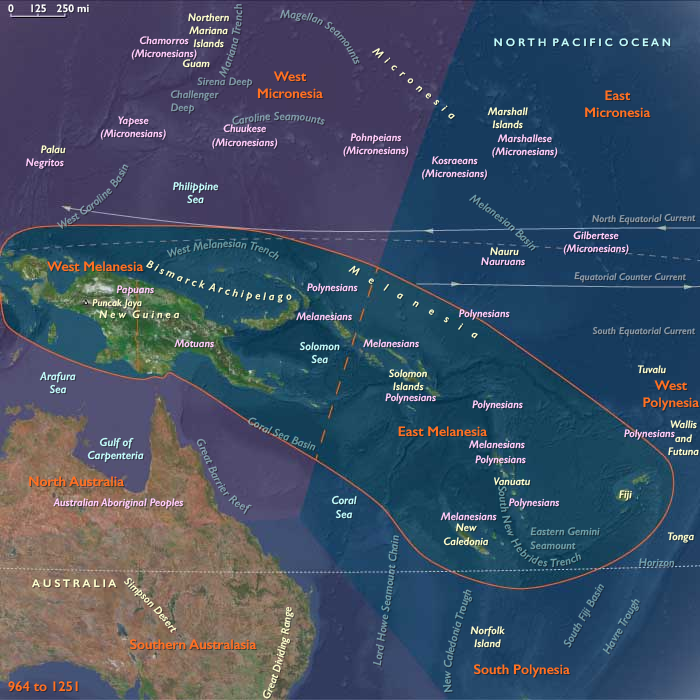
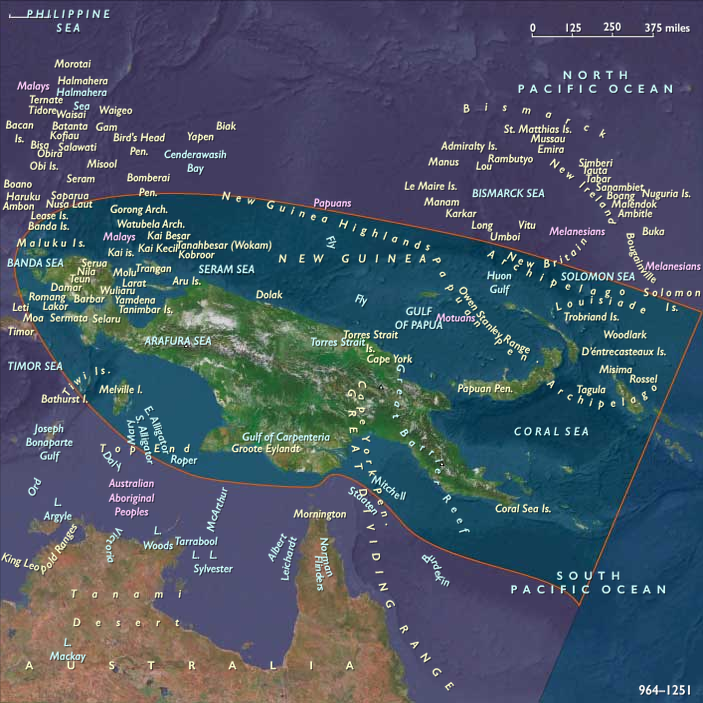
West Melanesia includes New Guinea, Bougainville (the northern Solomon Islands), and surrounding smaller islands.
-
The New Guinea Highlands provided fertile valleys for intensive agriculture.
-
The northern coast of New Guinea and offshore islands sustained fishing and maritime trade.
-
Bougainville and Buka connected Melanesian and Solomon cultural traditions.
-
Diverse ecologies — from highland valleys to reef systems — fostered both horticulture and fishing.
Climate and Environmental Shifts
-
The Medieval Warm Period brought relatively stable warmth and rainfall, favoring agricultural intensification in the highlands.
-
Coastal zones benefited from rich marine resources, though cyclones and storms periodically disrupted settlement.
-
El Niño events created drought cycles that challenged subsistence but reinforced adaptive strategies.
Societies and Political Developments
-
Highland societies in New Guinea expanded in population, supported by sweet potato cultivation and pig husbandry. Leadership was based on “big-man” systems, where influence depended on generosity and ritual authority.
-
Coastal chiefdoms grew more stratified, especially in the Huon Gulf and offshore islands, where chiefs controlled trade and ritual exchange.
-
Bougainville developed its own systems of ranked leadership, with exchange and ritual life binding communities into wider regional networks.
-
Complex ceremonial systems tied political power to ancestral veneration and ritual prestige.
Economy and Trade
-
Agriculture: intensive horticulture in highland valleys (bananas, taro, yams, sugarcane, and sweet potato).
-
Pig husbandry remained central to feasting and exchange, reinforcing social and ritual bonds.
-
Fishing and shell harvesting provided key protein along coasts.
-
Long-distance exchange moved obsidian (notably from New Britain), shell valuables, and ritual items.
-
Austronesian-speaking seafarers connected Melanesian coastal groups with wider Pacific networks.
Subsistence and Technology
-
Terraced gardens and irrigation supported dense highland populations.
-
Stone tools, digging sticks, and wooden implements remained widespread, though iron was unknown.
-
Canoes supported coastal fishing and inter-island trade, with outrigger vessels sustaining longer voyages.
-
Ceremonial houses and carved ritual objects expressed clan prestige and identity.
Movement and Interaction Corridors
-
Highland valleys served as hubs of internal trade, with pigs, shells, and stone axes circulating widely.
-
Coastal trade networks extended across northern New Guinea into Island Melanesia.
-
Bougainville connected Melanesia with the Solomon cultural world, exchanging pottery, mats, and shell valuables.
-
Austronesian voyaging maintained links with other island societies, blending Melanesian and wider Pacific traditions.
Belief and Symbolism
-
Ancestor veneration remained central, with ritual specialists mediating between living communities and spirits.
-
Pigs and shells held deep symbolic value, used in ceremonies of marriage, alliance, and exchange.
-
Ritual art — carvings, masks, and ceremonial houses — embodied cosmological narratives.
-
Leadership was legitimized through ritual generosity and control over sacred knowledge.
Adaptation and Resilience
-
Agricultural intensification in highlands buffered communities against climatic fluctuations.
-
Exchange networks redistributed goods and reinforced alliances in times of scarcity.
-
Coastal reliance on both fishing and horticulture created diversified subsistence bases.
-
Ritual life strengthened cohesion, embedding resilience in spiritual and social systems.
Long-Term Significance
By 1251 CE, West Melanesia had become a region of vibrant agricultural and maritime societies, with dense highland populations, stratified coastal chiefdoms, and ritual networks extending into Island Melanesia. With its big-man leadership systems, pig-centered exchange, and Austronesian maritime connections, the subregion embodied the cultural dynamism and resilience that would define Melanesian traditions into the late medieval world.
Groups
Topics
Commodoties
Subjects
- Commerce
- Symbols
- Watercraft
- Decorative arts
- Faith
- Government
- Custom and Law
- Technology
- Human Migration
Regions
Subregions
Related Events
Showing 10 events out of 49873 total
Years: 1108 - 1251
Groups
Topics
Commodoties
Subjects
- Commerce
- Symbols
- Watercraft
- Decorative arts
- Faith
- Government
- Custom and Law
- Technology
- Human Migration
Regions
Subregions