
West Melanesia (49,293 – 28,578 BCE): Upper …
Years: 49293BCE - 28578BCE
West Melanesia (49,293 – 28,578 BCE): Upper Pleistocene I — First Highland Foragers and Sahulian Bridges
Geographic & Environmental Context
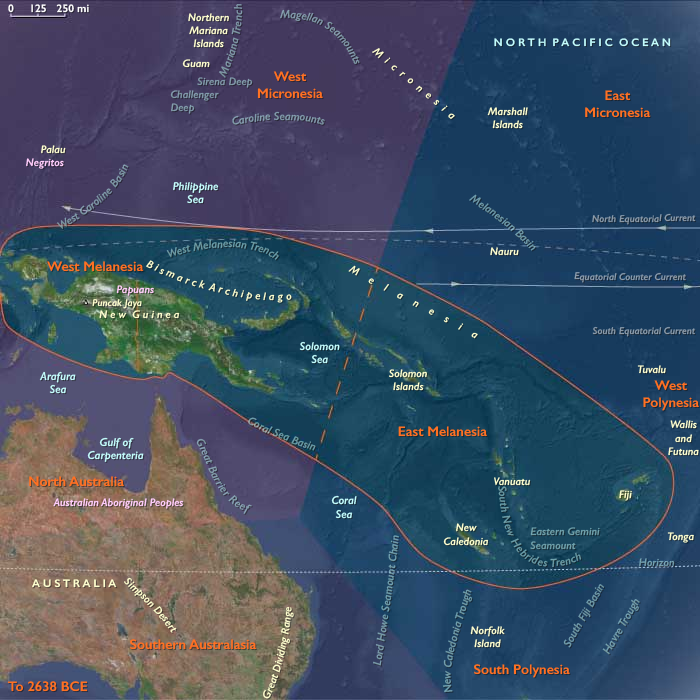
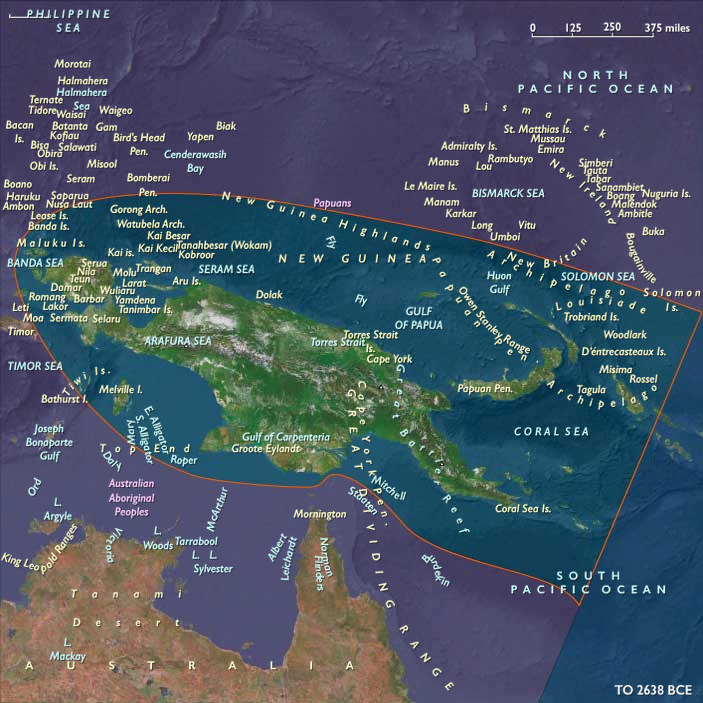
West Melanesia includes New Guinea (main island), its adjacent islands (Bismarck Archipelago: New Britain, New Ireland, Manus; Admiralties), and the northern Solomons (Bougainville, Buka).
-
Anchors: the Central Highlands of New Guinea, the Sepik–Ramu basins, Papuan Gulf, Huon Peninsula, Bismarck chain (New Britain, New Ireland, Manus), and the northern Solomons (Bougainville).
-
Sahul connection: lowered sea level (~100 m below modern) joined New Guinea to Australia; Torres Strait was dry land.
-
The Bismarck Archipelago and Bougainville remained separated by open seas but closer than today.
-
Highland valleys were colder, often glaciated, with frost-prone basins.
Climate & Environmental Shifts
-
Last Glacial Maximum: cooler, drier; montane glaciers extended in the Central Highlands.
-
Coastal reefs retreated to shelf edges; intertidal flats expanded.
Subsistence & Settlement
-
Modern humans reached Sahul >45,000 BP; by this epoch, populations occupied New Guinea highlands and lowland coasts.
-
Foragers exploited tubers (wild yam, taro), nuts, small game, and marsupials.
-
Early rock shelter camps (e.g., Ivane Valley) show seasonal hunting.
Technology & Material Culture
-
Flaked stone tools of quartz, chert; ground stone use emerging for woodworking.
-
Early use of plant fibers for nets/bags; shelters adapted to highland frost.
Movement & Interaction Corridors
-
Movement along river valleys (Sepik–Ramu, Strickland, Fly); coast–inland exchange likely limited but present.
-
Occasional crossings into the Bismarcks hinted by obsidian movement.
Cultural & Symbolic Expressions
-
Rock art and ochre use widespread; symbolic burials appear in highland contexts.
Environmental Adaptation & Resilience
-
Flexible coast–inland foraging; fire regimes reshaped highland grasslands, aiding tuber growth and game visibility.
Transition
By 28,578 BCE, highland foragers and coastal groups had established enduring lifeways across New Guinea, part of the wider Sahulian world.
Groups
Topics
Subjects
Regions
Subregions
Years: 49293BCE - 28578BCE
Groups
Topics
Subjects
Regions
Subregions