
West Central Europe (820 – 963 CE): …
Years: 820 - 963
West Central Europe (820 – 963 CE): Carolingian Legacies, Lotharingian Marches, and the Rhineland River Economy
Geographic and Environmental Context
West Central Europe includes modern Germany west of 10°E and the far northwest of Switzerland (Basel and the eastern Jura).
-
Anchors: the Middle and Upper Rhine corridor (Cologne, Mainz, Worms, Speyer, Bonn, Trier, Basel), the Moselle valley (Trier), the Main valley (Frankfurt, Würzburg), and the Basel–eastern Jura hinge to Burgundy.
Climate and Environmental Shifts
-
Cool-temperate conditions with ample rainfall supported cereals on river terraces and viticulture on south-facing slopes of the Rhine and Moselle.
-
From the mid-10th century, the onset of the Medieval Warm Period modestly lengthened growing seasons and navigation windows, aiding vineyards, hay meadows, and river traffic.
Societies and Political Developments
-
Carolingian fragmentation (843–888):
-
The Treaty of Verdun (843) split the empire; the Rhineland oscillated between East Francia and Middle Francia → Lotharingia.
-
Powerful archbishoprics (Mainz, Trier, Cologne) and great abbeys held fiscal immunities and military duties, stabilizing governance as comital lordship proliferated.
-
-
Lotharingian question (9th–10th c.):
-
Repeated partitions (Meerssen 870, Ribbemont 880) shuffled frontiers; cities like Aachen, Cologne, and Mainz mediated royal claims and border defense.
-
-
Ottonian consolidation (919–963):
-
Henry I “the Fowler” (919–936) stabilized East Francia;
-
Otto I (936–973) curbed ducal autonomy, relied on imperial bishops, and defeated the Magyars at Lechfeld (955)—a victory that secured Bavarian and Rhenish hinterlands and restored long-distance commerce.
-
Otto’s imperial coronation (962/963) reaffirmed Rhineland preeminence in imperial ceremony, law, and church politics.
-
-
Urban–ecclesiastical power:
-
Aachen remained a symbolic Carolingian capital;
-
Cologne, Mainz, and Trier emerged as archiepiscopal kingmakers;
-
Worms and Speyer developed as Salian-linked royal centers;
-
Basel guarded the Upper Rhine and Alpine approaches.
-
Economy and Trade
-
Agrarian base: rye, wheat, barley, and oats on loess; vineyards along the Rhine/Moselle; cattle and swine in riverine meadows and oak woods.
-
Rhine river economy: the Rhine served as Europe’s main north–south artery, moving wine, grain, millstones, timber, salt, and ceramics; Moselle and Main tributaries fed regional markets.
-
Tolls & fairs: episcopal and comital toll stations at bridges and fords funded defense; periodic markets in Aachen, Cologne, Mainz, Worms, Speyer, Trier, and Basel tied local and long-haul trade.
-
Monetization: Carolingian deniers and later Ottonian denarii circulated from Rhineland mints; church treasuries and royal pfalzen concentrated bullion for payments and patronage.
Subsistence and Technology
-
Heavy plow (carruca) and ox/horse traction extended deep tillage on heavy soils; three-field rotations appeared on richer estates.
-
Water-mills multiplied on tributary streams; river fish weirs provisioned towns.
-
Viticultural tech: terracing, stone revetments, presses, and cooperage (barrel-making) professionalized wine output.
-
Shipcraft & roadways: flat-bottomed river barges and clinker-built boats plied the Rhine; causeways and fords at Cologne, Mainz, and Basel linked overland routes to the river system.
-
Fortifications: timber-earth burgs and city walls expanded around episcopal seats and royal palaces; bridgeheads became militarized checkpoints.
Movement and Interaction Corridors
-
Middle Rhine (Bingen–Koblenz–Cologne): wine and metalware downriver, salt and cloth upriver.
-
Upper Rhine–Alsace–Basel: interface to Alpine passes (via Basel/Jura) toward Burgundy and Italy.
-
Moselle–Saar: Trier’s hinterland and wine route to the Lower Rhine.
-
Trans-Meuse/Lotharingian roads: linked Rhineland markets to Flanders and the North Sea.
Belief and Symbolism
-
Latin Christianity structured rulership: the archbishops of Mainz, Trier, Cologne served as royal advisors and later imperial electors; cathedral schools fostered learning and scriptoria.
-
Monastic reform currents (e.g., Gorze, precursors to Cluny) energized discipline and estate management; reliquary cults drew pilgrims, reinforcing urban prestige.
-
Royal ritual: imperial assemblies and synods in Rhineland cities showcased the fusion of sacral kingship with episcopal authority.
Adaptation and Resilience
-
Jurisdictional layering—bishops, abbots, counts—spread risk and ensured continuity when dynasties faltered.
-
River redundancy: when overland routes were insecure, merchants shifted to the Rhine; when war threatened a reach, tributary detours and fairs kept exchange flowing.
-
Food-rent & tithe systems buffered markets against poor harvests; monastic granaries and urban storehouses stabilized provisioning.
Long-Term Significance
By 963 CE, West Central Europe had reemerged as the imperial and commercial heart of the German kingdom:
-
A Rhineland episcopal axis (Aachen–Cologne–Mainz–Trier) anchored Ottonian power;
-
Wine-and-river trade linked Alpine, Burgundian, and North Sea economies;
-
Urban centers from Basel to Cologne consolidated tolls, crafts, and ecclesiastical authority.
These arrangements—imperial-episcopal governance, Rhine logistics, and viticultural surplus—set the stage for the 10th–11th-century urban and ecclesiastical boom that would define the high medieval Rhineland.
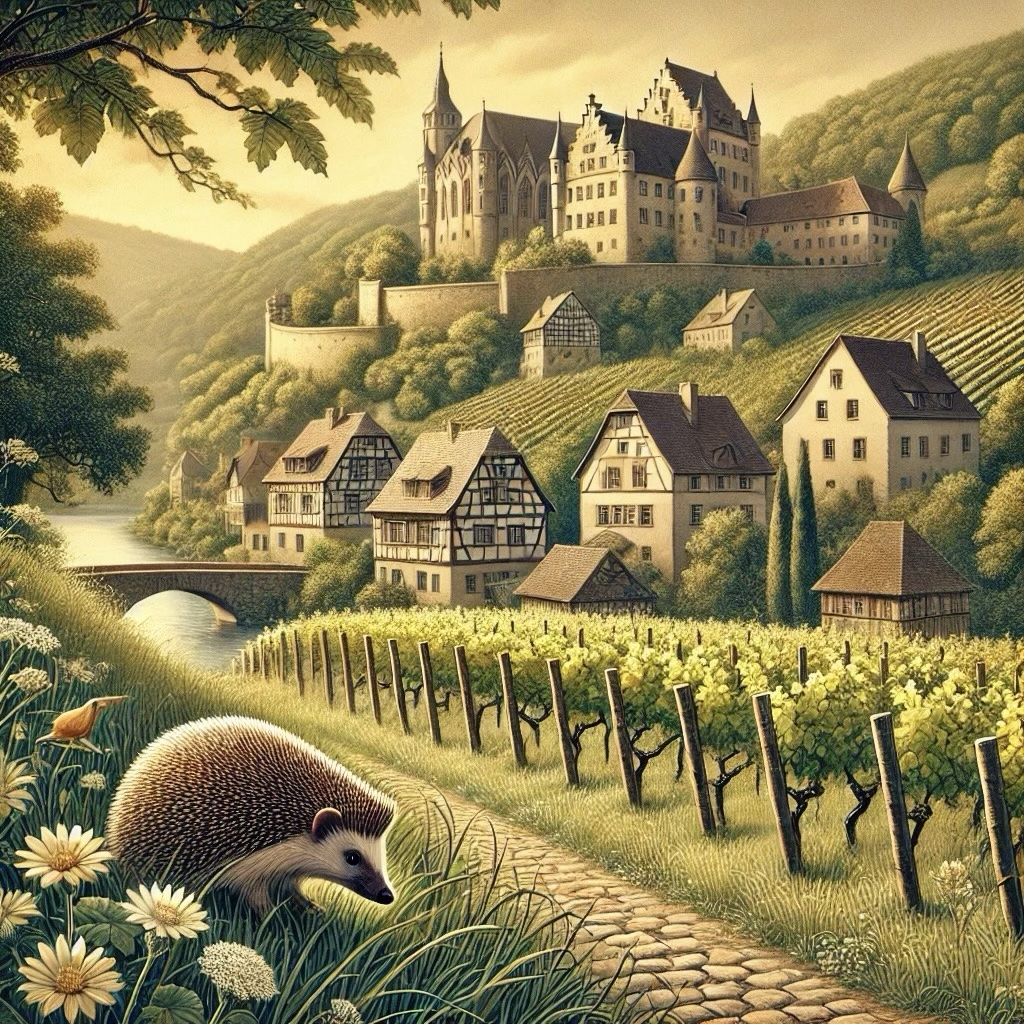
West Central Europe (with civilization) ©2024-25 Electric Prism, Inc. All rights reserved.
People
Groups
- Hungarian people
- Christianity, Chalcedonian
- Francia (Carolingians)
- Mainz, Electoral Archbishopric of
- Frankish, or Carolingian (Roman) Empire
- Francia Occidentalis (West Francia, or France), Kingdom of
- Francia Orientalis (East Francia), Kingdom of
- Francia Media (Middle Francia), Kingdom of
- Burgundy, Upper, Kingdom of
- Lotharingia, Kingdom of
- Worms, Bishopric of
- Hungary, Principality of
- Lotharingia, Duchy of
- Cologne, Electorate of
- Lorraine (Lothier), Upper, Duchy of
- Lorraine (Lotharingia), Lower, (first) Duchy of
- German, or Ottonian (Roman) Empire
- Holy Roman Empire
- Germany, Kingdom of (within the Holy Roman Empire)
Topics
Commodoties
- Rocks, sand, and gravel
- Domestic animals
- Grains and produce
- Textiles
- Ceramics
- Strategic metals
- Salt
- Beer, wine, and spirits
- Lumber
- Money
- Spices
Subjects
Regions
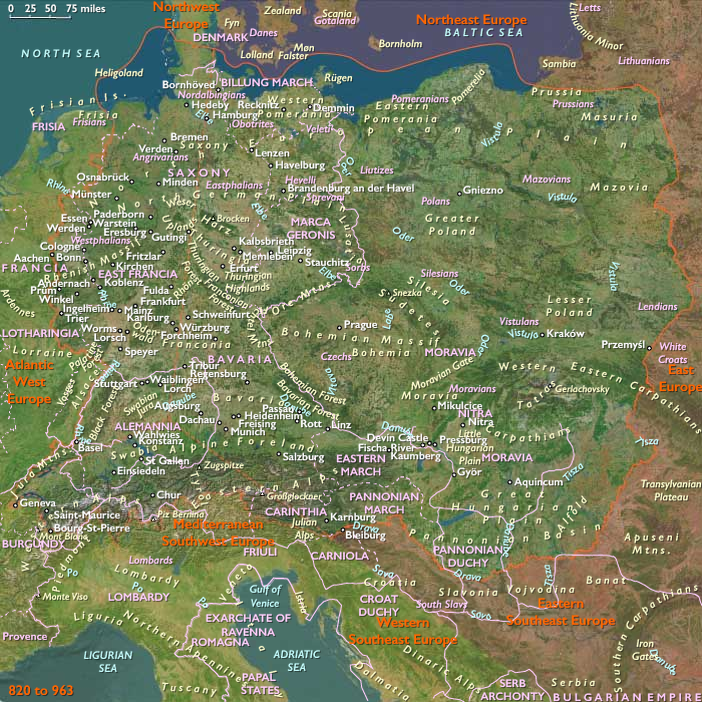
Subregions
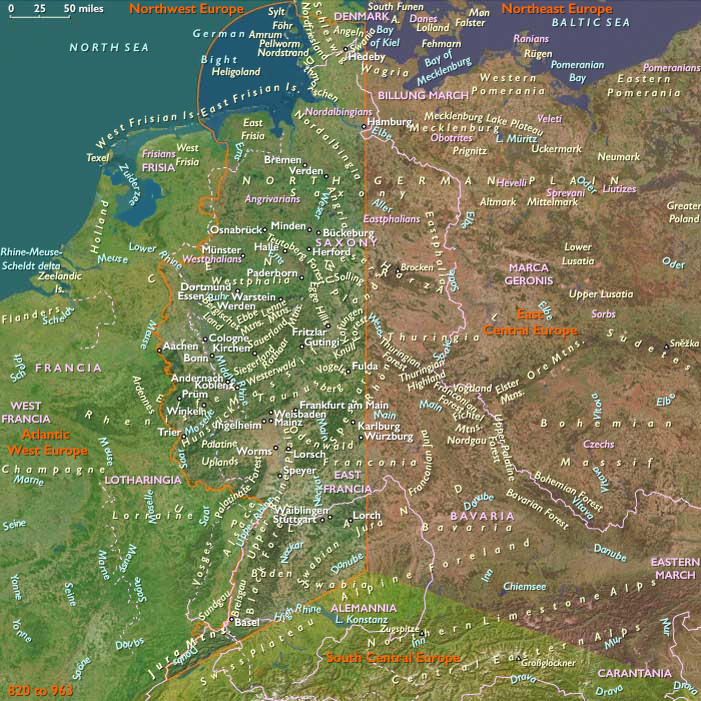
Years: 820 - 963
West Central Europe (with civilization) ©2024-25 Electric Prism, Inc. All rights reserved.
People
Groups
- Hungarian people
- Christianity, Chalcedonian
- Francia (Carolingians)
- Mainz, Electoral Archbishopric of
- Frankish, or Carolingian (Roman) Empire
- Francia Occidentalis (West Francia, or France), Kingdom of
- Francia Orientalis (East Francia), Kingdom of
- Francia Media (Middle Francia), Kingdom of
- Burgundy, Upper, Kingdom of
- Lotharingia, Kingdom of
- Worms, Bishopric of
- Hungary, Principality of
- Lotharingia, Duchy of
- Cologne, Electorate of
- Lorraine (Lothier), Upper, Duchy of
- Lorraine (Lotharingia), Lower, (first) Duchy of
- German, or Ottonian (Roman) Empire
- Holy Roman Empire
- Germany, Kingdom of (within the Holy Roman Empire)
Topics
Commodoties
- Rocks, sand, and gravel
- Domestic animals
- Grains and produce
- Textiles
- Ceramics
- Strategic metals
- Salt
- Beer, wine, and spirits
- Lumber
- Money
- Spices
Subjects
Regions
Subregions