
West Central Europe (964 – 1107 CE): …
Years: 964 - 1107
West Central Europe (964 – 1107 CE): Salian Kingship, Cathedral Cities, and the Rhineland–North Sea Axis
Geographic and Environmental Context
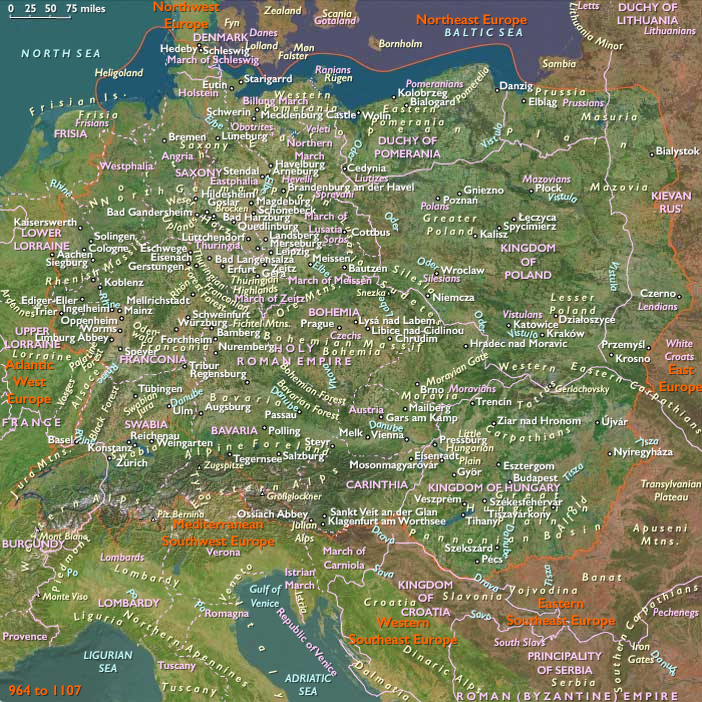
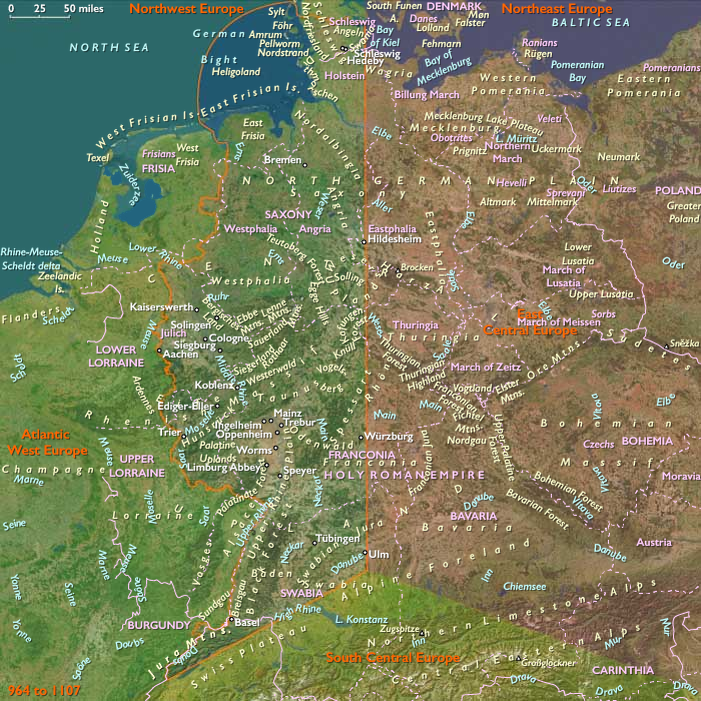
West Central Europe includes modern Germany west of 10°E and the far northwest of Switzerland (Basel and the eastern Jura).
-
Anchors: the Rhine–Moselle cities (Cologne, Mainz, Trier, Worms, Speyer, Bonn), the Main corridor (Frankfurt, Würzburg), and the Basel–eastern Jura passes toward Burgundy.
Climate and Environmental Shifts
-
The Medieval Warm Period expanded viticulture in the Moselle, Middle Rhine, and Burgundy-linked corridors.
-
Increased agricultural productivity supported demographic growth and the spread of villages into forest clearings.
-
Flooding remained a challenge in the Rhine’s lowlands, but embankment and drainage projects began in earnest by the 11th century.
Societies and Political Developments
-
Ottonian–Salian kingship:
-
Otto II (973–983) and Otto III (983–1002) anchored imperial assemblies at Aachen and Mainz;
-
Henry II (1002–1024) fostered church reform and consolidated royal–episcopal cooperation;
-
Salian dynasty: Conrad II (1024–1039), Henry III (1039–1056), and Henry IV (1056–1106) built palaces and cathedrals at Speyer, Worms, and Mainz.
-
-
Investiture Controversy (1070s–1080s): Conflict between Henry IV and Pope Gregory VII over episcopal appointments culminated in Henry’s penance at Canossa (1077); Rhineland bishops and abbots played decisive roles in imperial–papal tensions.
-
Ecclesiastical states: archbishops of Cologne, Mainz, and Trier grew as territorial lords with lands, tolls, and vassals.
-
Burgundy & Alsace: Incorporated into the empire, with Basel as a frontier bishopric tied to both Burgundy and Swabia.
Economy and Trade
-
Agriculture: three-field system spread widely; heavy plows and horse traction improved yields; new villages and clearances expanded settlement into Eifel, Hunsrück, and Jura fringes.
-
Viticulture: Moselle and Rhine wines exported north via river fleets to Flanders, England, and Scandinavia.
-
Rhine trade: Cologne became a premier emporium, importing English wool, Flemish cloth, and Baltic amber, and exporting wine, salt, glassware, and metalwork.
-
Markets and coinage: Imperial and episcopal mints (Cologne, Mainz, Worms, Speyer, Basel) struck silver denarii; fairs tied to cathedrals and relics fostered periodic exchange.
Subsistence and Technology
-
Plowlands and vineyards expanded; drainage of river meadows increased hay production.
-
Water-mills and early windmills multiplied along tributaries; quarrying provided stone for monumental cathedrals.
-
Fortifications: stone keeps and city walls arose around episcopal cities; royal palaces (pfalzen) at Aachen, Ingelheim, and Goslar (just beyond) showcased imperial presence.
-
Shipcraft: larger river barges and sailing craft allowed bulk wine/grain exports; Rhine bridges consolidated toll regimes.
Movement and Interaction Corridors
-
Middle Rhine corridor: Mainz–Worms–Speyer–Cologne became the empire’s busiest trade spine.
-
Moselle–Saar–Meuse links: Trier’s trade integrated with Lotharingia and Flanders.
-
Upper Rhine–Basel–Jura routes: tied Burgundy and Italy into Rhineland commerce.
-
Pilgrimage roads: Aachen (Charlemagne’s relics) and Trier (Holy Robe) drew pilgrims, while Cologne’s shrines foreshadowed later importance.
Belief and Symbolism
-
Romanesque cathedral boom: monumental churches at Speyer (imperial burial place), Mainz, Worms, and Trier reflected Salian patronage.
-
Cluniac reform spread into the Rhineland, inspiring new monasteries and disciplined abbeys.
-
Saints’ cults and relic processions (Aachen’s Palatine Chapel, Trier’s relics, Cologne’s early shrines) enhanced urban prestige.
-
Investiture Controversy polarized sacred kingship and papal supremacy, with West Central Europe at the conflict’s center.
Adaptation and Resilience
-
Episcopal–imperial partnership enabled political stability despite dynastic crises.
-
Agricultural innovation buffered against climate variability and underpinned demographic growth.
-
Urban resilience: cathedral cities developed artisan guilds and merchant groups, securing self-defense and provisioning during conflicts.
-
Trade redundancy: Rhine routes, Moselle spurs, and Jura passes gave multiple options when wars disrupted any one corridor.
Long-Term Significance
By 1107 CE, West Central Europe stood as the imperial and ecclesiastical core of the Holy Roman Empire:
-
The Rhine axis (Mainz–Cologne–Trier–Speyer–Worms) dominated European trade.
-
Aachen retained symbolic prestige as Charlemagne’s capital and an imperial assembly site.
-
Monumental cathedrals and reformist monasteries transformed the cultural landscape.
-
Political struggles of the Investiture Controversy forged enduring tensions between emperor, pope, and prince-bishops.
This subregion’s fusion of riverine economy, cathedral building, and imperial-episcopal governance defined the high medieval Rhineland and its place at the heart of Latin Christendom.
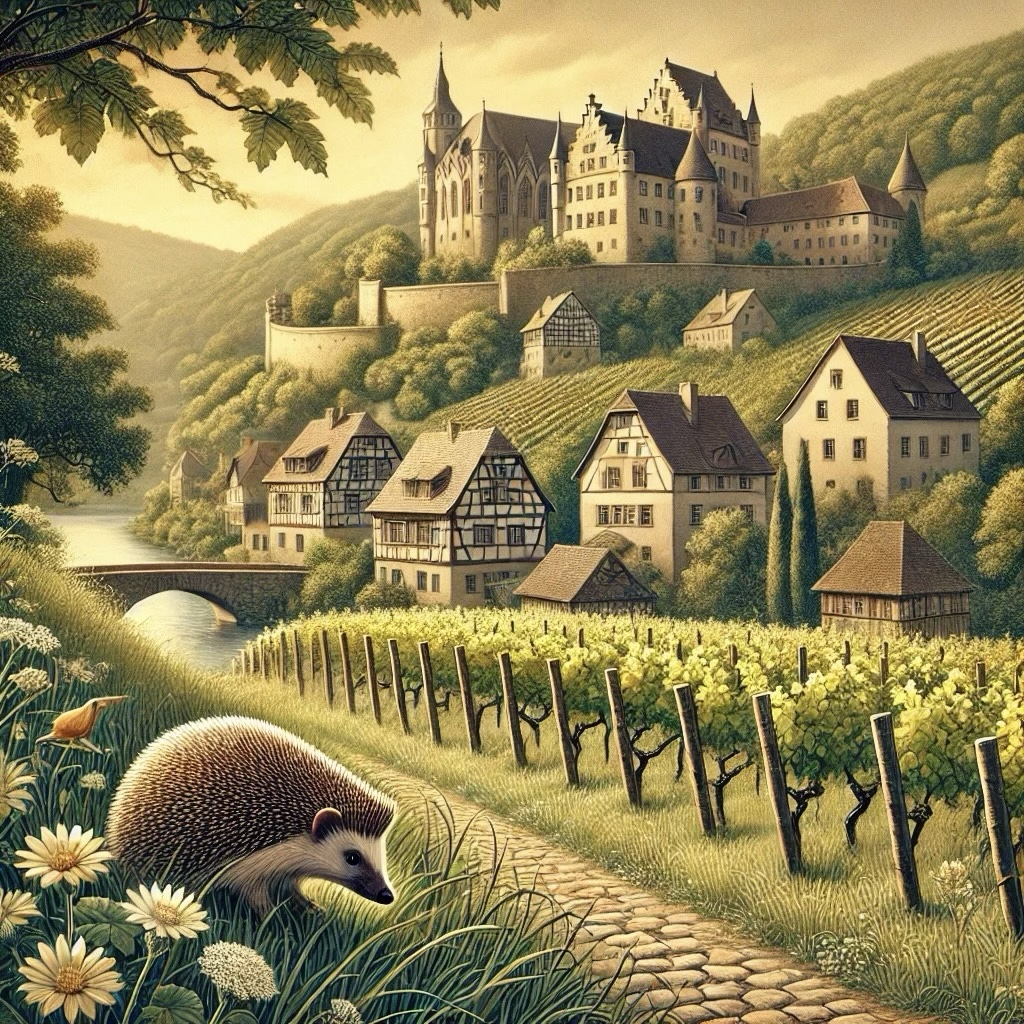
West Central Europe (with civilization) ©2024-25 Electric Prism, Inc. All rights reserved.
People
- Conrad II
- Henry III, Holy Roman Emperor
- Henry IV, Holy Roman Emperor
- Otto II
- Otto III
- Pope Gregory VI
Groups
- Christianity, Chalcedonian
- Papal States (Republic of St. Peter)
- Mainz, Electoral Archbishopric of
- Worms, Bishopric of
- Trier, Electorate of
- Cologne, Electorate of
- Lorraine (Lothier), Upper, Duchy of
- Lorraine (Lotharingia), Lower, (first) Duchy of
- Germany, Kingdom of (within the Holy Roman Empire)
- German, or Ottonian (Roman) Empire
- Holy Roman Empire
- Burgundy, County of
- Basel, Prince-Bishopric of
- Burgundy, Duchy of
- Lorraine, (second) Duchy of
- Lorraine (Lothier), Lower, (second) Duchy of
- Christians, Roman Catholic
Topics
Commodoties
- Domestic animals
- Grains and produce
- Textiles
- Ceramics
- Strategic metals
- Salt
- Beer, wine, and spirits
- Spices
Subjects
Regions
Subregions
Years: 964 - 1107
West Central Europe (with civilization) ©2024-25 Electric Prism, Inc. All rights reserved.
People
- Conrad II
- Henry III, Holy Roman Emperor
- Henry IV, Holy Roman Emperor
- Otto II
- Otto III
- Pope Gregory VI
Groups
- Christianity, Chalcedonian
- Papal States (Republic of St. Peter)
- Mainz, Electoral Archbishopric of
- Worms, Bishopric of
- Trier, Electorate of
- Cologne, Electorate of
- Lorraine (Lothier), Upper, Duchy of
- Lorraine (Lotharingia), Lower, (first) Duchy of
- Germany, Kingdom of (within the Holy Roman Empire)
- German, or Ottonian (Roman) Empire
- Holy Roman Empire
- Burgundy, County of
- Basel, Prince-Bishopric of
- Burgundy, Duchy of
- Lorraine, (second) Duchy of
- Lorraine (Lothier), Lower, (second) Duchy of
- Christians, Roman Catholic
Topics
Commodoties
- Domestic animals
- Grains and produce
- Textiles
- Ceramics
- Strategic metals
- Salt
- Beer, wine, and spirits
- Spices
Subjects
Regions
Subregions