
Antarctica (820 – 963 CE): Icebound Mountains, …
Years: 820 - 963
Antarctica (820 – 963 CE): Icebound Mountains, Polar Plateaus, and Unpeopled Frontiers
Geographic and Environmental Context
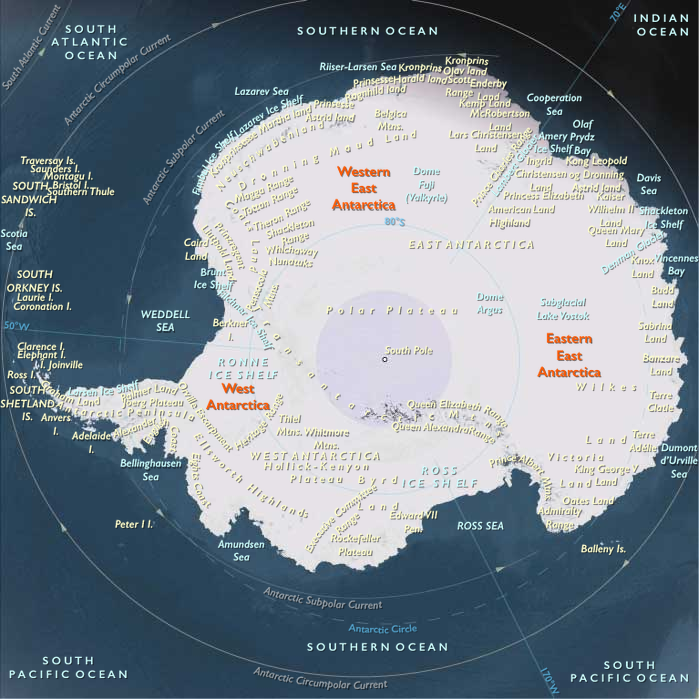
Antarctica at this time remained Earth’s most isolated and least accessible continent—its immense cryosphere stretching from the South Shetland Islands and Antarctic Peninsula across the Transantarctic Mountains to the high domes of East Antarctica.
-
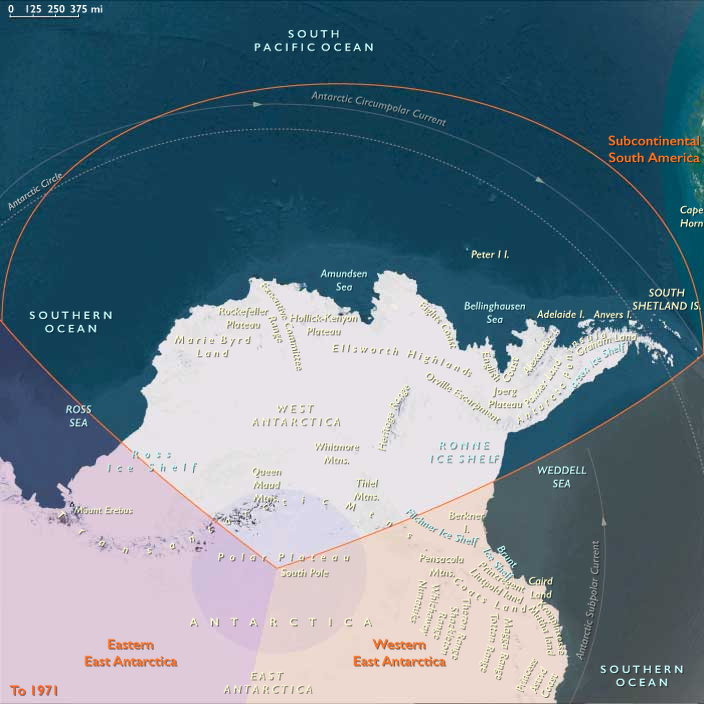
West Antarctica comprised the Peninsula, Marie Byrd Land, and the ice shelves of the Ronne–Filchner and Ross sectors, bordered by the Weddell, Amundsen, and Ross Seas.
-
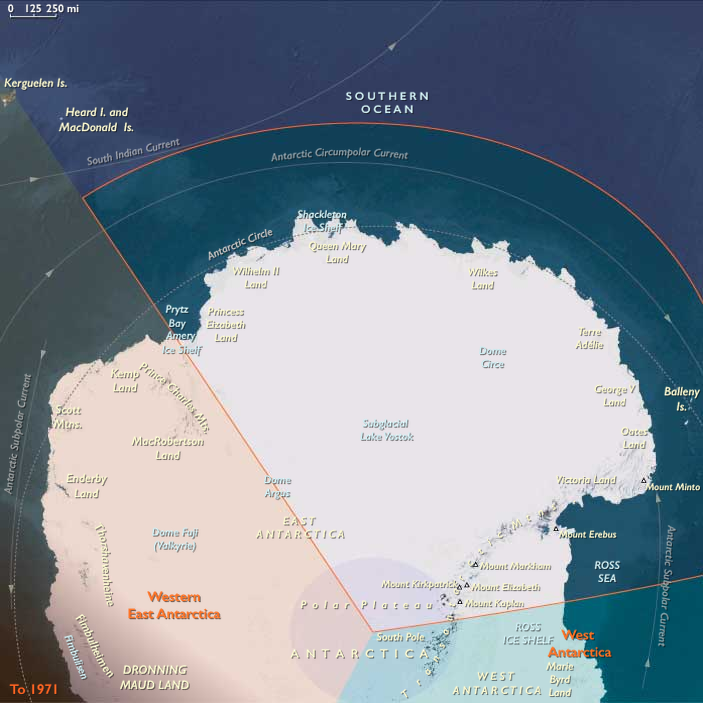
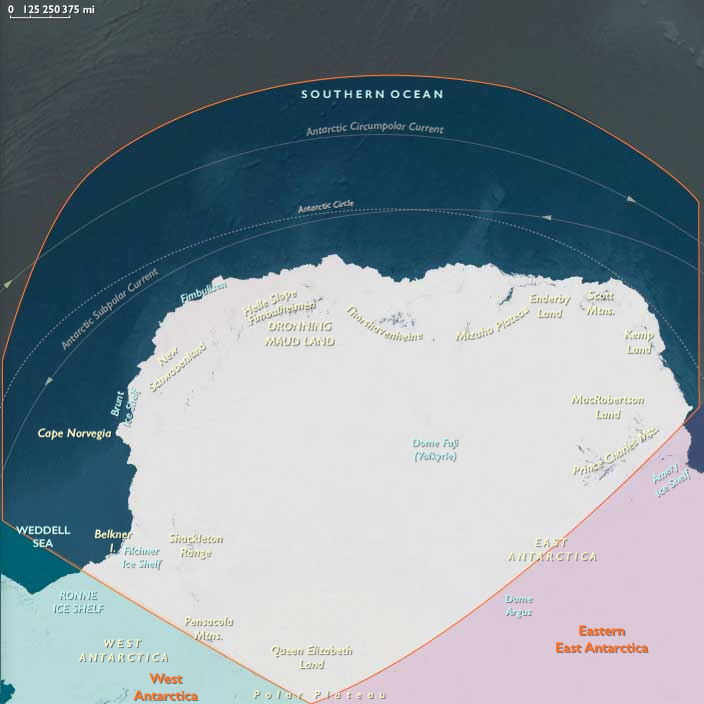
East Antarctica, far vaster, contained the Polar Plateau and interior basins of the Queen Maud, Vostok, and Wilkes regions, ringed by mountain ranges and coastal ice shelves such as the Shackleton, Amery, and West Ice Shelf.
Both sectors were dominated by continental glaciers, exposed nunataks, and perennially frozen deserts at the planet’s lowest mean temperatures.
Climate and Environmental Shifts
-
The late-Holocene neoglacial regime continued, marked by cold stability rather than change.
-
The Antarctic Plateau remained the coldest environment on Earth, with temperatures plunging below −70 °C and katabatic winds racing downslope from the polar domes.
-
The Peninsula–South Shetland arc received higher snowfall and occasional maritime thaws, sustaining small ice-free headlands.
-
In East Antarctica, interior accumulation was minimal; coastal shelves calved icebergs that replenished sea ice across surrounding seas.
-
Polynyas—winter openings in the pack ice—persisted in the Weddell, Ross, and Prydz Bay sectors, anchoring zones of extraordinary marine productivity.
Subsistence and Ecological Systems
No human presence occurred. Life was concentrated in narrow biological margins:
-
Penguins—Adélie, chinstrap, and gentoo on the Peninsula; emperor colonies on fast ice—thrived in summer breeding cycles.
-
Seals (crabeater, Weddell, leopard, Ross) and whales (blue, fin, right) followed krill swarms through seasonal leads.
-
Krill remained the keystone species, feeding on under-ice algae.
-
Lichens and mosses colonized rocky nunataks, forming minute photosynthetic refuges.
-
Petrels, skuas, and albatrosses ranged between Antarctic shelves and subantarctic islands, completing vast migratory circuits.
Technology and Material Culture
Globally, the age saw ironworking and complex maritime trade across temperate oceans, but no known seafaring tradition reached the Antarctic convergence.
Reaching these coasts would have required ice-reinforced hulls, polar textiles, and reliable marine-mammal provisioning—innovations centuries beyond contemporary capability.
Thus, Antarctica remained entirely beyond human exploration, existing only as conjecture in distant cosmologies.
Movement and Interaction Corridors
-
Marine migrations: whales and seals traversed polynyas and pack-ice leads along the Weddell, Bellingshausen, Amundsen, and Ross Seas.
-
Glacial systems: the East Antarctic Ice Sheet drained through massive ice streams—Lambert, Recovery, Byrd, and Beardmore—feeding the encircling ice shelves.
-
Atmospheric circulation: the circumpolar vortex locked Antarctica in a self-contained climatic cell, influencing global albedo and sea-level balance.
Belief and Symbolism
No human myth was grounded in direct Antarctic experience, yet across the ancient world legends of a great southern land persisted:
-
Greek and Roman philosophers postulated Terra Australis Incognita to balance the globe;
-
Polynesian and Andean oral traditions hinted at distant southern waters.
These remained speculative echoes, not geographic knowledge.
Environmental Adaptation and Resilience
-
Ecosystems operated at maximum efficiency under minimal warmth: breeding timed to fleeting summers, fasting adapted to long winters.
-
Micro-habitats on nunataks supported extremophile flora able to desiccate and revive after decades of dormancy.
-
Marine food webs proved self-renewing: krill cycles, penguin migrations, and seal pupping synchronized with seasonal ice advance and retreat.
-
The continent functioned as Earth’s primary cold reservoir, stabilizing global climate through its reflective ice sheet.
Long-Term Significance
By 963 CE, Antarctica remained a pristine, unvisited wilderness:
-
Glacial and coastal systems stood near modern extents.
-
Marine and avian populations thrived without human disturbance.
-
No technological horizon yet existed capable of reaching these latitudes.
For the rest of the medieval millennium, Antarctica endured as the planet’s final unpeopled realm—a silent counterweight of ice and life, shaping Earth’s oceans and atmosphere far from any witness.
Topics
Subjects
Regions
Subregions
Years: 820 - 963
Topics
Subjects
Regions
Subregions