
West Africa (4,365 – 2,638 BCE) …
Years: 4365BCE - 2638BCE
West Africa (4,365 – 2,638 BCE) Late Neolithic/Chalcolithic — Agricultural Expansion and Oasis Trade
Geographic and Environmental Context
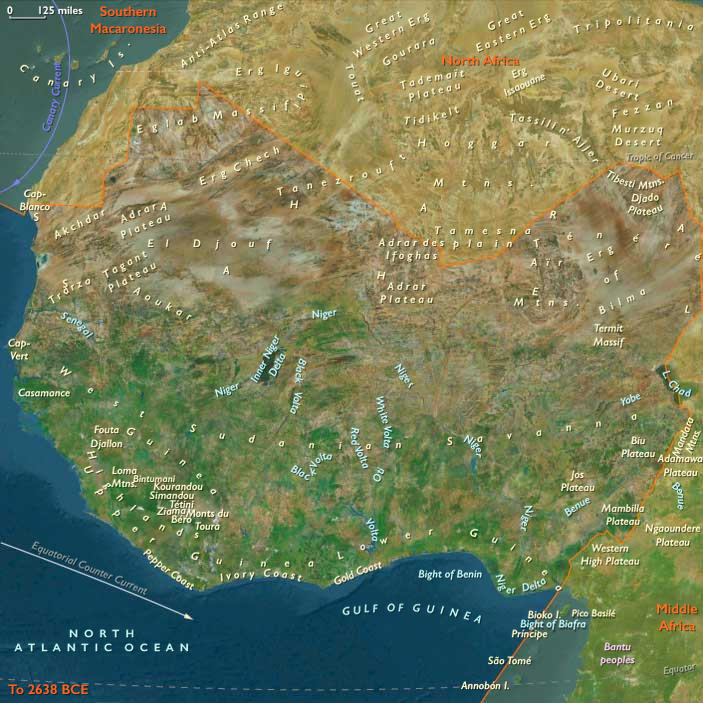
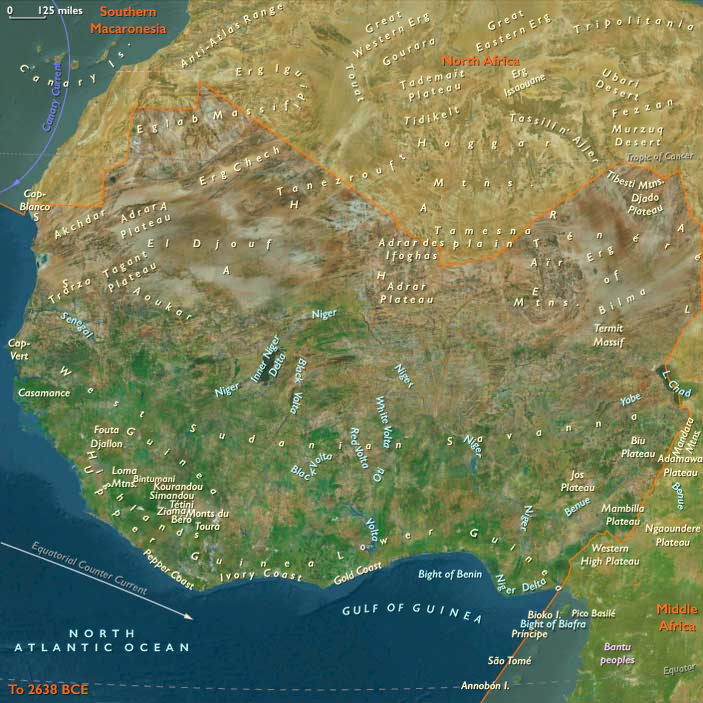
The Atlantic and inland belt from Senegal and Mauritania east through Mali, Niger, Burkina Faso, and Nigeria (western and central), plus the forest–savanna margins of Guinea, Sierra Leone, Liberia, Côte d’Ivoire, Ghana, Togo, and Benin.
Anchors: Senegal–Gambia valleys, Inland Niger Bend and Inland Delta (Timbuktu, Mopti, Gao), Middle Niger–Kainji basin, Jos Plateau, Hausaland (Kano, Katsina, Zaria), Upper Volta basin, Gold Coast forest margins, Futa Jallon highlands, Dahomey Gap.
-
Sahara began desiccating after 4000 BCE.
-
Sahel/Savanna belts contracted south.
Climate & Environmental Shifts
-
Arid pulses increased; oases crucial.
Subsistence & Settlement
-
Millet–sorghum agriculture spread.
-
Oil palm cultivation in forests.
-
Cattle pastoralism consolidated.
Technology & Material Culture
-
Pottery painted/incised; copper trinkets reached Sahel.
-
Irrigation ditches at Niger Inland Delta.
Movement & Interaction Corridors
-
Oasis–Sahel trade: salt, copper, livestock.
-
Niger Inland Delta a trading hub.
Cultural & Symbolic Expressions
-
Rock art in Sahara records transition from wildlife to pastoral motifs.
Environmental Adaptation & Resilience
-
Farming and trade stabilized societies despite Sahara desiccation.
Transition
By 2,638 BCE, West Africans adapted to Sahara aridification with agriculture and oasis trade.
Topics
Commodoties
- Fish and game
- Domestic animals
- Oils, gums, resins, and waxes
- Grains and produce
- Strategic metals
- Salt
Subjects
Regions
Subregions
Years: 4365BCE - 2638BCE
Topics
Commodoties
- Fish and game
- Domestic animals
- Oils, gums, resins, and waxes
- Grains and produce
- Strategic metals
- Salt
Subjects
Regions
Subregions