
West Africa (1396–1539 CE): Empires, Gold, and …
Years: 1396 - 1539
West Africa (1396–1539 CE): Empires, Gold, and the Atlantic Turn
Geographic & Environmental Context
The subregion of West Africa includes the Sahelian and savanna zones stretching from the Senegal and Niger River basins across modern Mali, Burkina Faso, and Niger, as well as the forest and coastal belts of modern Guinea, Sierra Leone, Liberia, Côte d’Ivoire, Ghana, Togo, Benin, and Nigeria. Anchoring landscapes included the Niger River’s inland delta, the Sahel’s grasslands, the forested Guinea coast, and the Atlantic seaboard with its lagoons and estuaries.
Climate & Environmental Shifts
The Little Ice Age brought modest cooling and rainfall variability. Sahelian zones experienced alternating drought and recovery, testing herders and farmers. Savanna and forest belts enjoyed relatively stable rainfall, sustaining yam and oil palm cultivation. Along the coast, seasonal monsoons shaped farming cycles, while the Atlantic upwelling enriched marine fisheries.
Subsistence & Settlement
-
Sahel and savanna: Millet, sorghum, and rice supported large populations, with cattle, sheep, and camels managed in mixed herding systems.
-
Forest belt: Yams, kola, palm oil, and plantains anchored subsistence, complemented by hunting and river fisheries.
-
Urban centers: Timbuktu, Gao, Jenne, and other cities combined farming hinterlands with trade, scholarship, and crafts.
Technology & Material Culture
Iron smelting and blacksmithing flourished, supplying weapons, hoes, and ritual objects. Sahelian architecture—mud-brick mosques and palaces—defined skylines (Djinguereber Mosque, Askia’s Tomb). In the forest, the Benin court produced brass and ivory works. Textiles, leatherwork, and gold jewelry circulated widely. Manuscripts in Arabic script preserved Islamic scholarship in Timbuktu and other cities.
Movement & Interaction Corridors
-
Trans-Saharan routes: Caravans carried gold, kola, and captives north in exchange for salt, horses, and luxuries.
-
River corridors: The Niger River served as an east–west artery for goods and ideas.
-
Atlantic seaboard: Portuguese ships reached Senegal in the mid-15th century, later tapping the Gambia and Gold Coast, inaugurating direct Atlantic trade while older Saharan links persisted.
Cultural & Symbolic Expressions
Islam flourished in Sahelian capitals: mosques, Qur’anic schools, and zawiyas anchored faith and learning. Oral traditions of griots preserved epics and genealogies. In the forest zone, ritual kingship, sacred groves, and ancestral veneration structured societies. Festivals, drumming, and praise-songs reinforced political legitimacy.
Environmental Adaptation & Resilience
Agricultural diversification and transhumance buffered environmental stress. Tribute and trade redistributed surpluses in lean years. Coastal chiefdoms exploited fisheries and mangroves. Spiritual rituals reinforced cohesion under climate pressure.
Transition
By 1539 CE, the Songhai Empire dominated the Niger bend; Benin flourished as an artistic and political power; and coastal polities engaged Portuguese traders. Gold, ivory, kola, and enslaved captives linked West Africa to both Saharan and Atlantic networks, reshaping its place in the wider world.
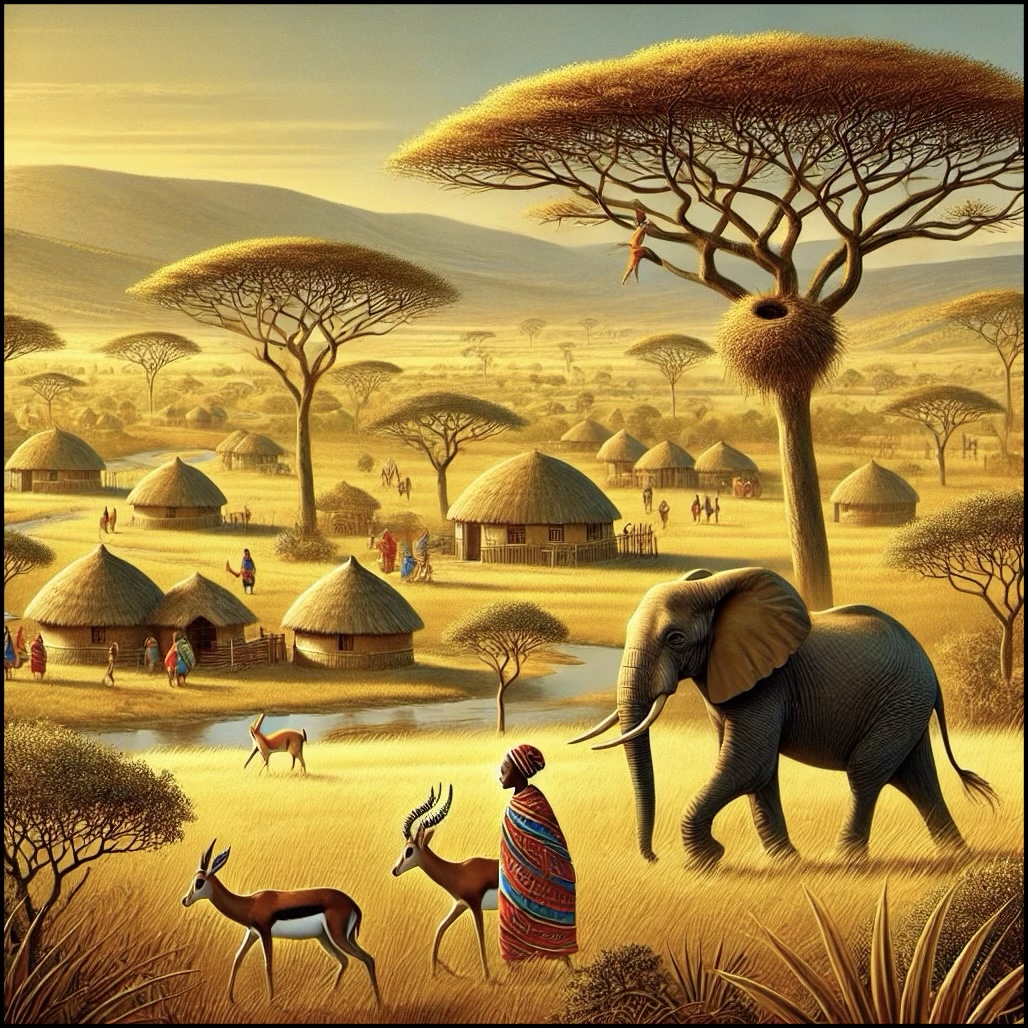
West Africa (with civilization) ©2024-25 Electric Prism, Inc. All rights reserved.
People
Groups
- Mandé peoples
- Hausa Kingdoms, the
- Hausa people
- Islam
- Soninke people
- Sijilmassa, Berber state of
- Ghana (Wagadou) Empire
- Takrur, state of
- Akan people
- Yoruba people
- Kano (Hausa city state)
- Katsina (Hausa city state)
- Zaria (Zazzau), Hausa City-State of
- Mossi people
- Mossi Kingdoms
- Benin Empire
- Jolof Kingdom
- Mali Empire
- Songhai (Songhay) Empire
- Jolof (Wolof) Empire
Topics
Commodoties
- Fish and game
- Weapons
- Hides and feathers
- Gem materials
- Domestic animals
- Grains and produce
- Textiles
- Ceramics
- Strategic metals
- Slaves
- Salt
- Manufactured goods
- Stimulants
Subjects
Regions
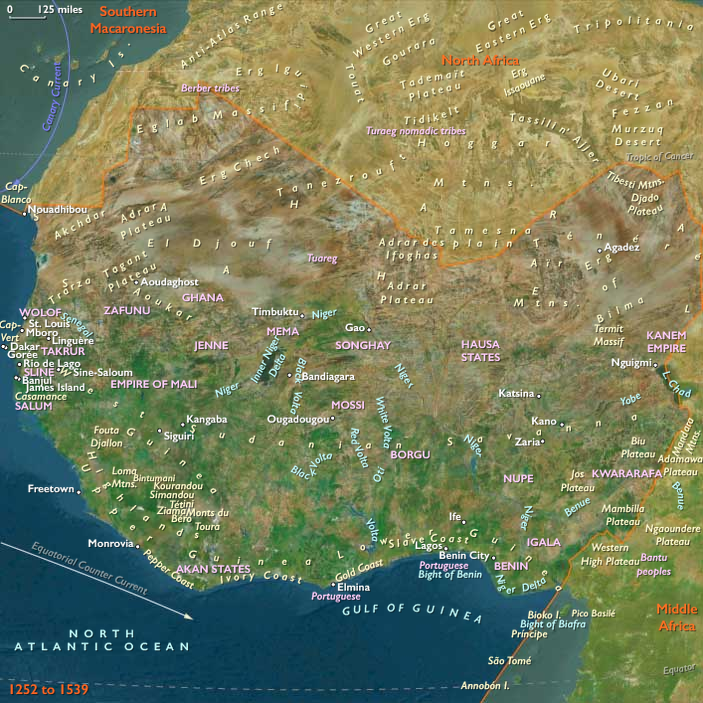
Subregions
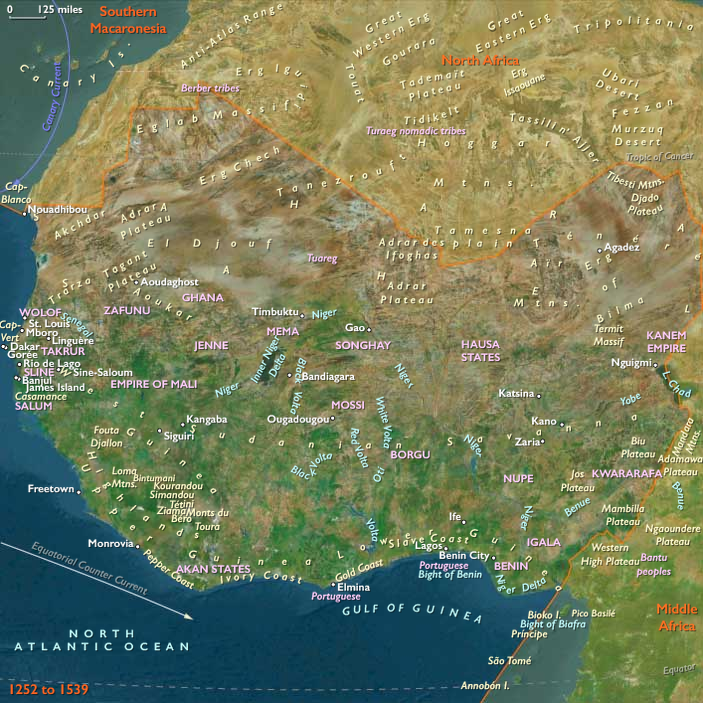
Related Events
Showing 10 events out of 43406 total
Years: 1396 - 1539
West Africa (with civilization) ©2024-25 Electric Prism, Inc. All rights reserved.
People
Groups
- Mandé peoples
- Hausa Kingdoms, the
- Hausa people
- Islam
- Soninke people
- Sijilmassa, Berber state of
- Ghana (Wagadou) Empire
- Takrur, state of
- Akan people
- Yoruba people
- Kano (Hausa city state)
- Katsina (Hausa city state)
- Zaria (Zazzau), Hausa City-State of
- Mossi people
- Mossi Kingdoms
- Benin Empire
- Jolof Kingdom
- Mali Empire
- Songhai (Songhay) Empire
- Jolof (Wolof) Empire
Topics
Commodoties
- Fish and game
- Weapons
- Hides and feathers
- Gem materials
- Domestic animals
- Grains and produce
- Textiles
- Ceramics
- Strategic metals
- Slaves
- Salt
- Manufactured goods
- Stimulants
Subjects
Regions
Subregions