
The Joyous Entry and the Struggle for …
Years: 1356 - 1356
The Joyous Entry and the Struggle for Brabant (1355–1356)
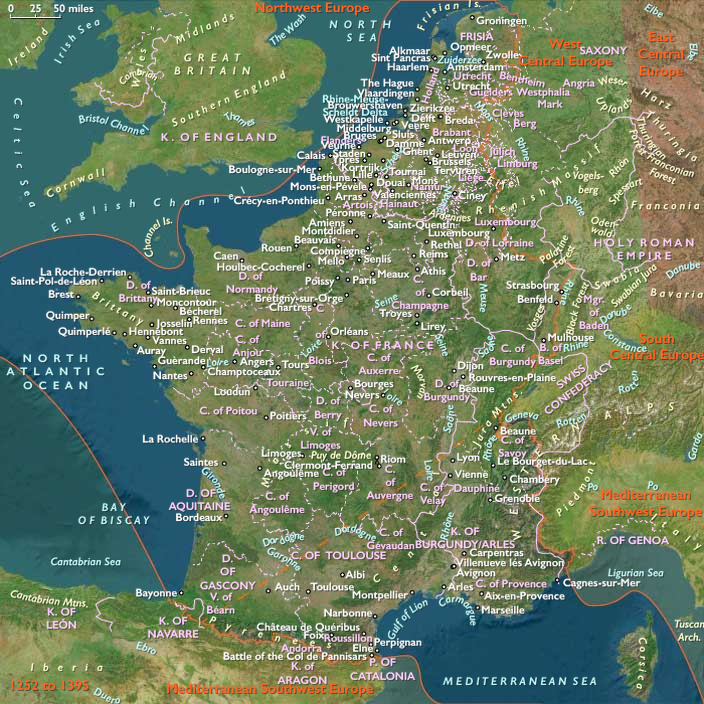
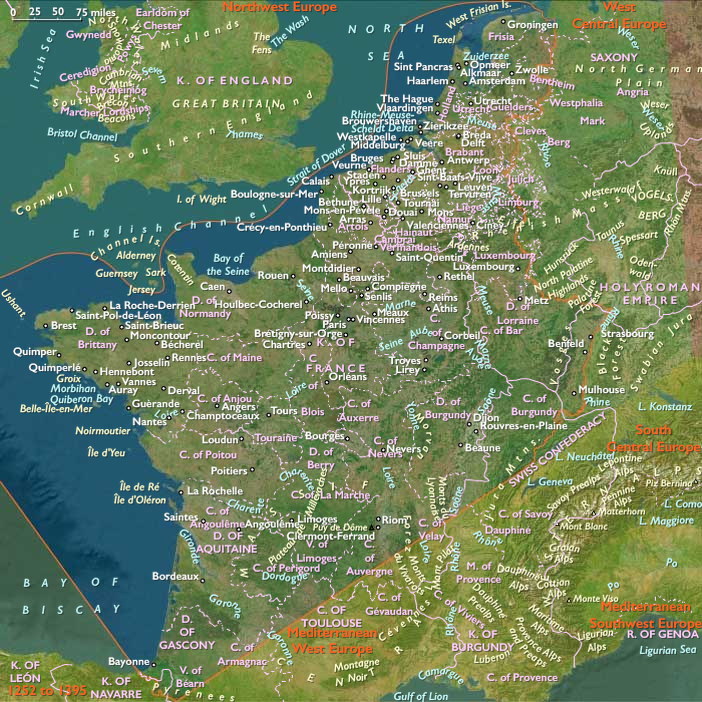
In 1352, Wenceslaus, Duke of Luxembourg, married Joanna of Brabant, the daughter of Duke John III of Brabant and Limburg and Marie d'Évreux. Upon her father’s death in 1355, Joanna inherited the Duchy of Brabant and Limburg, but her rule was immediately contested, leading to a conflict with her brother-in-law, Louis II of Flanders.
The Joyous Entry and Flemish Opposition (1355–1356)
- To secure Brabant’s unity and autonomy, Wenceslaus signed the Joyous Entry (Blijde Inkomst) in 1356, a constitutional charter that guaranteed:
- The indivisibility of Brabant (preventing it from being divided between multiple heirs).
- The protection of Brabant’s liberties and self-governance.
- The assurance that Brabant would not be absorbed into Luxembourg.
- However, Louis II of Flanders, who was married to Margaret of Brabant (Joanna’s sister), saw this as a violation of his inheritance rights and invaded Brabant to claim his "share" of the duchy.
The Seizure of Brussels and the Flemish Occupation
- The Flemish army, led by Louis II, overran parts of Brabant and managed to capture Brussels, the duchy’s capital.
- Wenceslaus and Joanna were unable to stop the Flemish advance, and it appeared that Brabant would fall under Flemish control.
The Liberation of Brussels (October 24, 1356)
- On the night of October 24, 1356, a Brabantine patriot, Everard 't Serclaes, led a daring raid to recapture Brussels.
- Scaling the city walls with a small group of men, he launched a surprise attack that forced the Flemish troops to retreat.
- With Brussels liberated, Joanna and Wenceslaus were able to make their "Joyous Entry" into the city, symbolizing their restored rule and the resilience of Brabant’s autonomy.
Impact and Legacy
- The liberation of Brussels prevented Brabant from falling under Flemish rule, but the conflict between Brabant and Flanders continued.
- Everard 't Serclaes’ heroic action became legendary in Brabantine history, and he is still remembered as a symbol of civic resistance and local pride.
- The Joyous Entry remained a cornerstone of Brabant’s constitutional traditions, influencing later struggles for local governance and autonomy in the Low Countries.
The struggle for Brabant in 1356, culminating in the recapture of Brussels and the Joyous Entry of Joanna and Wenceslaus, reinforced Brabant’s independence from Flanders and ensured that its tradition of self-rule would endure.
Locations
People
Groups
Commodoties
Subjects
Regions
Subregions
Related Events
Showing 10 events out of 44108 total
Years: 1356 - 1356
Locations
People
Groups
Commodoties
Subjects
Regions
Subregions