
Wealthy Dutch settlers in Batavia have built …
Years: 1732 - 1743
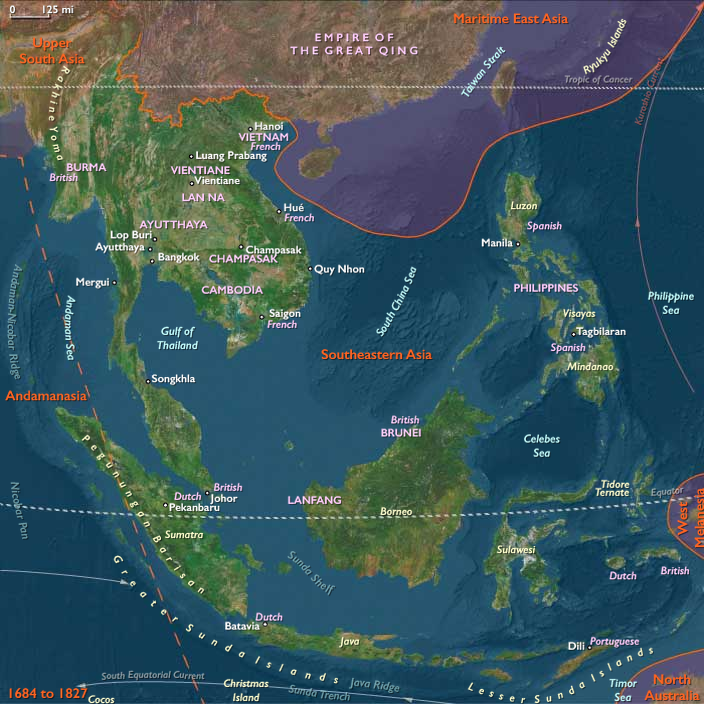
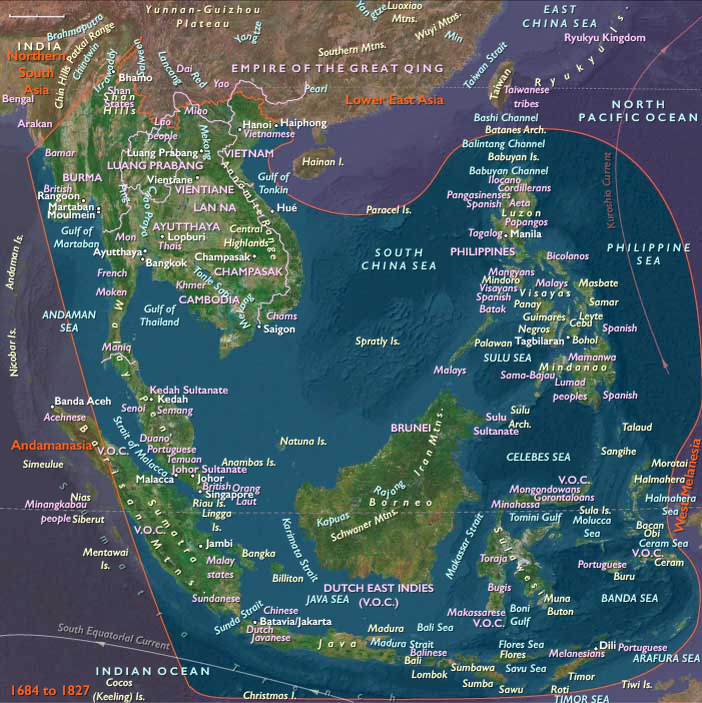
Wealthy Dutch settlers in Batavia have built tall houses and canals within the city's walls.
Commercial opportunities attract Indonesian and especially Chinese immigrants, the increasing numbers creating burdens on the city.
Tensions have grown as the colonial government tries to restrict Chinese migration through deportations.
Ten thousand Chinese are massacred on October 9, 1740, and in the following year, Chinese residents are moved to Glodok outside the city walls.
Most accounts of the ensuing massacre in October 1740 estimate that ten thousand Chinese were killed within Batavia's city walls, while at least another five hundred were seriously wounded.
Between six hundred and seven hundred Chinese-owned houses were raided and burned.
Vermeulen gives a figure of six hundred survivors, while the Indonesian scholar A.R.T. Kemasang estimates that three thousand Chinese survived.
The Indonesian historian Benny G. Setiono notes that five hundred prisoners and hospital patients were killed, and a total of three thousand four hundred and thirty-one people survived.
The massacre is followed by an "open season" against the ethnic Chinese throughout Java, causing another massacre in 1741 in Semarang, and others later in Surabaya and Gresik.
As part of conditions for the cessation of violence, all of Batavia's ethnic Chinese are moved to a pecinan, or Chinatown, outside of the city walls, now known as Glodok.
This allows the Dutch to monitor the Chinese more easily.
To leave the pecinan, ethnic Chinese require special passes.
By 1743, however, ethnic Chinese have already returned to inner Batavia; several hundred merchants operate here.
Other ethnic Chinese led by Khe Pandjang flee to Central Java where they attack Dutch trading posts, and are later joined by troops under the command of the Javanese sultan of Mataram, Pakubuwono II.
Though this further uprising is quashed in 1743, conflicts in Java will continue almost without interruption for the next seventeen years.
Locations
People
Groups
- Javanese people
- Chinese (Han) people
- Dutch people
- Netherlands, United Provinces of the (Dutch Republic)
- Dutch East India Company in Indonesia
- Dutch East India Company (Vereenigde Oostindische Compagnie or VOC in Dutch, literally "United East Indies Company")
Topics
Commodoties
Subjects
Regions
Subregions
Years: 1732 - 1743
Locations
People
Groups
- Javanese people
- Chinese (Han) people
- Dutch people
- Netherlands, United Provinces of the (Dutch Republic)
- Dutch East India Company in Indonesia
- Dutch East India Company (Vereenigde Oostindische Compagnie or VOC in Dutch, literally "United East Indies Company")
Topics
Commodoties
Subjects
Regions
Subregions