
Wassily Kandinsky, sent by the University of …
Years: 1889 - 1889
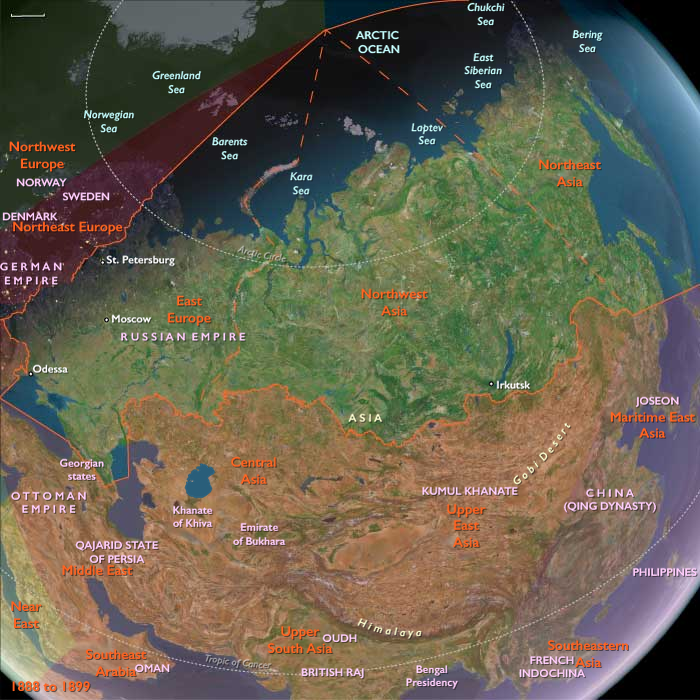
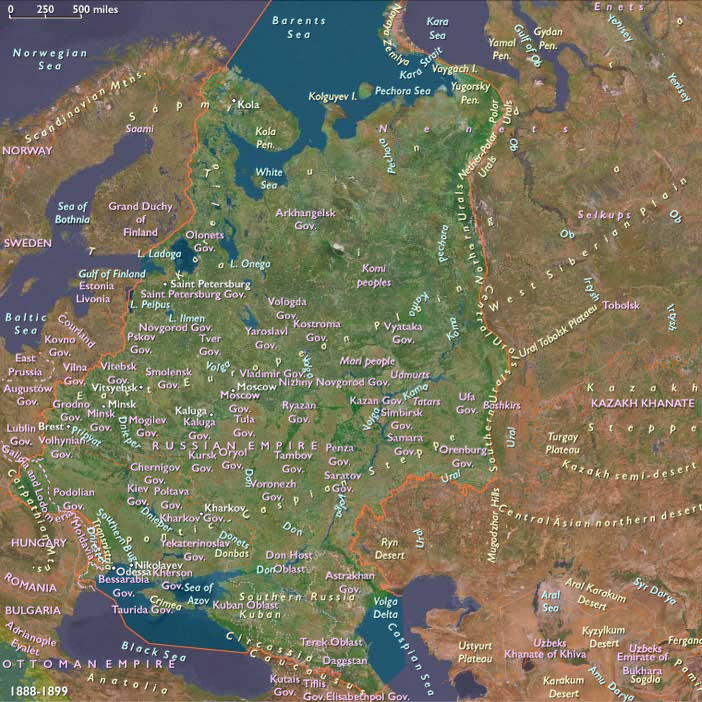
Wassily Kandinsky, sent by the University of Moscow on an ethnographic mission to the province of Vologda, in the forested north, in 1889, returns with a lasting interest in the often garish, nonrealistic styles of Russian folk painting.
During that same year, the twenty-three-year-old painter discovers the Rembrandts in the Hermitage at St. Petersburg, and he furthers his visual education with a trip to Paris.
Kandinsky, whose mother is a Muscovite, one of his great-grandmothers a Mongolian princess, and his father a native of Kyakhta, a Siberian town near the Chinese border, had grown up with a cultural heritage that is partly European and partly Asian.
His family is genteel, affluent, and fond of travel; while still a child Kandinsky had become familiar with Venice, Rome, Florence, the Caucasus, and the Crimean Peninsula.
At Odessa, where his parents settled in 1871, he completed his secondary schooling and became an amateur performer on the piano and the cello.
He also became an amateur painter (he will later recall, as a sort of first impulse toward abstraction, an adolescent conviction that each color had a mysterious life of its own).
In 1886 he had began to study law and economics at the University of Moscow, but he continues to have unusual feelings about color as he contemplates the city's vivid architecture and its collections of icons (in the latter, he will later say, can be found the roots of his own art).
Locations
People
Groups
Topics
Subjects
Regions
Subregions
Related Events
Showing 10 events out of 10081 total
Years: 1889 - 1889
Locations
People
Groups
Topics
Subjects
Regions
Subregions