
Walpurga, born in Devonshire of a family …
Years: 779 - 779
Walpurga, born in Devonshire of a family of the local aristocracy, is the daughter of St. Richard the Pilgrim, one of the under-kings of the West Saxons, and of Winna, sister of St. Boniface, Apostle of Germany, and has two brothers, St. Willibald and St. Winibald.
Saint Richard is buried in the Basilica of San Frediano, Lucca, where he died on pilgrimage in 722.
Saint Richard is also known the Richard the Saxon Pilgrim, of Droitwich.
Saint Richard, when starting with his two sons on a pilgrimage to the Holy Land, had entrusted Walburga, then eleven years old, to the abbess of Wimborne.
Walpurga was educated by the nuns of Wimborne Abbey, Dorset, where she spent twenty-six years as a member of the community.
She then traveled with her brothers, Saints Willibald and Winibald, to Francia (now Württemberg and Franconia) to assist Saint Boniface, her mother's brother, in evangelizing among the still-pagan Germans.
Because of her rigorous training, she was able to write her brother Winibald's vita and an account in Latin of his travels in Palestine.
As a result, she is often called the first female author of both England and Germany.
Walpurga became a nun in the double monastery of Heidenheim am Hahnenkamm, which was founded by her brother, Willibald, who appointed her as his successor.
Following his death in 751, she became the abbess.
She dies on February 25 in either 777 or 779 (the records are unclear) and is buried at Heidenheim; the day carries her name in the Catholic church calendar.
(Later canonized, one of her feast days, May 1, will coincide with the date of the festival commemorating Waldborg, a pagan fertility goddess, and will give rise to the legend of Walpurgis (Walburga's) Night, when witches are said to congregate with the devil.
).
Locations
People
Groups
- Saxons
- Germans
- Christianity, Chalcedonian
- Wessex, English Kingdom of
- Bavaria, Agilolfing Duchy of
- Francia (Carolingians)
Topics
Subjects
Regions
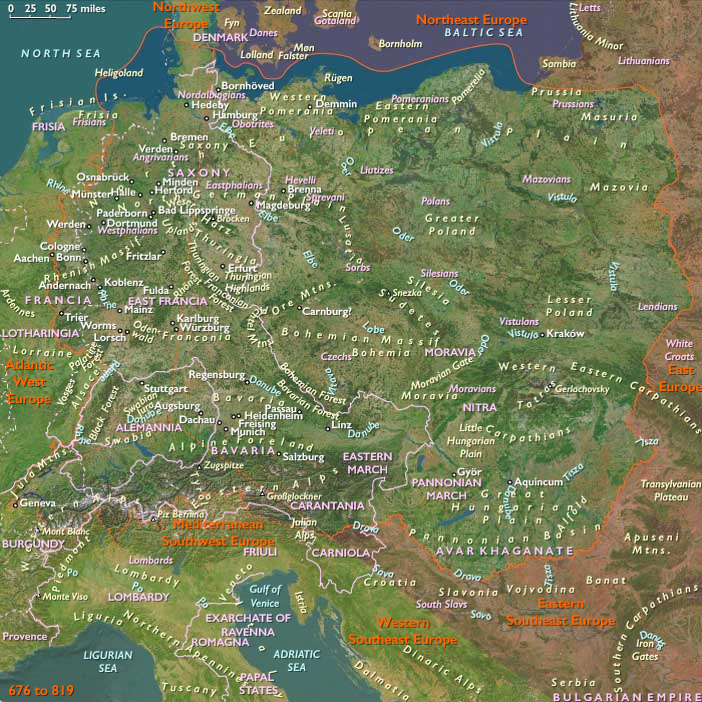
Subregions
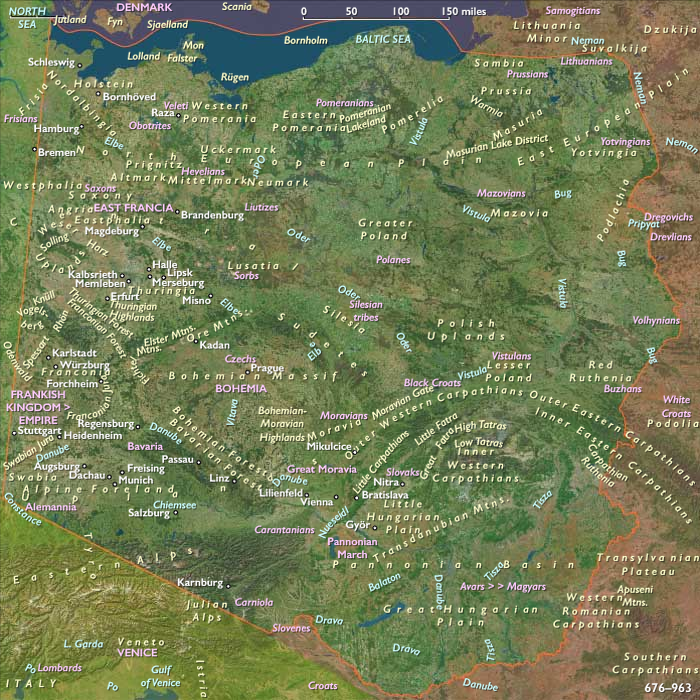
Related Events
Showing 10 events out of 55047 total
Years: 779 - 779
Locations
People
Groups
- Saxons
- Germans
- Christianity, Chalcedonian
- Wessex, English Kingdom of
- Bavaria, Agilolfing Duchy of
- Francia (Carolingians)
Topics
Subjects
Regions
Subregions