
Vytautas had signed the Salynas peace treaty …
Years: 1401 - 1401
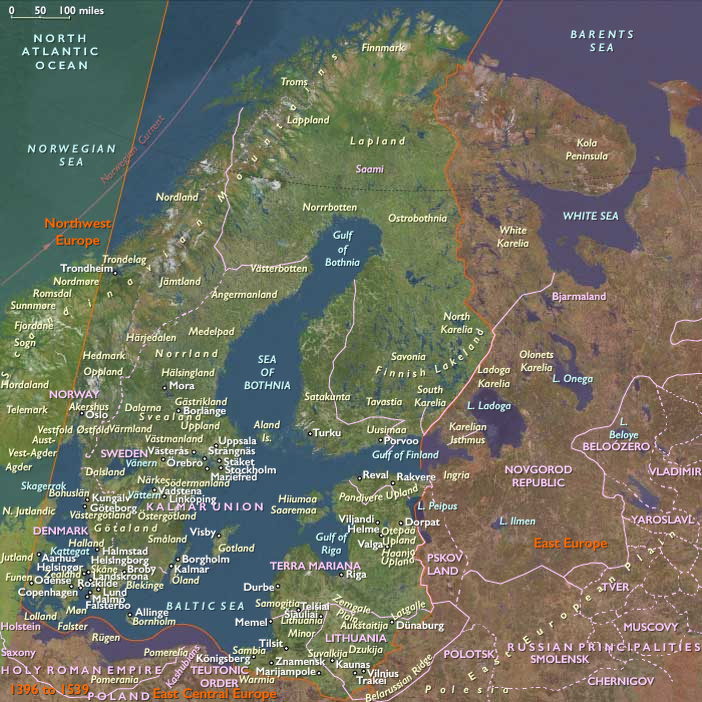
Vytautas had signed the Salynas peace treaty with the Teutonic Knights and transferred Samogitia to them in preparation for the crusade against the Golden Horde in 1398.
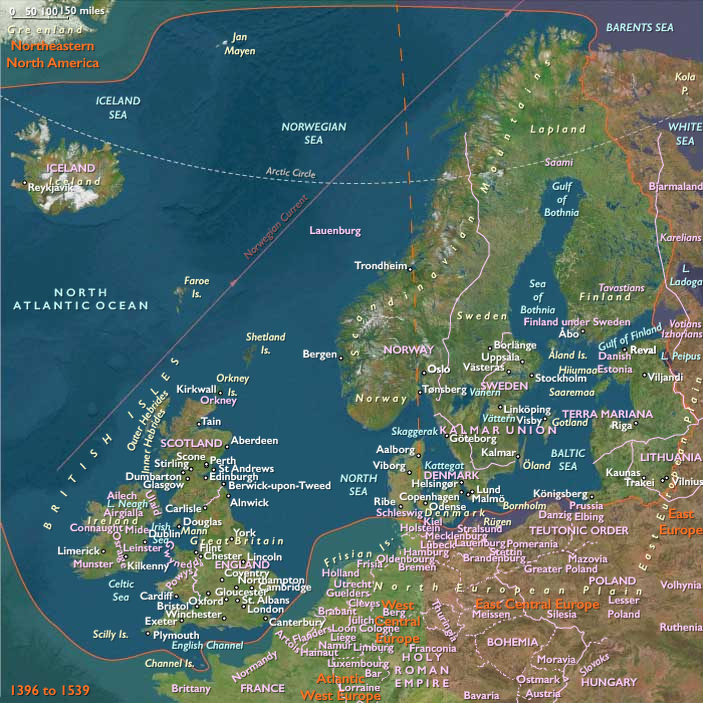
Samogitia is especially important for the order because it separates Teutonic Knights, based in Prussia, from the Livonian Order, based in Latvia.
The two orders desire to unite and form a mighty force, and the Poles and the Lithuanians have little option but to suffer in silence, for they are still not prepared militarily to confront the power of the Knights.
However, after the Knights have ruled Samogitia for three years, the Samogitians, supported by Vytautas, rebel in 1401 and burn two castles.
The knights have received support from Vytautas’s cosuin Švitrigaila, brother of Jagiello, who desires to take Vytautas' title.
Švitrigaila, formerly based in Polotsk, had in 1392 made an ill-fated attempt to seize neighboring Vitebsk, but had been ousted by Vytautas to Prussia.
While living abroad, Švitrigaila had sided with the Teutonic Knights in their prolonged struggle against Vytautas.
He had been allowed in 1400 to return to Lithuania, receiving Podolia as his demesne.
Locations
People
Groups
- Samogitians, or Lowland Lithuanians (Eastern Balts)
- Livonian Order
- Teutonic Knights of Prussia, or Monastic state of the Teutonic Knights (House of the Hospitalers of Saint Mary of the Teutons in Jerusalem)
- Golden Horde, Khanate of the (Kipchak Khanate)
- Poland of the Jagiellonians, Kingdom of
- Lithuania, Grand Duchy of
Topics
Commodoties
Subjects
Regions
Subregions
Related Events
Showing 4 events out of 4 total
Years: 1401 - 1401
Locations
People
Groups
- Samogitians, or Lowland Lithuanians (Eastern Balts)
- Livonian Order
- Teutonic Knights of Prussia, or Monastic state of the Teutonic Knights (House of the Hospitalers of Saint Mary of the Teutons in Jerusalem)
- Golden Horde, Khanate of the (Kipchak Khanate)
- Poland of the Jagiellonians, Kingdom of
- Lithuania, Grand Duchy of
Topics
Commodoties
Subjects
Regions
Subregions