
Vsevolod had inherited the Kievan throne upon …
Years: 1093 - 1093
Vsevolod had inherited the Kievan throne upon the death of his brother Sviatoslav in 1076 but had ceded it to the banished Iziaslav in return for his patrimony of Chernigov.
But Iziaslav dies two years later, and Vsevolod takes the Kievan throne yet again.
Vsevolod is versed in Greek learning and speaks five languages.
Since he loses most of his battles, his eldest son, Vladimir Monomakh, a grand and famous warrior, does most of the fighting for his father.
The last years of his reign have been clouded by grave illness, and Vladimir Monomakh has presided over the government.
When Vsevolod Iaroslavich dies in 1093, Sviatopolk is acknowledged by other princes as the senior son of Veliki Kniaz and permitted to ascend the Kievan throne.
Although he has participated in the princely congresses organized by Vladimir Monomakh, he is sometimes charged with encouraging internecine wars among Rurikid princes.
He has sided with Vladimir Monomakh in several campaigns against the Cumans but is defeated in the Battle of the Stugna River in 1093.
Sviatopolk's Christian name is Michael.
He encourages the embellishment of St. Michael's Abbey in Kiev, which will be been known as the Golden-Roofed up to the present.
The history now known as the Primary Chronicle is compiled during Sviatopolk's reign by Nestor, a monk of the Monastery of the Caves in Kiev from 1073.
Locations
People
Groups
- Slavs, East
- Rus' people
- Kievan Rus', or Kiev, Great Principality of
- Volhynia, Principality of
- Cuman people, or Western Kipchaks, also called Polovtsy, Polovtsians)
- Poland of the first Piasts, Kingdom of
Commodoties
Subjects
Regions
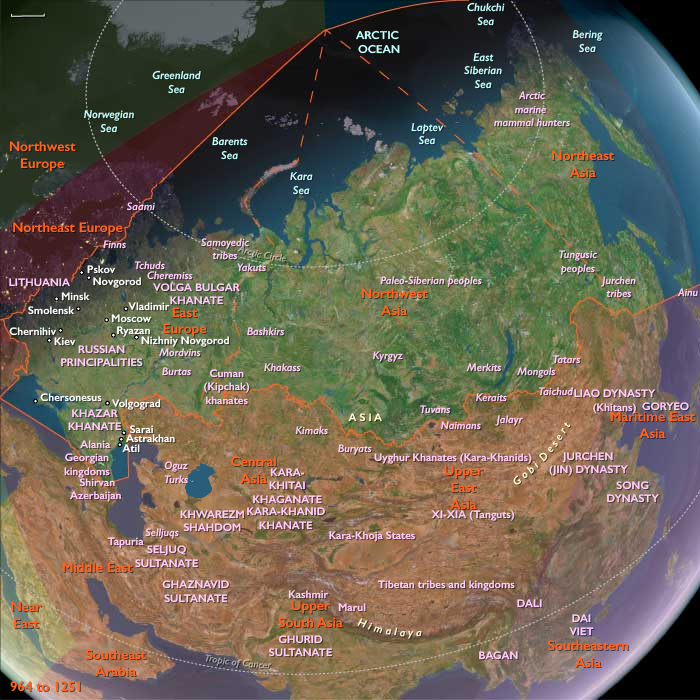
Subregions
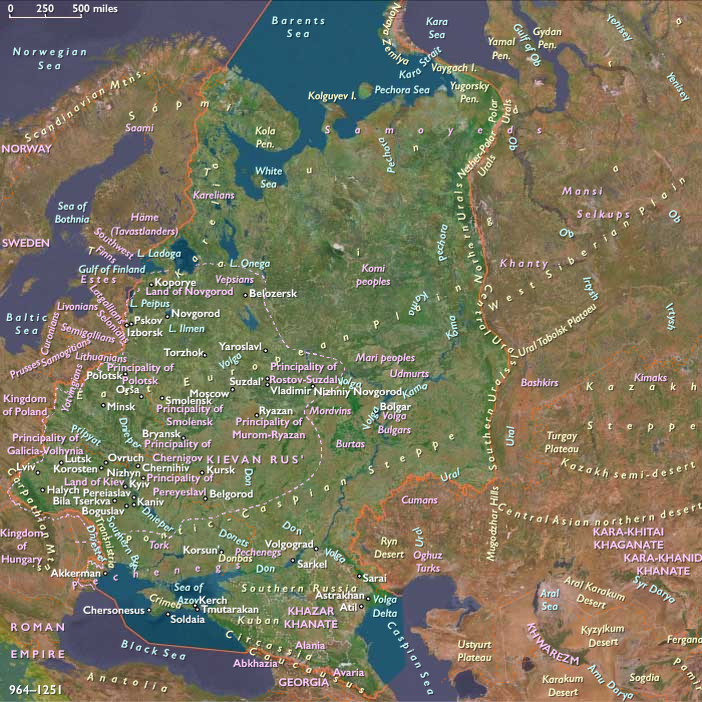
Years: 1093 - 1093
Locations
People
Groups
- Slavs, East
- Rus' people
- Kievan Rus', or Kiev, Great Principality of
- Volhynia, Principality of
- Cuman people, or Western Kipchaks, also called Polovtsy, Polovtsians)
- Poland of the first Piasts, Kingdom of
Commodoties
Subjects
Regions
Subregions