
Voluntary immigrations of the Armenians into the …
Years: 1080 - 1080
Voluntary immigrations of the Armenians into the Empire had begun as early as the sixth century; from the reign of Emperor Maurice (582–602) onward, they have been solidly incorporated into the military fabric of the imperial army.
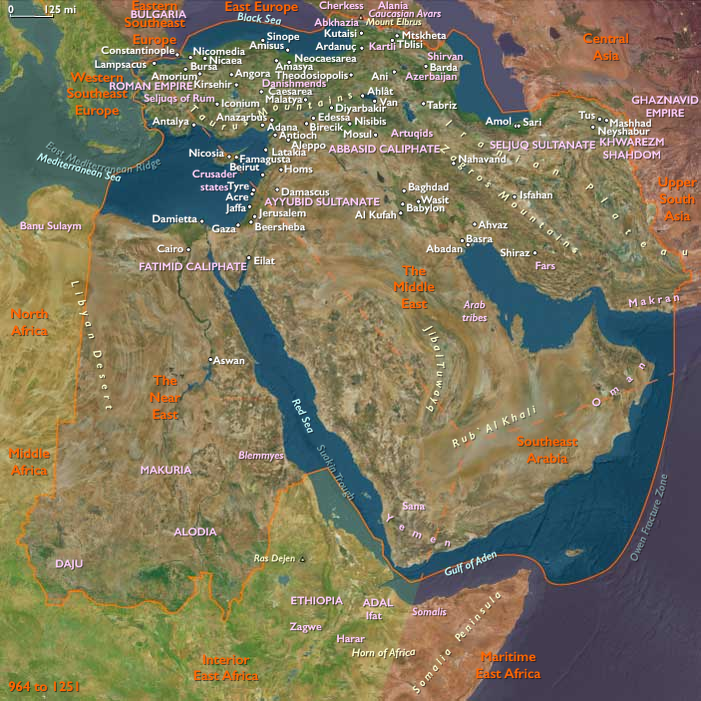
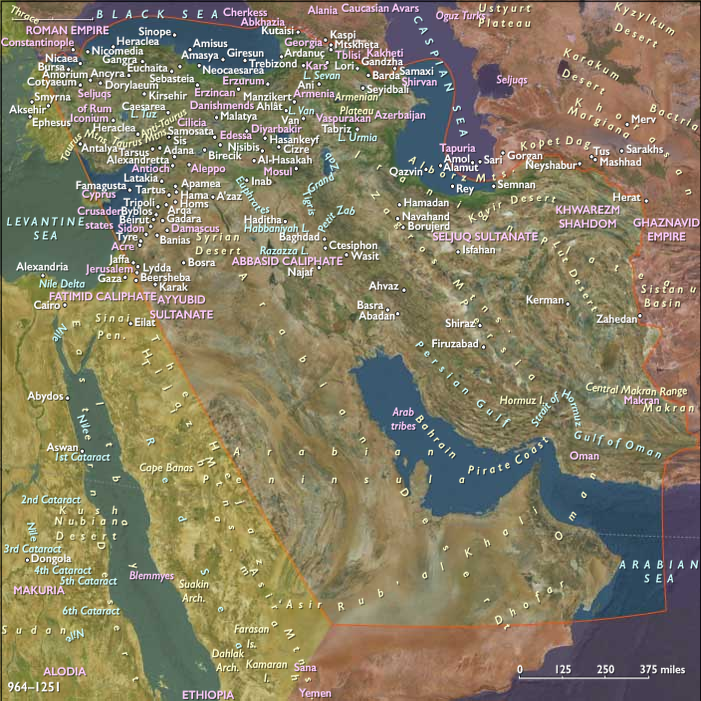
The Armenian migration to the southwest had begun when the Seljuq invasions made life in the Araxes valley and by Lake Van no longer secure.
By the mid-eleventh century, large numbers of Armenian settlements were well underway in Cilicia.
Greater Armenia had been ruled by the Bagratids in relative peace and prosperity from the ninth century until 1045 when their capital city of Ani fell.
In 1045, King Gagik II had been invited to Constantinople; upon arrival there, he had been taken captive and under duress had been forced to abdicate his throne and relinquish all his right in Armenia in exchange for lands in Cappadocia.
Thus Ani was relinquished to Emperor Constantine IX Monomachos, who began the resettlement of large numbers of Armenians in Byzantine Cilicia.
The Seljuqs also play a significant role in the Armenian immigration into Cilicia.
In 1071, Sultan Alp Arslan had put an end to Constantinople’s dominance in the east at the battle on the plains of Manzikert, where Emperor Romanos IV Diogenes had been taken captive.
Gagik had received as compensation for his Kingdom the district of Lycandus in Asia Minor and the town of Bizou, in the vicinity of Caesarea.
He has been also granted the use of a palace on the Bosporus in Constantinople and a pension from the Imperial treasury.
Several seals testify Kakikios Aniotes (Gagik of Ani) as duke of the thema of Charsianon.
Michael Iasites, duke of Iberia, has been entrusted with the government of Ani.
The Bishop of Caesarea, named Marcus, loses no occasion to express his scorn towards Gagik whom he considers a heretic.
After several insults by Marcus directed against him, Gagik eventually murders the Bishop, an act that makes Gagik even more unpopular among the locals.
As the story goes, it is said the Bishop had a dog named Armenen, so as to scorn the Armenians.
One day, Gagik visites the Bishop, has the dog put in a canvas bag and beaten with sticks.
He then has the Bishop seized and placed in the same bag with the dog, now maddened by pain.
The bishop dies in pain from the wounds inflicted by his own dog.
Later, Gagik is killed by the imperial governors (three brothers) of Kyzistra, who have his body mutilated and hanged from the fort for others to see.
His body is later buried outside the fort but is later said to have been secretly conveyed by an Armenian from Ani named Banik to a convent he had built in a city called Piza.
Shortly after Gagik is killed, his youngest son David is poisoned by his father-in-law for suspected treachery.
Gagik's eldest son Johannes had married the daughter of the governor of Ani and still lives there, but had been in Georgia when it was captured.
Johannes has a son Ashot who is poisoned and his body brought to Piza.
Johannes does not survive his son by long, at which time the posterity of the male Bagratian line of kings of Armenia is extinct.
Locations
People
Groups
- Armenian people
- Christians, Armenian Apostolic Orthodox
- Greeks, Medieval (Byzantines)
- Turkmen people
- Armenia, Principalities of
- Seljuq Empire (Isfahan)
- Christians, Roman Catholic
- Roman Empire, Eastern: Doukid dynasty
- Armenia, Baronry of Little, or Lesser
Topics
Commodoties
Subjects
Regions
Subregions
Years: 1080 - 1080
Locations
People
Groups
- Armenian people
- Christians, Armenian Apostolic Orthodox
- Greeks, Medieval (Byzantines)
- Turkmen people
- Armenia, Principalities of
- Seljuq Empire (Isfahan)
- Christians, Roman Catholic
- Roman Empire, Eastern: Doukid dynasty
- Armenia, Baronry of Little, or Lesser
Topics
Commodoties
Subjects
Regions
Subregions