
Vitellius, surrounded by enemies, makes a last …
Years: 69 - 69
December
Vitellius, surrounded by enemies, makes a last attempt to win the city to his side, distributing bribes and promises of power where needed.
He tries to levy by force several allied tribes, such as the Batavians, only to be refused.
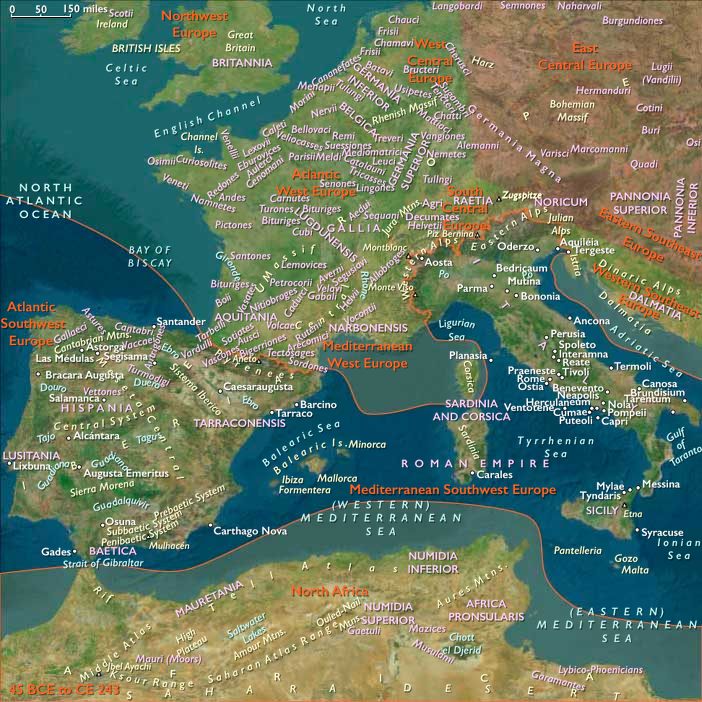
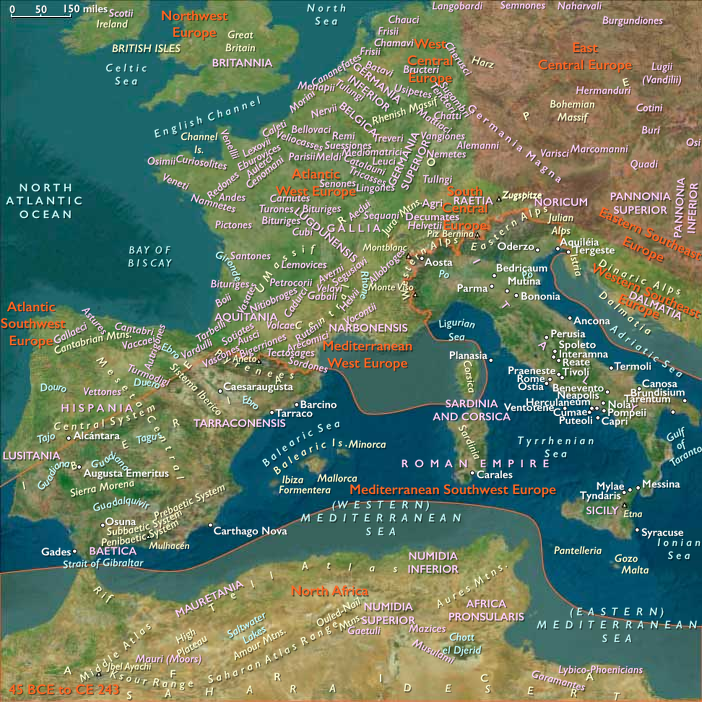
The Danube army is now very near Rome.
Realizing the immediate threat, Vitellius makes a last attempt to gain time and sends emissaries, accompanied by Vestal Virgins, to negotiate a truce and start peace talks.
Tacitus' Histories state that Vitellius awaited Vespasian's army at Mevania.
The terms of resignation had actually been agreed upon with Marcus Antonius Primus, the commander of the sixth legion serving in Pannonia and one of Vespasian’s chief supporters, but the praetorians refused to allow him to carry out the agreement, and forced him to return to the palace, when he was on his way to deposit the insignia of empire in the Temple of Concord.
Messengers arrive the following day with news that the enemy is at the gates of the city.
Vitellius goes into hiding and prepares to flee, but decides on a last visit to the palace, where he is caught by Vespasian's men and killed.
In seizing the capital, they burn down the temple of Jupiter.
Vitellius’s body is thrown into the Tiber according to Suetonius; Cassius Dio's account is that Vitellius was beheaded and his head paraded around Rome, and his wife attended to his burial.
"Yet I was once your emperor," were his last words.
His brother Sabinus and son are also killed.
On receiving the tidings of his rival's defeat and death at Alexandria, the new emperor at once forwards supplies of urgently needed grain to Rome, along with an edict or a declaration of policy, in which he gives assurance of an entire reversal of the laws of Nero, especially those relating to treason.
While in Egypt he visits the Temple of Serapis, where reportedly he experiences a vision.
Later he is confronted by two laborers who are convinced that he possesses a divine power that can work miracles.
The Senate acknowledges Vespasian as emperor on the following day, December 21, 69.
Locations
People
Groups
Topics
- Classical antiquity
- Portraits, Classical
- Roman art
- Roman Age Optimum
- Pax Romana
- First Jewish-Roman War, or Jewish Revolt of 66-73
- Year of the Four Emperors, or Roman Civil War of 68-69
Commodoties
Subjects
- Commerce
- Engineering
- Sculpture
- Environment
- Labor and Service
- Conflict
- Mayhem
- Faith
- Government
- Technology
Regions
Subregions
Years: 69 - 69
December
Locations
People
Groups
Topics
- Classical antiquity
- Portraits, Classical
- Roman art
- Roman Age Optimum
- Pax Romana
- First Jewish-Roman War, or Jewish Revolt of 66-73
- Year of the Four Emperors, or Roman Civil War of 68-69
Commodoties
Subjects
- Commerce
- Engineering
- Sculpture
- Environment
- Labor and Service
- Conflict
- Mayhem
- Faith
- Government
- Technology
Regions
Subregions