
The Castilian Conquest of Lower Navarre and …
Years: 1512 - 1512
September
The Castilian Conquest of Lower Navarre and the Struggle for Control (September 1512)
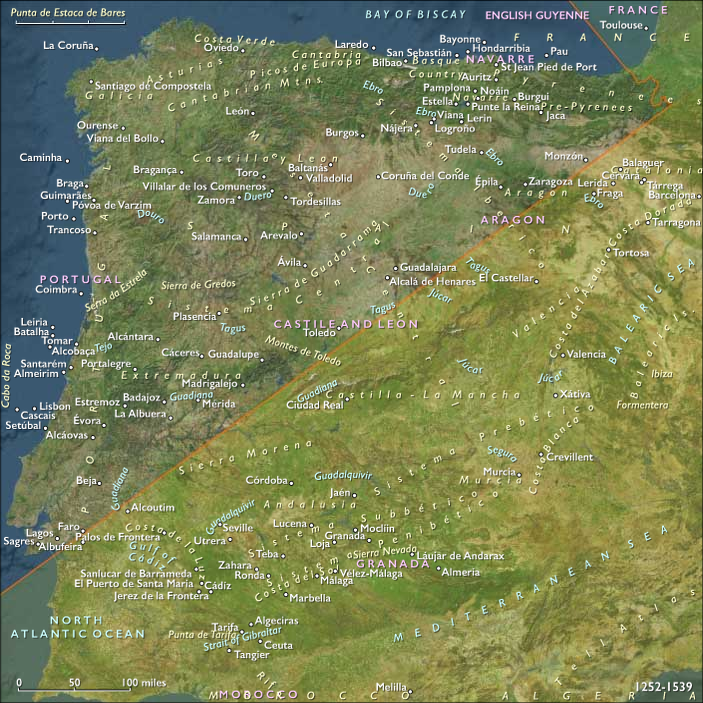
By late August 1512, Ferdinand II of Aragon’s forces had effectively conquered Upper (Iberian) Navarre, leaving only Lower Navarre (Ultrapuertos) north of the Pyrenees under the control of the exiled Navarrese monarchs, Catherine I and John III of Albret. However, Ferdinand was not content with stopping at the Pyrenees and launched an incursion into Lower Navarre, using brutal tactics to suppress resistance.
The Castilian Advance into Lower Navarre (September 1512)
- The Duke of Alba, leading 3,000 infantry, 300 cavalry, and 400 artillery men, pushed northward through the Pyrenean valleys of Aezkoa, Salazar, and Roncal.
- His troops crossed into Lower Navarre, taking the Chapel of Roncevaux (Roncesvalles) by surprise, setting fire to the village.
- On September 10, 1512, Castilian forces led by Colonel Villalba (or Beaumont party lord Martín de Ursúa, depending on the source) entered St-Jean-Pied-de-Port (Donibane Garazi), only to find that the garrison under the Lord of Miossens (an Albret ally) had abandoned the fortress.
Pillage, Destruction, and Repression
- Despite securing the town without resistance, the Castilian troops pillaged and burned villages across Lower Navarre, spreading terror among the local population.
- The Roman Catholic Church appeared to support the enslavement of the subdued Navarrese, further legitimizing the conquest.
- All Navarrese lords in Lower Navarre were ordered to submit, while the Duke of Alba gave the order to demolish tower houses, key defensive structures in Basque noble estates.
- Apple and fruit orchards around St-Jean-Pied-de-Port were cut down, devastating local agriculture and leaving the population struggling for subsistence.
Ferdinand’s Demand for the Surrender of the Navarrese Crown
- As Navarre’s monarchs remained in exile in Béarn, Ferdinand II demanded their full capitulation.
- However, he offered negotiations, proposing that Catherine and John III could remain rulers of Navarre if they sent their heir, Henry II of Navarre, to be raised in the Castilian court—a clear attempt to control Navarre through a puppet king.
- The Navarrese monarchs flatly refused, unwilling to surrender their sovereignty to Castile.
The French Presence and Castilian Stalemate
- A French army was stationed in Bayonne (Labourd, Guyenne), watching for English or Castilian movements, but France did not yet intervene militarily.
- Ferdinand still hoped to invade Guyenne, targeting Bayonne, an important French port with strategic value for Navarre.
- However, time was running out for the Castilians in Lower Navarre, as they faced:
- Food and supply shortages.
- Harsh weather conditions in the Pyrenees.
- Mounting unrest among their veteran troops.
Mutiny in St-Jean-Pied-de-Port and the Castilian Withdrawal
- In St-Jean-Pied-de-Port, around 1,000 discontented Castilian troops mutinied, refusing to endure the worsening supply crisis and weather conditions.
- To prevent full-scale desertion, the Duke of Alba allowed the mutineers to relocate to Burgui and Salazar, breaking up the rebellion without violence.
- The mutiny weakened Castilian control over Lower Navarre, ultimately forcing their withdrawal from the region.
Conclusion: The Limits of Castilian Expansion
- While Ferdinand II successfully annexed Upper Navarre, his attempt to conquer Lower Navarre stalled, leading to a strategic retreat.
- French forces in Bayonne and local Navarrese resistance prevented Ferdinand from fully absorbing the kingdom.
- Lower Navarre remained under the House of Albret, and their exiled monarchs would continue resisting Spanish rule for decades.
Though Ferdinand’s campaign crushed Navarrese independence south of the Pyrenees, the invasion of Lower Navarre proved unsustainable, marking the limits of Castile’s territorial ambitions in the region.
Locations
People
- Alonso de Aragón
- Catherine of Navarre
- Fadrique Álvarez de Toledo
- Ferdinand II of Aragon
- Gaston of Foix
- Germaine of Foix
- Henry VIII of England
- John III of Navarre
- Louis XII of France
- Pope Julius II
Groups
- Papal States (Republic of St. Peter)
- Navarre, Kingdom of
- Christians, Roman Catholic
- Béarn, Viscountcy of
- Aragón, Kingdom of
- Aragon, Crown of
- Castile, Crown of
- Foix, County of
- France, (Valois) Kingdom of
- England, (Tudor) Kingdom of
Topics
Commodoties
Subjects
Regions

Subregions
Related Events
Showing 10 events out of 39269 total
Years: 1512 - 1512
September
Locations
People
- Alonso de Aragón
- Catherine of Navarre
- Fadrique Álvarez de Toledo
- Ferdinand II of Aragon
- Gaston of Foix
- Germaine of Foix
- Henry VIII of England
- John III of Navarre
- Louis XII of France
- Pope Julius II
Groups
- Papal States (Republic of St. Peter)
- Navarre, Kingdom of
- Christians, Roman Catholic
- Béarn, Viscountcy of
- Aragón, Kingdom of
- Aragon, Crown of
- Castile, Crown of
- Foix, County of
- France, (Valois) Kingdom of
- England, (Tudor) Kingdom of
Topics
Commodoties
Subjects
Regions
Subregions