
Washington had returned to Williamsburg and informed …
Years: 1754 - 1754
April
Washington had returned to Williamsburg and informed Dinwiddie that the French had refused to leave.
Dinwiddie commissions Washington a lieutenant colonel, and orders him to begin raising a militia regiment to hold the Forks of the Ohio, a site Washington had identified as a fine location for a fortress.
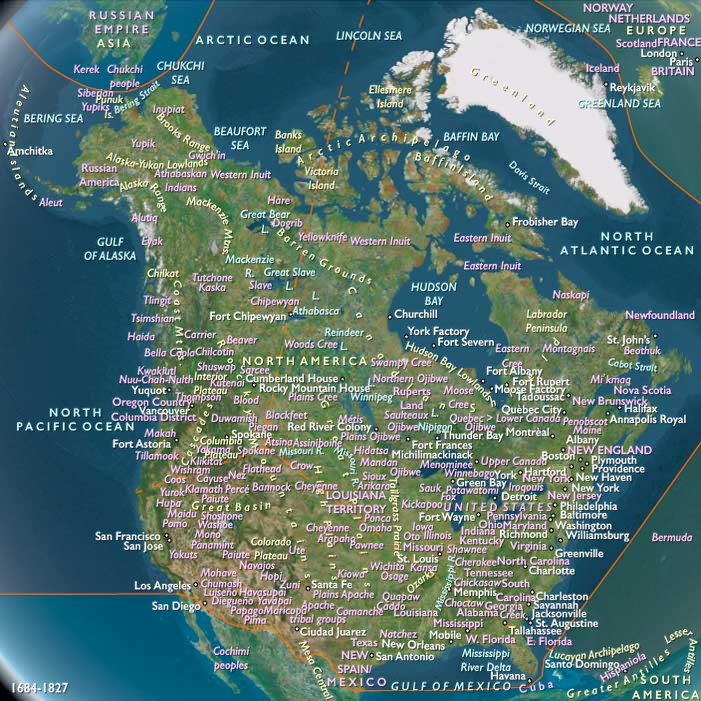
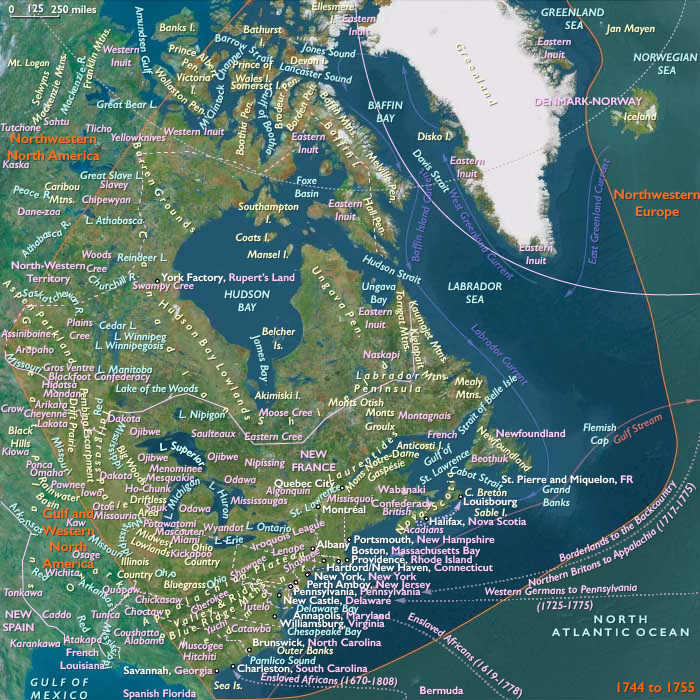
Even before learning of the French refusal to decamp, Dinwiddie had issued a captain's commission to Ohio Company employee William Trent, send a small force of Virginia militia in January 1754 to build a fort at the forks of the Ohio River, where the Allegheny and Monongahela rivers merge to form the Ohio at present-day Pittsburgh.
Dinwiddie had issued these instructions on his own authority, without even asking for funding from the Virginina House of Burgesses until after the fact.
Trent's company had arrived on site on February 1754, and began construction of a storehouse and stockade with the assistance of Tanacharison and the Mingos.
Work began on the fort on February 17, but by April a much larger French force of eight hundred Canadien militia and French troupes de la marine under the command of Claude-Pierre Pécaudy de Contrecœur, who has taken over command from Saint-Pierre.
When Contrecœur learns of Trent's activity, he leads a force of about five hundred men (troupes de la marine, militia, and natives) to drive them off (rumors reaching Trent's men put its size at one thousand).
Contrecœur's force arrives at the forks on April 16; the next day, Trent's force of thirty-six men, led by Ensign Edward Ward in Trent's absence, agree to leave the site.
The French now begin construction of the fort they called Fort Duquesne in honor of the Marquis de Duquesne, the current governor of New France.
The fort is built on the same model as Fort Frontenac on Lake Ontario.
Locations
People
Groups
- New France (French Colony)
- France, (Bourbon) Kingdom of
- Virginia (English Crown Colony)
- Britain, Kingdom of Great
- Mingo (Seneca-Cayuga Tribe of Oklahoma)
Topics
Commodoties
Subjects
Regions
Subregions
Related Events
Showing 10 events out of 26905 total
Years: 1754 - 1754
April
Locations
People
Groups
- New France (French Colony)
- France, (Bourbon) Kingdom of
- Virginia (English Crown Colony)
- Britain, Kingdom of Great
- Mingo (Seneca-Cayuga Tribe of Oklahoma)
Topics
Commodoties
Subjects
Regions
Subregions