
Vespasian is immediately succeeded by his son …
Years: 79 - 79
Vespasian is immediately succeeded by his son Titus, who is supported by the Praetorian Guard and the Senate.
Because of his many alleged vices, many Romans fear at this point that he would be another Nero.
Against these expectations, however, Titus will prove to be an effective Emperor and will become well-loved by the population, who praise him highly when they find that he possesses the greatest virtues instead of vices.
One of his first acts as Emperor is to publicly order a halt to trials based on treason charges, which have long plagued the principate.
The law of treason, or maiestas law, was originally intended to prosecute those who had corruptly 'impaired the people and majesty of Rome' by any revolutionary action.
Under Augustus, however, this custom had been revived and applied to cover slander or libelous writings as well, eventually leading to a long cycle of trials and executions under such emperors as Tiberius, Caligula and Nero, spawning entire networks of informers that have terrorized Rome's political system for decades.
Titus puts n end to this practice, against himself or anyone else, declaring: "It is impossible for me to be insulted or abused in any way.
For I do naught that deserves censure, and I care not for what is reported falsely.
As for the emperors who are dead and gone, they will avenge themselves in case anyone does them a wrong, if in very truth they are demigods and possess any power."
(Cassius Dio, Roman History LXVI.19) Consequently, no senators will be put to death during his reign; he thus keeps to his promise that he would assume the office of Pontifex Maximus "for the purpose of keeping his hands unstained".
(Suetonius, The Lives of Twelve Caesars, Life of Titus) The informants are publicly punished and banished from the city, and Titus further prevents abuses by introducing legislation that make it unlawful for persons to be tried under different laws for the same offense.
Finally, when Berenice returns to Rome, he sends her away.
As Emperor he will become known for his generosity, and Suetonius states that upon realizing he had brought no benefit to anyone during a whole day he remarked, "Friends, I have lost a day.” Although his administration is marked by a relative absence of major military or political conflicts, Titus faceds a number of major disasters during his brief reign.
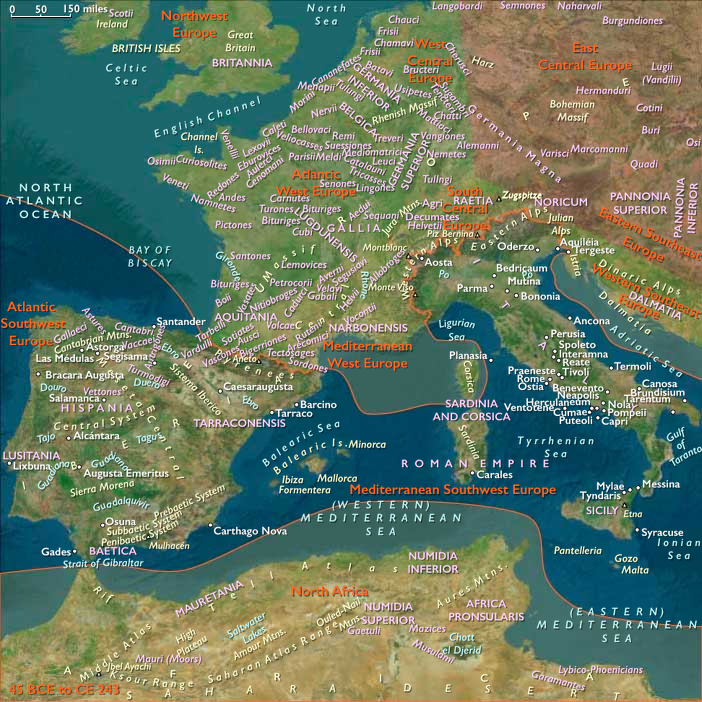
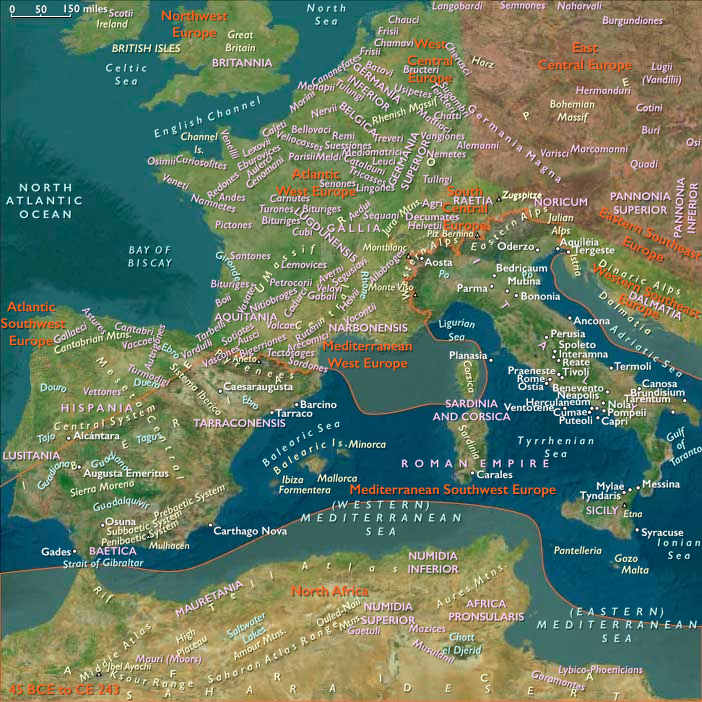
On August 24, 79, two months after his accession, Mount Vesuvius erupts, resulting in the almost complete destruction of life and property in the cities and resort communities around the Bay of Naples.
Locations
People
Groups
Topics
Commodoties
Subjects
- Commerce
- Sculpture
- Environment
- Labor and Service
- Conflict
- Faith
- Government
- Custom and Law
- Technology
- Catastrophe
Regions
Subregions
Years: 79 - 79
Locations
People
Groups
Topics
Commodoties
Subjects
- Commerce
- Sculpture
- Environment
- Labor and Service
- Conflict
- Faith
- Government
- Custom and Law
- Technology
- Catastrophe
Regions
Subregions