
Valentinian III’s recognition of Genseric as ruler …
Years: 444 - 444
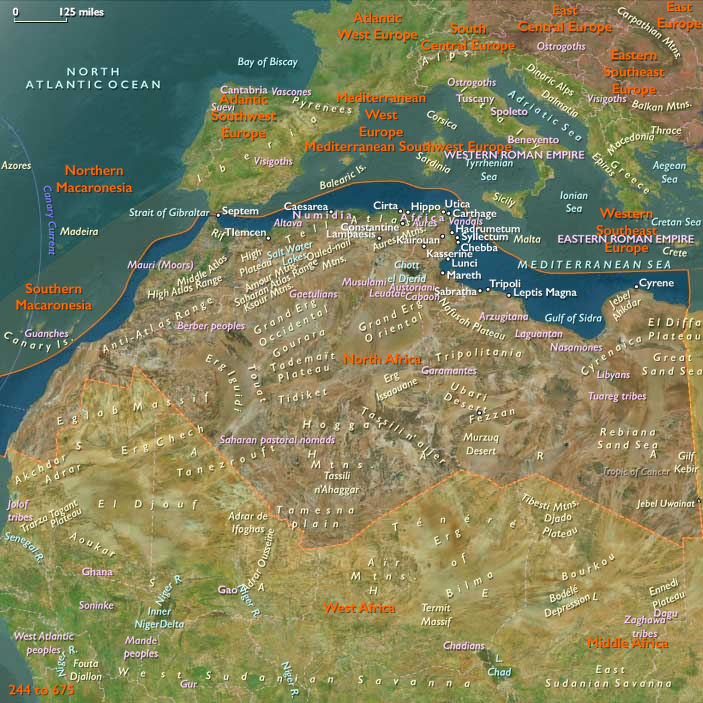
Valentinian III’s recognition of Genseric as ruler of the independent Vandal kingdom brings a temporary cessation to raids on Roman territory.
Although the Vandals are ardent Arian Christians, they allow the Jews in North Africa to live peacefully.
Locations
People
Groups
- Africa proconsularis (Roman province)
- Christianity, Arian
- Italy, Praetorian prefecture of
- Roman Empire, Western (Ravenna)
- Vandals and the Alans, Kingdom of the
Topics
Commodoties
Subjects
Regions
Subregions
Related Events
Showing 10 events out of 58792 total
Years: 444 - 444
Locations
People
Groups
- Africa proconsularis (Roman province)
- Christianity, Arian
- Italy, Praetorian prefecture of
- Roman Empire, Western (Ravenna)
- Vandals and the Alans, Kingdom of the
Topics
Commodoties
Subjects
Regions
Subregions