
The Frankish Conquest of Utrecht and the …
Years: 697 - 697
The Frankish Conquest of Utrecht and the Rhine Delta
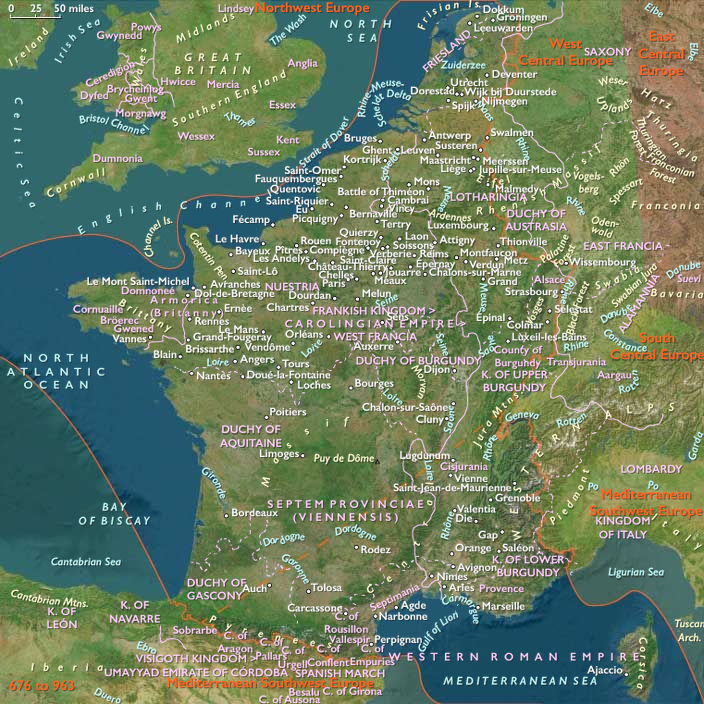
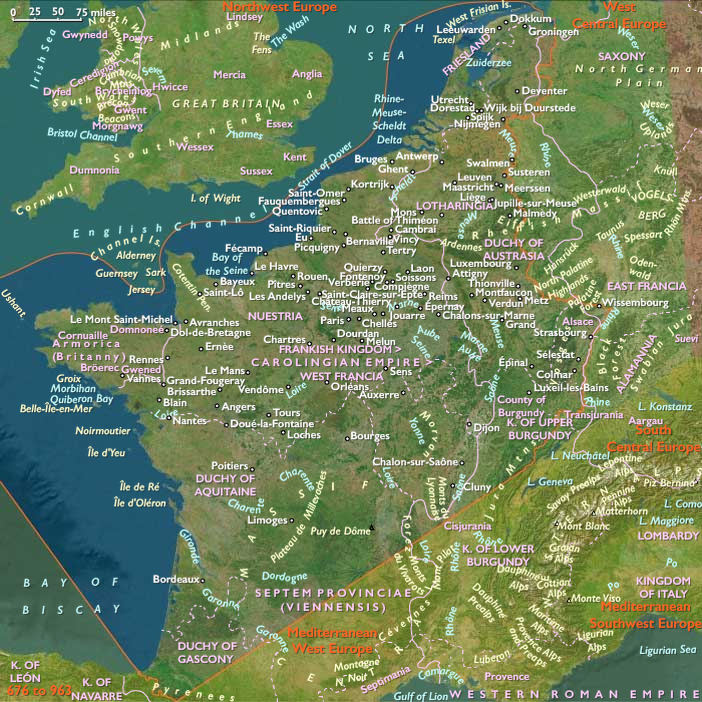
Between 690 and 692, Pepin of Heristal seizes Utrecht, a crucial Frisian stronghold, bringing the Rhine trade routes under Frankish control and solidifying his dominance over commerce between the Middle Rhineland and the North Sea. This victory significantly weakens Radbod, the Frisian ruler, forcing him to retreat.
Sources diverge on Radbod’s exact movements after his defeat. Some accounts suggest that by 697, he withdrew to the island of Heligoland, while others place his retreat within the lands still known as Friesland. Regardless of his exact refuge, his power is significantly diminished, and the Rhine delta—a vital commercial and strategic region—falls firmly into Frankish hands.
The capture of Utrecht and control of the Rhine delta mark a major milestone in the expansion of Austrasian influence, strengthening Frankish hegemony over the Low Countries and paving the way for the Christianization of the region under Frankish rule.
Locations
People
Groups
- Franks
- Christianity, Chalcedonian
- Frisians
- Frisian Kingdom
- Francia (mayors of the palaces of Austrasia and Neustria)
Topics
Commodoties
Subjects
Regions
Subregions
Related Events
Showing 10 events out of 55907 total
Years: 697 - 697
Locations
People
Groups
- Franks
- Christianity, Chalcedonian
- Frisians
- Frisian Kingdom
- Francia (mayors of the palaces of Austrasia and Neustria)
Topics
Commodoties
Subjects
Regions
Subregions