
Uruk III reaches up to 3000 BCE …
Years: 2925BCE - 2782BCE
Uruk III reaches up to 3000 BCE and into the Early Dynastic period (not to be confused with the Ur III period of the twenty-first century BCE, where the numbering refers to royal dynasties, not archaeological layers)The famous Uruk Vase (found in a deposit of cult objects of the Uruk III period) depicts a row of naked men carrying various objects, bowls, vessels, and baskets of farm produce, and bringing sheep and goats, to a female figure facing the ruler.
This figure was ornately dressed for a divine marriage, and attended by a servant.
The female figure holds the symbol of the two twisted reeds of the doorpost, signifying Inanna behind her, while the male figure holds a box and stack of bowls, the later cuneiform sign signifying En, or high priest of the temple.
Especially in the Uruk period, the symbol of a ring-headed doorpost is associated with Inanna.
Locations
Groups
Topics
- Piora Oscillation ending the Neolithic Subpluvial
- Early Bronze Age II (Near and Middle East)
- Subboreal Period
Commodoties
Subjects
- Commerce
- Symbols
- Watercraft
- Sculpture
- Painting and Drawing
- Environment
- Labor and Service
- Conflict
- Faith
- Government
- Technology
- Anthropology
- Archaeology
Regions
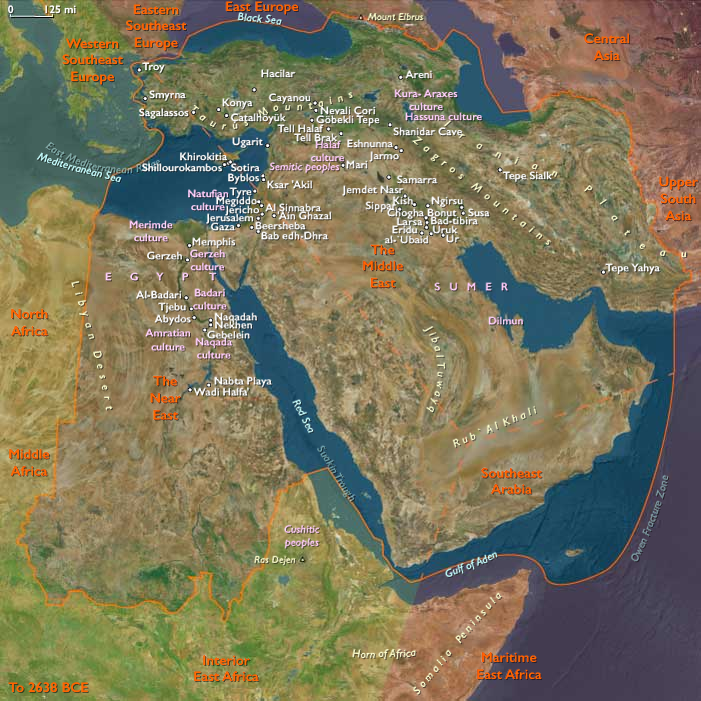
Subregions
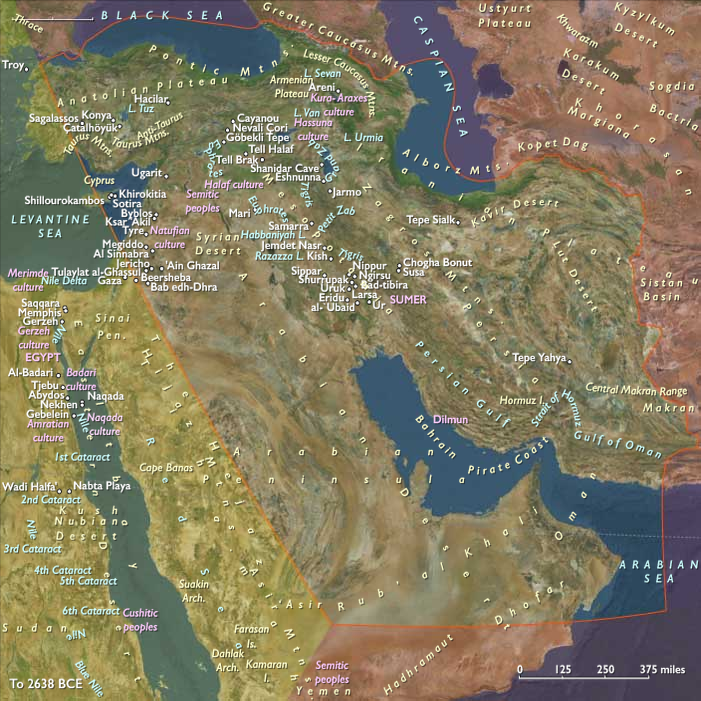
Years: 2925BCE - 2782BCE
Locations
Groups
Topics
- Piora Oscillation ending the Neolithic Subpluvial
- Early Bronze Age II (Near and Middle East)
- Subboreal Period
Commodoties
Subjects
- Commerce
- Symbols
- Watercraft
- Sculpture
- Painting and Drawing
- Environment
- Labor and Service
- Conflict
- Faith
- Government
- Technology
- Anthropology
- Archaeology
Regions
Subregions