
Shimao (石峁): An Upper East Asian Citadel …
Years: 2637BCE - 910BCE
Shimao (石峁): An Upper East Asian Citadel of the Late Neolithic
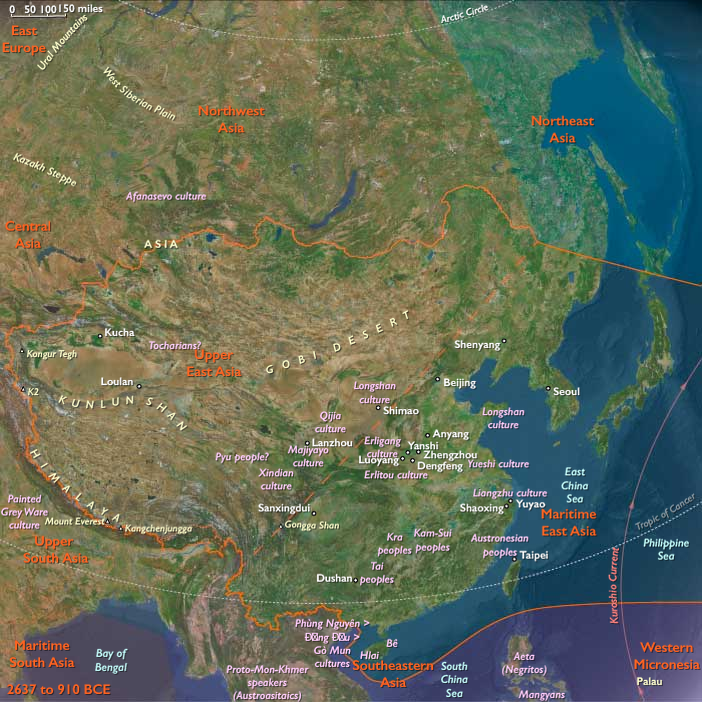
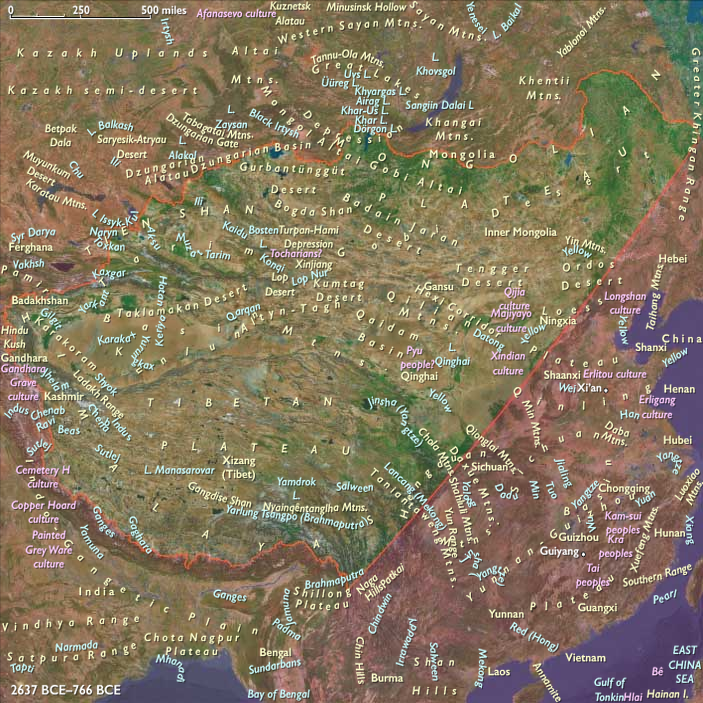
Rising above the northern edge of the Loess Plateau in today’s Shenmu County, Shaanxi, Shimao was the largest fortified settlement of the Late Neolithic in northern China, active roughly 2300–1800 BCE. At its height, Shimao extended over 400 hectares, dwarfing its contemporaries and anchoring a frontier zone between the agrarian heartlands to the south and the pastoral–foraging cultures of the Ordos and northern steppes. Built of massive stone walls—unusual in Neolithic China—the city’s terraced fortifications, palatial platform, and gates lined with human sacrifices reveal an emerging political order shaped by competition, display, and the orchestration of labor at unprecedented scales.
Shimao’s most remarkable signatures are its jade-rich assemblages and hybrid symbolic program. Jade plaques, blades, scepters, animal ornaments, and inlaid wall mosaics echo Longshan jade traditions yet appear in far greater volume and more northerly style. Thin-walled black pottery and carved motifs show a selective adoption of material traits from the Longshan cultural sphere, which extended through Shandong and northern Henan. At the same time, Shimao’s iconography—especially its stone-carved masks, stepped terraces, and animal–spirit imagery—draws from older northern traditions of the Ordos and steppe worlds. This cultural hybridity positions Shimao as a frontier capital, mediating between millet-farming societies to the south and mobile pastoralists to the north.
Recent findings reveal extensive craft specialization—workshops for jade, stone, bone, and horn, along with evidence of textile production—and an elite compound separated by inner walls. The scale of construction, repeated remodeling, and rich ritual deposits suggest a powerful ruling lineage at Shimao that commanded long-distance trade in jade and other prestige goods. Climate shifts around 2000 BCE, along with emerging Bronze Age powers to the south, likely contributed to its decline, but the site’s influence endured in the cultural memory and political formations of the early northern states.
Locations
Groups
Topics
Commodoties
Subjects
Regions
Subregions
Years: 2637BCE - 910BCE
Locations
Groups
Topics
Commodoties
Subjects
Regions
Subregions