
Upon the death of Yaroslav the Wise …
Years: 1073 - 1073
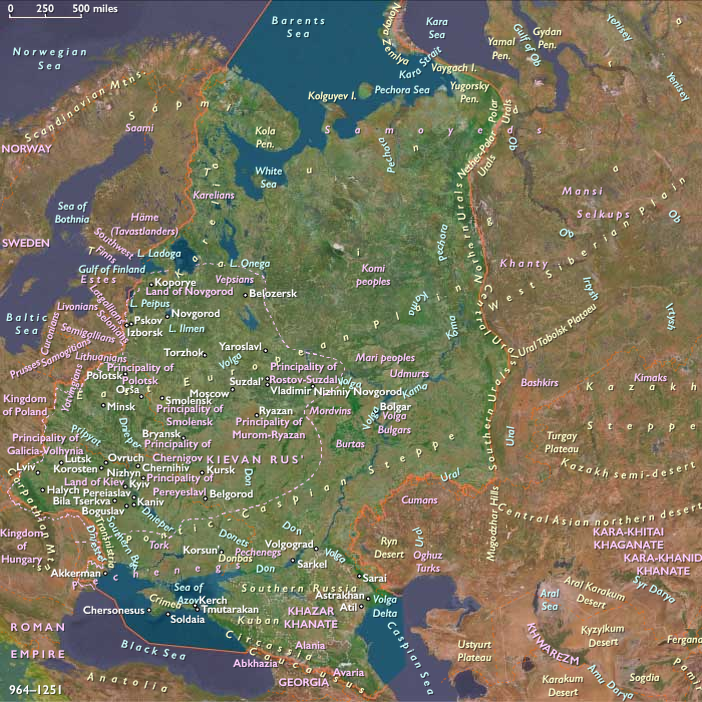
Upon the death of Yaroslav the Wise in 1054, his son Sviatoslav had joined his brothers Vsevolod and Iziaslav in forming a kind of a princely triumvirate that has overseen the affairs of Kievan Rus' until 1072.
In 1067, they had defeated Vseslav of Polotsk, on the Nemiga River and had taken hm him prisoner.
A year later, the brothers had been defeated by the Polovtsi (Cumans) on the Alta River.
After a while, Sviatoslav had returned to defeat these steppe nomads with a smaller force at the town of Snov, thus enhancing his prestige among the populace.
Sviatoslav's first wife was named Kilikia (Cecilia), a lady of unknown origin, but possibly a princess from the Caucasus.
Their sons were Oleg, Gleb, Roman, and Davyd In 1072, Sviatoslav had married Oda, daughter of a certain "Count Lippold", and the sister of Burkhard, provost of Trier.
Oda's granduncles were Pope Leo IX and Henry III, Holy Roman Emperor.
The triumvirate breaks up in 1073, when Sviatoslav, supported by his younger brother Vsevolod, dethrones and replaces his older brother Iziaslav.
Locations
People
Groups
- Slavs, East
- Rus' people
- Polatsk, Principality of
- Kievan Rus', or Kiev, Great Principality of
- Cuman people, or Western Kipchaks, also called Polovtsy, Polovtsians)
Subjects
Regions

Subregions
Related Events
Showing 10 events out of 50730 total
Years: 1073 - 1073
Locations
People
Groups
- Slavs, East
- Rus' people
- Polatsk, Principality of
- Kievan Rus', or Kiev, Great Principality of
- Cuman people, or Western Kipchaks, also called Polovtsy, Polovtsians)
Subjects
Regions
Subregions