
Filters:
Under Ubashi Khan’s leadership, approximately two hundred …
Years: 1771 - 1771
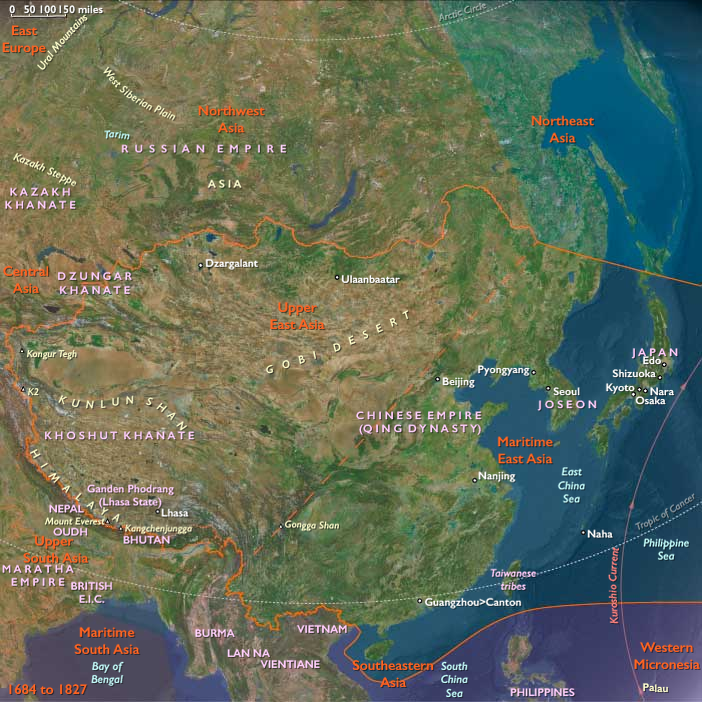
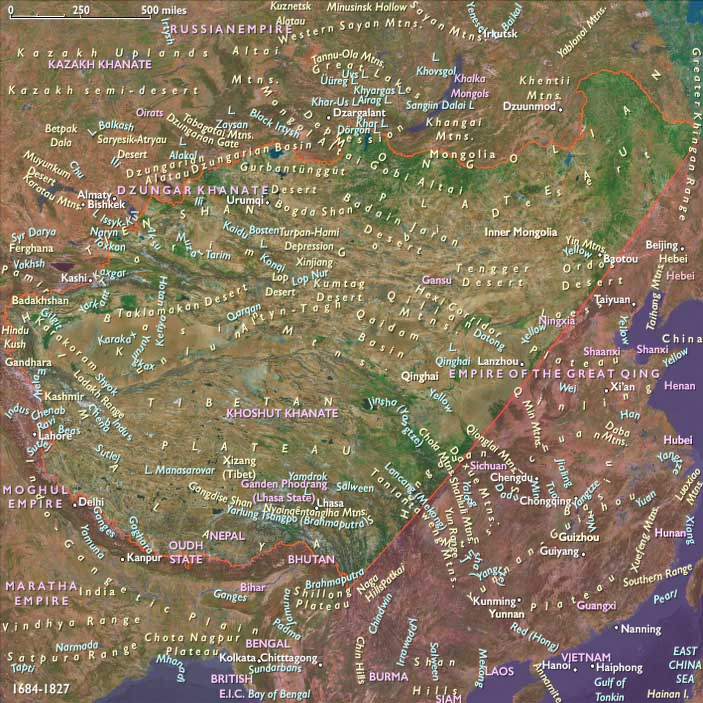
Under Ubashi Khan’s leadership, approximately two hundred thousand Kalmyks had begun the journey from their pastures on the left bank of the Volga River to Dzungaria.
Approximately five-sixths of the Torghut tribe had followed Ubashi Khan.
Most of the Khoshuts, Choros and Khoits had also accompanied the Torghuts on their journey to Dzungaria.
The Dörbet tribe, by contrast, had elected not to go at all.
The Kalmyks who resettle in Qing territory became known as Torghuts.
While the first phase of their movement becomes the Old Torghuts, the Qing call the later Torghut immigrants "New Torghut".
The size of the departing group has been variously estimated between one hundred and fifty thousand and four hundred thousand people, with perhaps as many as six million animals (cattle, sheep, horses, camels and dogs).
Beset by raids, thirst and starvation, approximately eighty-five thousand survivors make it to Dzungaria, where they settle near the Ejin River with the permission of the Qing Manchu Emperor.
The Torghuts are coerced by the Qing into giving up their nomadic lifestyle and to take up sedentary agriculture instead as part of a deliberate policy by the Qing to enfeeble them.
They prove to be incompetent farmers and they become destitute, selling their children into slavery, engaging in prostitution, and stealing, according to the Manchu Qi-yi-shi.
Child slaves are in demand on the Central Asian slave market, and Torghut children are sold into this slave trade.
Approximately five-sixths of the Torghut tribe had followed Ubashi Khan.
Most of the Khoshuts, Choros and Khoits had also accompanied the Torghuts on their journey to Dzungaria.
The Dörbet tribe, by contrast, had elected not to go at all.
The Kalmyks who resettle in Qing territory became known as Torghuts.
While the first phase of their movement becomes the Old Torghuts, the Qing call the later Torghut immigrants "New Torghut".
The size of the departing group has been variously estimated between one hundred and fifty thousand and four hundred thousand people, with perhaps as many as six million animals (cattle, sheep, horses, camels and dogs).
Beset by raids, thirst and starvation, approximately eighty-five thousand survivors make it to Dzungaria, where they settle near the Ejin River with the permission of the Qing Manchu Emperor.
The Torghuts are coerced by the Qing into giving up their nomadic lifestyle and to take up sedentary agriculture instead as part of a deliberate policy by the Qing to enfeeble them.
They prove to be incompetent farmers and they become destitute, selling their children into slavery, engaging in prostitution, and stealing, according to the Manchu Qi-yi-shi.
Child slaves are in demand on the Central Asian slave market, and Torghut children are sold into this slave trade.
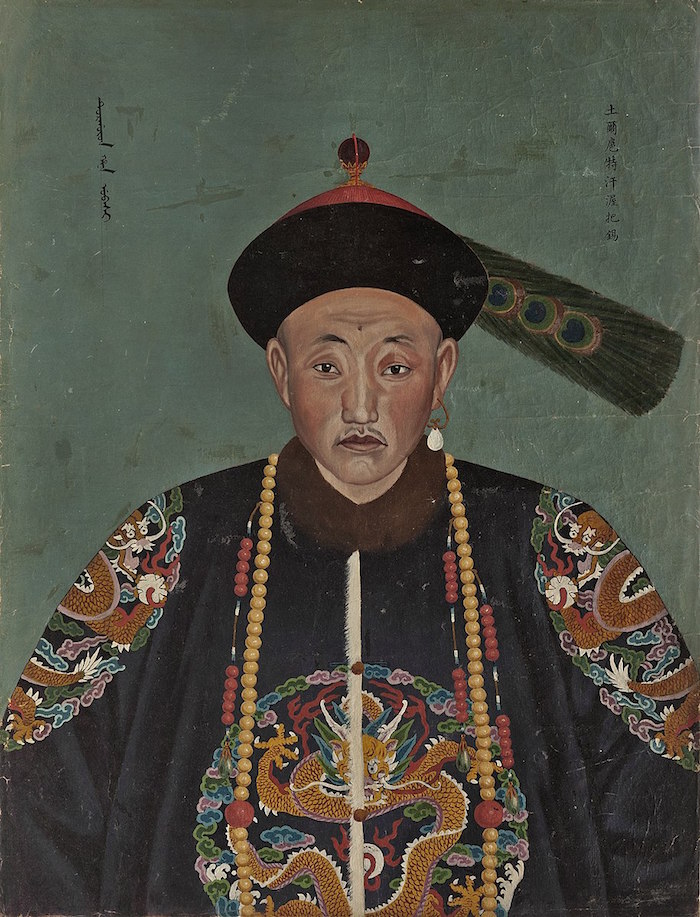
Ubashi Kahn, 1724-1775. Oil; Reiss-Museum Mannheim. (Photo taken by 16 April 2014 Kale Gelaifu)
People
Groups
Topics
Commodoties
Subjects
Regions
Subregions
Years: 1771 - 1771
Ubashi Kahn, 1724-1775. Oil; Reiss-Museum Mannheim. (Photo taken by 16 April 2014 Kale Gelaifu)
People
Groups
Topics
Commodoties
Subjects
Regions
Subregions