
The Troubled History of the Duchy of …
Years: 962 - 962
The Troubled History of the Duchy of Burgundy Begins (c. 952–1002)
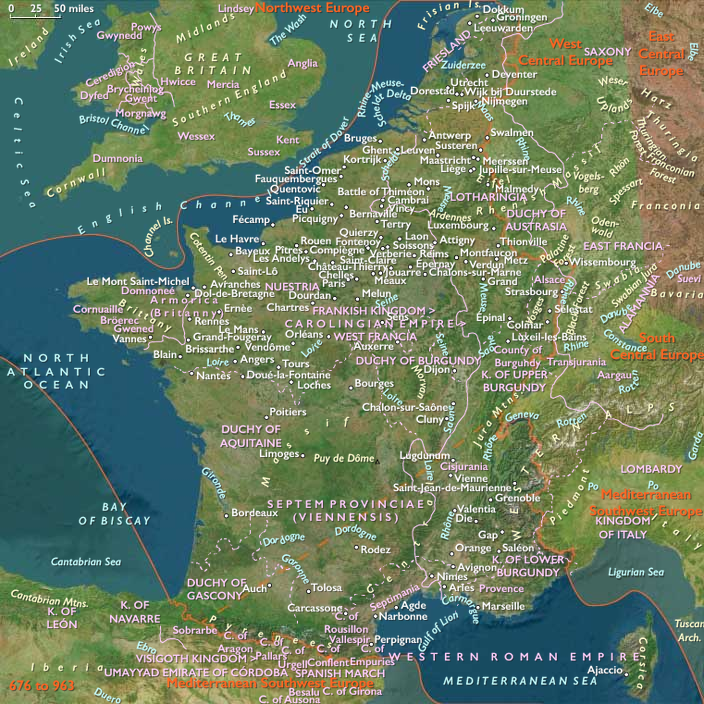
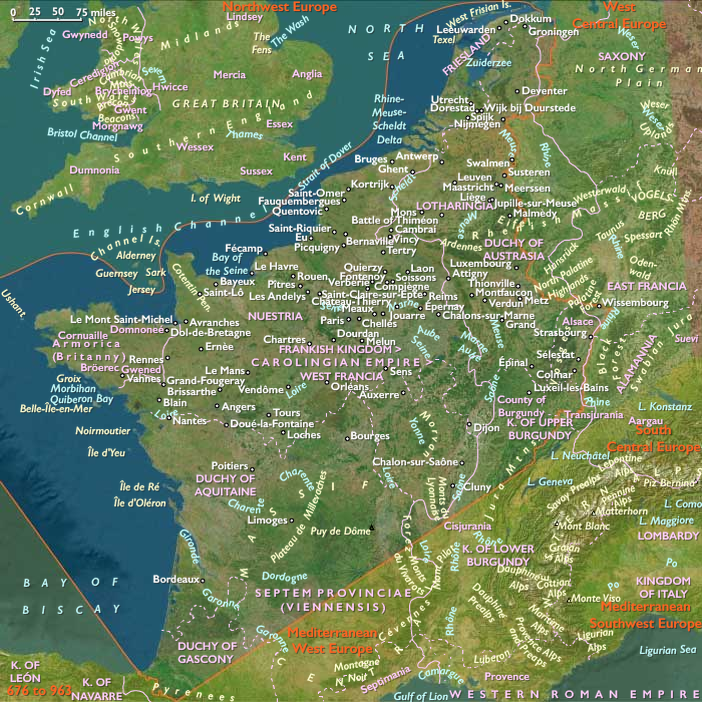
The Duchy of Burgundy, which will experience centuries of contested rule, begins its long and complex history under Hugh the Black (d. 952). His rule and succession shape the duchy’s political trajectory, particularly in relation to the Robertians and the Capetians, who seek to assert dominance over Burgundy but ultimately fail to incorporate it into their domains.
Hugh the Black and the Succession of Gilbert of Chalon (c. 952)
- Hugh the Black, brother of King Rudolph of West Francia, ruled Burgundy until his death in 952.
- It is uncertain whether Hugh ever married or had children, as he was succeeded by Gilbert of Chalon, who ruled Burgundy jure uxoris (by right of his wife, Ermengard).
- Ermengard was the daughter of Richard of Autun and the sister of Hugh the Black, ensuring that the ducal title remained within the Burgundian noble family.
Robertian Ambitions and the Struggle for Burgundy
- The Robertian family, rulers of Neustria and Francia, seek to bring Burgundy under their control to strengthen their position against the Carolingians.
- However, their efforts to subject Burgundy to their suzerainty fail, as the duchy remains an autonomous political entity.
- The Robertians are forced to abandon the direct annexation of Burgundy, instead maintaining it as a separate duchy, while ensuring that it remains under Capetian influence.
Capetian Dukes of Burgundy: Otto and Henry the Venerable
- As the Capetian dynasty rises to power in France, two brothers of Hugh Capet, the first Capetian king, take control of Burgundy:
- Otto (Duke of Burgundy, 956–965) → Maintains Burgundian independence while remaining loyal to his brother Hugh Capet.
- Henry the Venerable (Duke of Burgundy, 965–1002) → His reign continues Burgundy’s semi-independent status, balancing Capetian influence with local Burgundian autonomy.
- Both Otto and Henry ensure that Burgundy remains a distinct political unit, rather than being absorbed directly into the Capetian royal domain.
The Defining Moment: The Death of Henry the Venerable (1002)
- The death of Henry the Venerable without children in 1002 marks a major turning point in Burgundian history.
- His lack of an heir creates a succession crisis, leading to contested claims over the duchy.
- This event sets the stage for a long struggle over Burgundian independence, shaping its role in medieval French and European politics.
Conclusion: Burgundy’s Complex Relationship with the Capetians
Though the Robertians and later the Capetians sought to incorporate Burgundy into their domain, the duchy remains independent under local rulers. The death of Henry the Venerable in 1002 will spark a defining moment in Burgundian history, leading to rival claims and further struggles for control. Burgundy’s distinct identityensures that it remains a powerful feudal state, playing a key role in the political conflicts of medieval France.
Locations
People
- Bruno the Great
- Fulk II
- Henry I, Duke of Burgundy
- Hugh Capet
- Lothair of France
- Otto, Duke of Burgundy
- Richard I of Normandy
- Theobald I
- William III, Duke of Aquitaine
Groups
- Breton people
- Burgundians
- Aquitaine, (Carolingian) Kingdom of
- Francia Orientalis (East Francia), Kingdom of
- Francia Occidentalis (West Francia, or France), Kingdom of
- Anjou, County of
- Lotharingia, Duchy of
- Normandy, Duchy of
- Brittanny, Duchy of
- Blois, County of
- Normans
- Cologne, Electorate of
- Lorraine (Lothier), Upper, Duchy of
- Lorraine (Lotharingia), Lower, (first) Duchy of
- Burgundy, Duchy of
Subjects
Regions
Subregions
Related Events
Showing 10 events out of 52812 total
Years: 962 - 962
Locations
People
- Bruno the Great
- Fulk II
- Henry I, Duke of Burgundy
- Hugh Capet
- Lothair of France
- Otto, Duke of Burgundy
- Richard I of Normandy
- Theobald I
- William III, Duke of Aquitaine
Groups
- Breton people
- Burgundians
- Aquitaine, (Carolingian) Kingdom of
- Francia Orientalis (East Francia), Kingdom of
- Francia Occidentalis (West Francia, or France), Kingdom of
- Anjou, County of
- Lotharingia, Duchy of
- Normandy, Duchy of
- Brittanny, Duchy of
- Blois, County of
- Normans
- Cologne, Electorate of
- Lorraine (Lothier), Upper, Duchy of
- Lorraine (Lotharingia), Lower, (first) Duchy of
- Burgundy, Duchy of
Subjects
Regions
Subregions