
Umayyad decline had begun with the disastrous …
Years: 720 - 720
Umayyad decline had begun with the disastrous defeat of the Syrian army by Constantinople’s forces in 717.
The Muslims’ failure to capture Constantinople and the feeling in Islam that the end of the world is imminent, leads to a religious revival.
Upon the ascension of the pious and respected Umar ibn Abd al-Aziz to the caliphate in 717 as Umar II, the new caliph, in an usual departure from prevailing Umayyad nationalist policies, had attempted to respond to the growing frustrations and anger of the non-Arab Muslims, or mawali, connected by patronage with Arabs, by promulgating reforms meant to provide equality to all Muslims, without respect of nationality, in regard to taxation.
On the heels of what had been a period of respite for non-Muslims during the Umayyad dynasty, Umar has done his best to force Jews and Christians to convert to Islam.
The caliph's fiscal reforms have led to financial crisis.
At the same time, the recrudescence of feuds between southern (Kalb) and northern (Qays) Arab tribes has seriously reduced military power.
Though Umar does not place as much an emphasis on expanding the Empire's borders as his predecessors had, he is not passive: his armies successfully repel an attack from the people of Azerbaijan, and he has put down a number of Kharijite uprisings.
His reforms in favor of the people have greatly angered the nobility of the Umayyads, and they eventually bribe a servant into poisoning his food.
Umar learns of this on his death bed and pardons the culprit, collecting the punitive payments he is entitled to under Islamic Law but depositing them in the public treasury.
He dies in 720 in Aleppo and is succeeded by his cousin Yazid II, who abandons Umar’s reforms.
Locations
People
Groups
- Arab people
- Jews
- Banū Kalb (Arabic tribe)
- Christianity, Chalcedonian
- Qais (Arabian tribe)
- Islam
- Muslims, Sunni
- Muslims, Kharijite
- Umayyad Caliphate (Damascus)
- Muslims, Shi'a
- Roman Empire, Eastern: Isaurian dynasty
Commodoties
Subjects
Regions
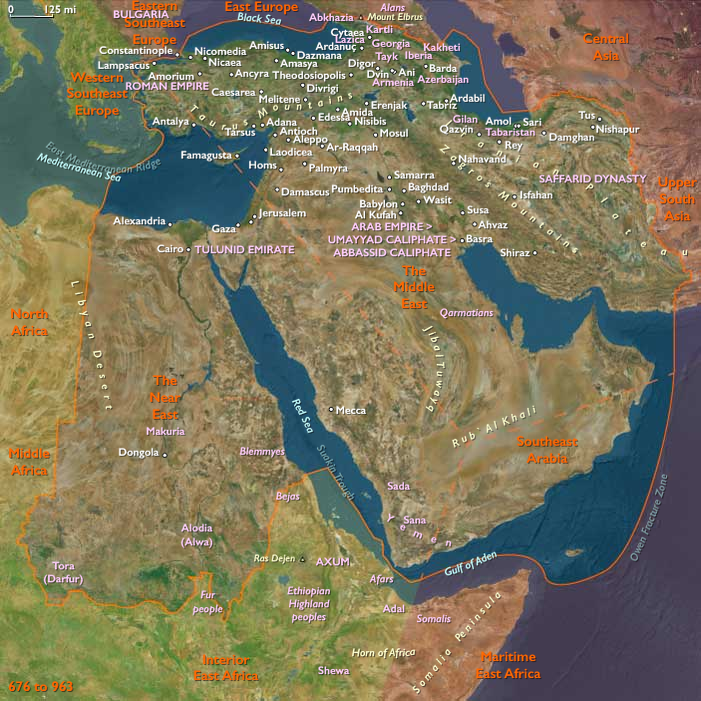
Subregions
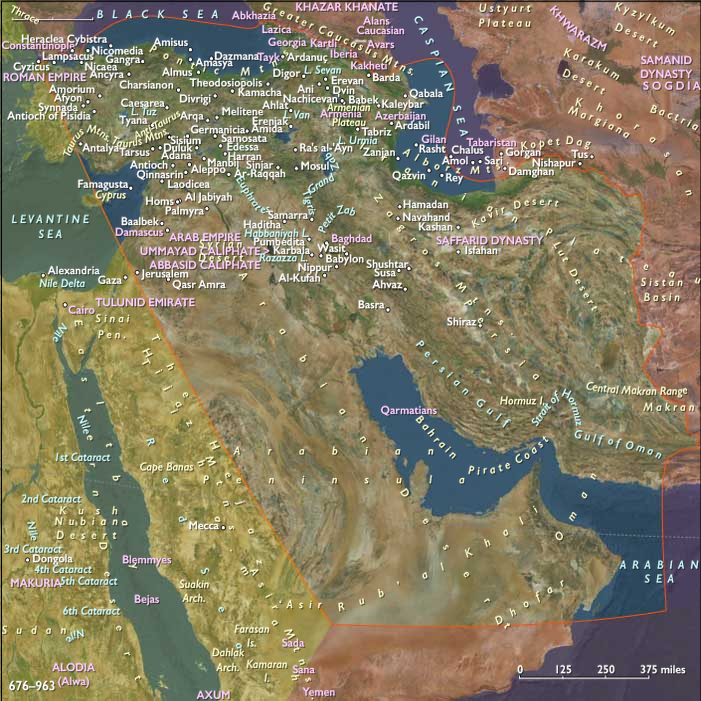
Related Events
Showing 10 events out of 55636 total
Years: 720 - 720
Locations
People
Groups
- Arab people
- Jews
- Banū Kalb (Arabic tribe)
- Christianity, Chalcedonian
- Qais (Arabian tribe)
- Islam
- Muslims, Sunni
- Muslims, Kharijite
- Umayyad Caliphate (Damascus)
- Muslims, Shi'a
- Roman Empire, Eastern: Isaurian dynasty
Commodoties
Subjects
Regions
Subregions