
Filters:
Muslim armies reach the Amu Darya (Oxus …
Years: 532 - 675
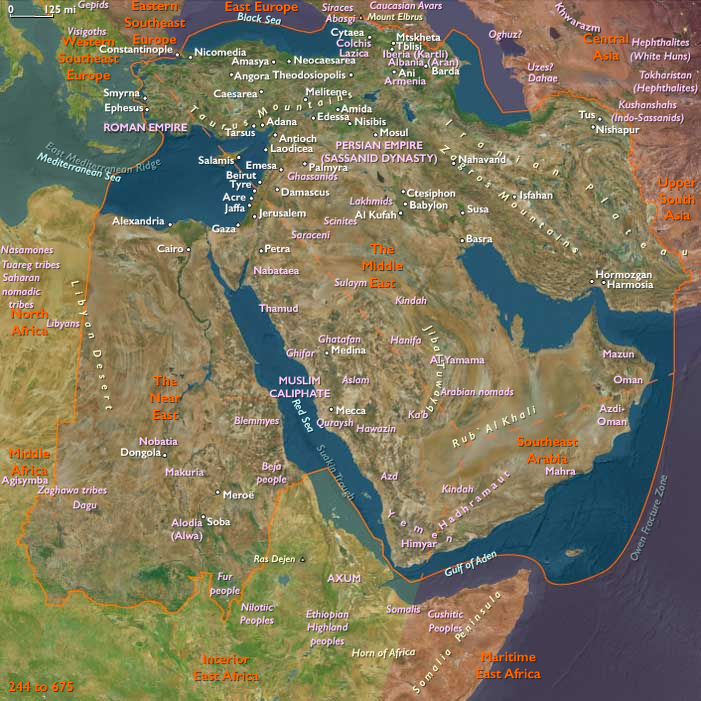
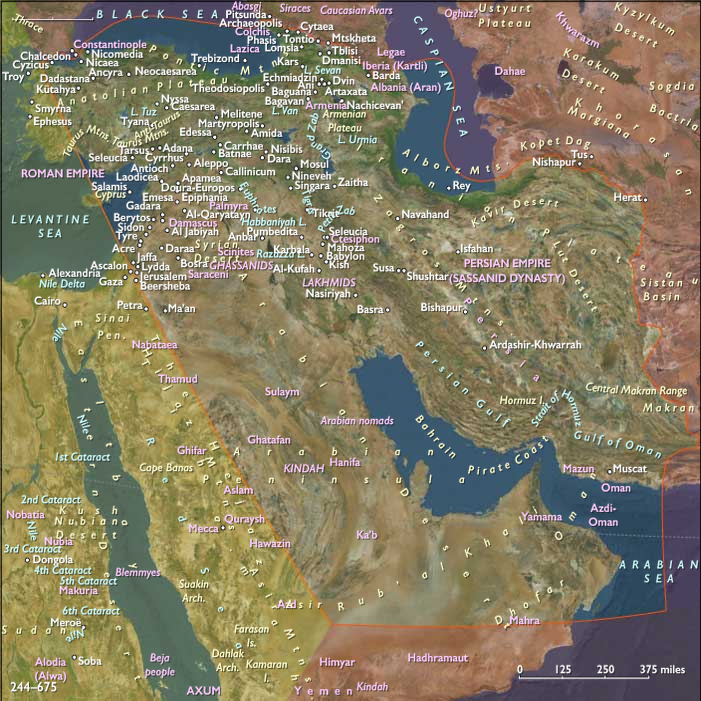
Muslim armies reach the Amu Darya (Oxus River) by 650 and have conquered all the Sassanid domains, although some were more strongly held than others.
Arab expansion and conquest virtually ceases shortly thereafter, and the groups in power now direct their energies to maintaining the status quo while those outside the major power structure devote themselves to political and religious rebellion.
The ideologies of the rebellions usually are couched in religious terms.
Frequently, a difference in the interpretation of a point of doctrine is sufficient to spark armed warfare.
More often, however, religious disputes are the rationalization for underlying nationalistic or cultural dissatisfactions.
Arab expansion and conquest virtually ceases shortly thereafter, and the groups in power now direct their energies to maintaining the status quo while those outside the major power structure devote themselves to political and religious rebellion.
The ideologies of the rebellions usually are couched in religious terms.
Frequently, a difference in the interpretation of a point of doctrine is sufficient to spark armed warfare.
More often, however, religious disputes are the rationalization for underlying nationalistic or cultural dissatisfactions.
Groups
- Iranian peoples
- Arab people
- Persian people
- Zoroastrians
- Mesopotamia (Roman province)
- Persian Empire, Sassanid, or Sasanid
- Islam
- Rashidun Caliphate
Topics
Subjects
Regions
Subregions
Years: 532 - 675
Groups
- Iranian peoples
- Arab people
- Persian people
- Zoroastrians
- Mesopotamia (Roman province)
- Persian Empire, Sassanid, or Sasanid
- Islam
- Rashidun Caliphate
Topics
Subjects
Regions
Subregions