
The Arctic Divergence: Linguistic Foundations and Cultural …
Years: 2061BCE - 1918BCE
The Arctic Divergence: Linguistic Foundations and Cultural Differentiation
This age represents a pivotal moment in Arctic prehistory, occurring in the immediate aftermath of the great Eskimo-Aleut linguistic split around 4000 years ago (c. 2000 BCE). The ancestral Eskaleut language had recently divided into the Eskimoan and Aleut branches, and the cultural implications of this separation were becoming manifest.
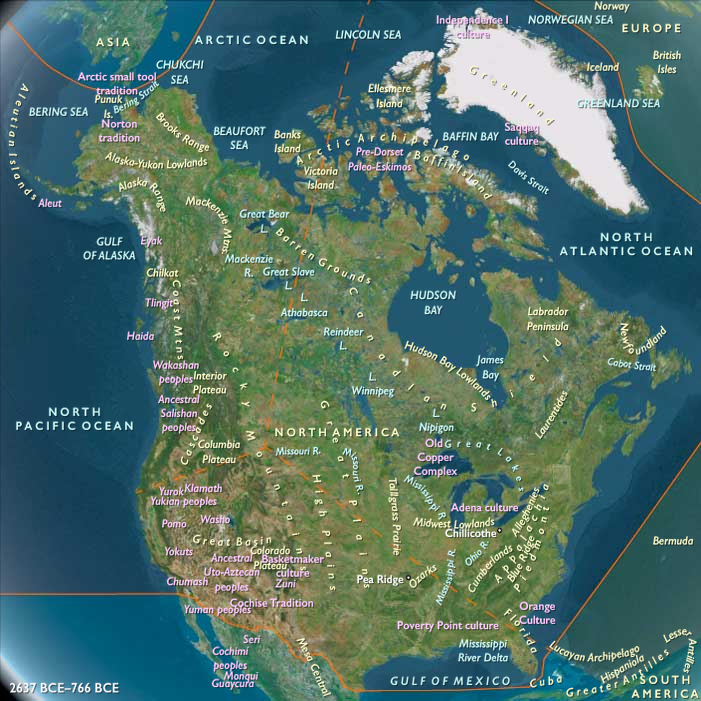
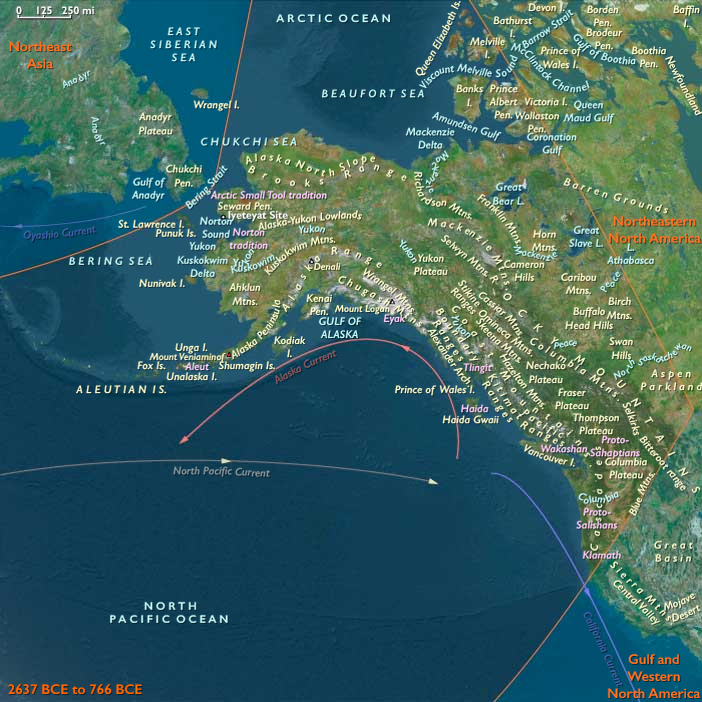
The Denbigh Flint complex continued to flourish across Alaska and northwestern Canada, representing the mature phase of this Paleo-Inuit technological tradition. Proto-Aleut populations were undergoing complex cultural contacts, including ongoing admixture with Late Anangula and Ocean Bay populations in the Alaska Peninsula and Aleutian Islands.
During these 143 years, the foundations were being laid for the distinct maritime adaptations that would characterize Aleut culture. The Unangan culture of the Aleut was becoming increasingly distinct from other Arctic traditions, developing the specialized marine technologies that would define their civilization for millennia.
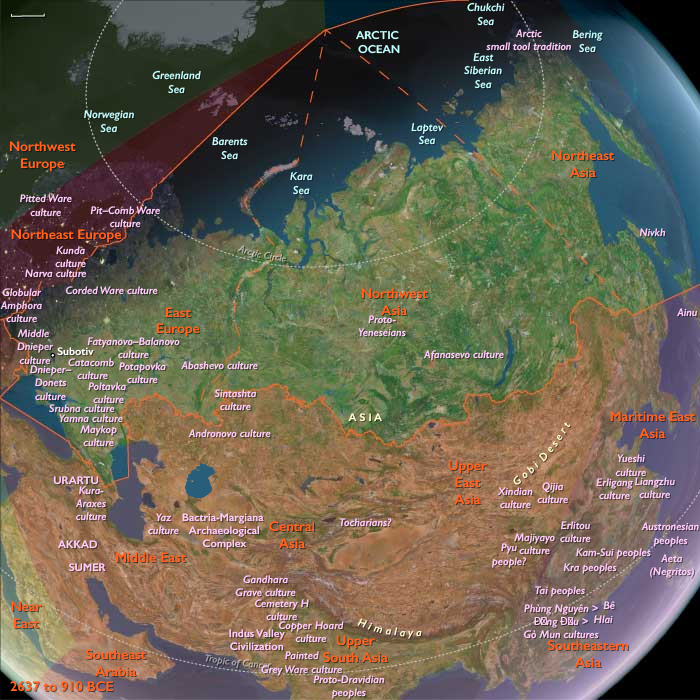
The Arctic Small Tool tradition was reaching its geographical limits, with groups having become the first human occupants of Arctic Canada and Greenland, completing one of humanity's most remarkable expansions into extreme environments.
Groups
Topics
Subjects
Regions
Subregions
Related Events
Showing 6 events out of 6 total
Years: 2061BCE - 1918BCE
Groups
Topics
Subjects
Regions
Subregions